




Manas Dasgupta
NEW DELHI, July 14: The Supreme Court on Tuesday refused to restore status quo to allow the Muslim side offer Namaz in the Bhojshala complex but suggested the Madhya Pradesh government to provide the open space adjacent to Bhojshala site to Muslim side for offering Friday prayers.
The Supreme Court in its order said for the time being, while keeping the rights of both parties in mind, the apex court direct the state government to provide an open space to the applicants so that they may offer Namaz between 1:00 PM and 3:00 PM as an ad hoc measure till the case was finally decided by the top court.. Arrangements and management for this should be ensured, it told the state government.
While refusing to interfere at the moment in the Madhya Pradesh High Court’s order which declared the Bhojshala – Kamal Maula Mosque complex a temple dedicated to Goddess Saraswati and barred Friday Namaz at the site, the Supreme Court said it did not want to “create tension” in a “very sensitive” issue.
The top court was hearing a batch of appeals challenging a Madhya Pradesh High Court order, which said the disputed Bhojshala complex in Dhar district was a temple dedicated to Goddess Saraswati. The Muslim side had challenged the May order of Madhya Pradesh High Court that had declared the disputed Bhojshala site a temple and had pressed for the Namaz rights at the complex.
A bench headed by Chief Justice of India Surya Kant and comprising Justices Joymalya Bagchi and V Mohna said it has to be very careful about every expression used. “These are very sensitive matters. What is being said in court can unnecessarily create controversies or send wrong impression. We have to be very careful about every expression used.”
The bench asked both Hindu and Muslim sides to have patience as Bhojshala was a sensitive matter and said it was ready to hear the matter on a day-to-day basis and resolve the issue. The Supreme Court has also ordered that Archaeological Survey of India (ASI) should not make any structural changes without the Court’s permission.
Notices have been issued to the Central Government, the ASI, the Hindu Front for Justice, and other Hindu parties. The Supreme Court said the Muslim side would not be able to offer Namaz at the Bhojshala temple and an arrangement for Namaz would be made at an alternative location. The current arrangement at the Bhojshala temple would remain unchanged, the court added.
“This is the first time that the issue relating to the interim arrangement is coming before us. The high court’s order and the helplessness of the State in maintaining law and order are also being taken note of. Our view is that whatever arrangement is presently in place, the matter can be listed before an appropriate bench within 10 to 15 days,” the CJI observed orally.
Earlier on Monday the bench was urged by senior advocate Huzefa Ahmadi and advocate Nizam Pasha, appearing for Muslim appellants, that the pleas needed to be heard on an urgent basis. The CJI had asked the counsel for the appellants to remove defects from the petitions and assured them that they would be listed for hearing before a bench soon.
On May 15, the Madhya Pradesh High Court ruled that the disputed Bhojshala-Kamal Maula Mosque complex in Dhar district is a temple dedicated to Goddess Saraswati. It simultaneously quashed a decades-old ASI order that had allowed the Muslim community to offer Friday prayers at the site.
Urging the court to pass an interim order of status quo, senior advocate A.M. Singhvi, for the appellants, said “fraternity” seemed to be the “most forgotten word” in recent times. He said statues like the Places of Worship (Special Provisions) Act of 1991 were enacted to stop exactly situations like this from emerging when religious places from antiquity were at risk of losing their identity.
“The 1991 Act was meant to stop this eye-for-an-eye… Somebody has sought a survey of the Taj Mahal. This would never stop unless the 1991 Act is strictly adhered to… Ayodhya was a one-time exception,” Mr Singhvi submitted. He said the Bhojshala had once been a site to showcase harmony with Namaz held along with Basant Panchami.
Senior advocate Huzefa Ahmadi, also for the appellants, said the declaration was made on a writ petition. Facts were highly disputable and the persons who prepared the ASI reports banked by the High Court were not cross-examined, he said. Mr Ahmadi said the High Court’s judgment had acknowledged the disputed site as a centuries’ old mosque, and the balance of convenience lay in favour of status quo ante.
Solicitor General Tushar Mehta, appearing for the government side, said the High Court decision was in May. The appeals have come up after two months now. “We have ensured that both communities keep calm,” Mr Mehta said.
The Chief Justice made a request to the senior advocates, reminding them that the issue was “very sensitive,” and comments made in court should not be misinterpreted outside.
“If Namaz has been offered for the past 800 years, why should it be stopped now? If parties have been worshipping jointly since a settlement arrived at in 1995, why cannot it be continued till Your Lordships decide?” senior advocate Meenakshi Arora, also for the appellants, said.
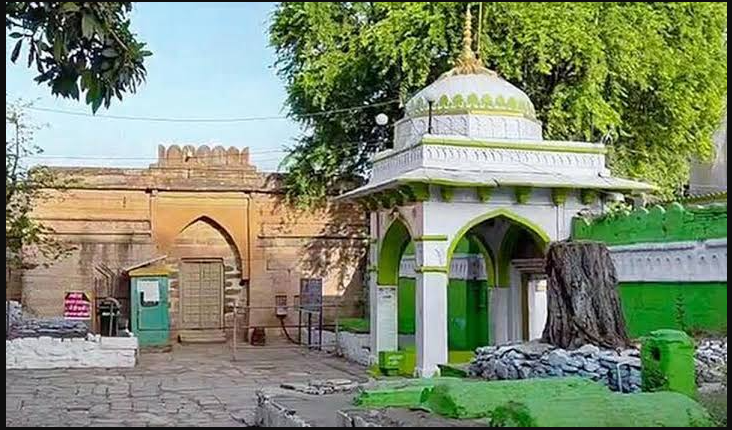
The Hindu community considers Bhojshala a temple dedicated to Goddess Saraswati, while the Muslim side calls the 11th-century monument the Kamal Maula Mosque. The disputed complex is protected by the ASI.
Under the 2003 ASI arrangement, Hindus and Muslims continued to pray on Tuesdays and Fridays, respectively. The Hindu side challenged the order in the high court, seeking exclusive rights to worship at the complex. The high court had ordered the ASI to conduct a scientific survey of the Bhojshala Temple-Kamal Maula Mosque complex on March 11, 2024.
The ASI began the survey on March 22 that year and, after a detailed 98-day survey, submitted its report to the court.
The ASI, in its over 2,000-page report, indicated that a massive structure dating back to the reign of the Parmar kings of Dhar predated the mosque, and that the current disputed structure was built using repurposed temple components.
The Hindu side claims coins, sculptures, and inscriptions found by the ASI during its scientific survey prove the complex was originally a temple. However, the Muslim side has argued in court that the ASI’s survey report was “biased” and prepared to support the claims of the Hindu petitioners.