




New Delhi: In Kolkata, thousands of hectares of fish ponds turn urban wastewater into a source of food and livelihoods. In Rajasthan’s Khichan, villagers help protect more than 22,000 demoiselle cranes that arrive each winter. Along the eastern coast, the Sundarban mangroves stand between settlements and the force of cyclones and tidal surges.
These landscapes differ widely, but they share a distinction: recognition as wetlands of international importance under the Ramsar Convention. They also demonstrate why wetland conservation extends beyond protecting scenic lakes or migratory birds. Wetlands support water security, local economies and protection against extreme weather.
India’s Ramsar network has grown from 26 sites in 2014 to 103, covering more than 13.87 lakh hectares across 28 states and Union Territories, according to the Union Environment Ministry. The country now ranks first in Asia and third globally by number of designated sites.
The latest additions, announced on October 15, 2026, are Sukhna Wetland in Chandigarh and Sauj Jheel in Uttar Pradesh. Their inclusion brings two distinct ecosystems into the network: a reservoir at the foothills of the Shivaliks and a shallow floodplain lake that supports large congregations of waterbirds.
Created in 1958, Sukhna provides feeding and wintering grounds for migratory birds travelling along the Central Asian Flyway. It also shelters threatened species, including Pallas’s fish eagle, the common pochard and the black pond turtle.
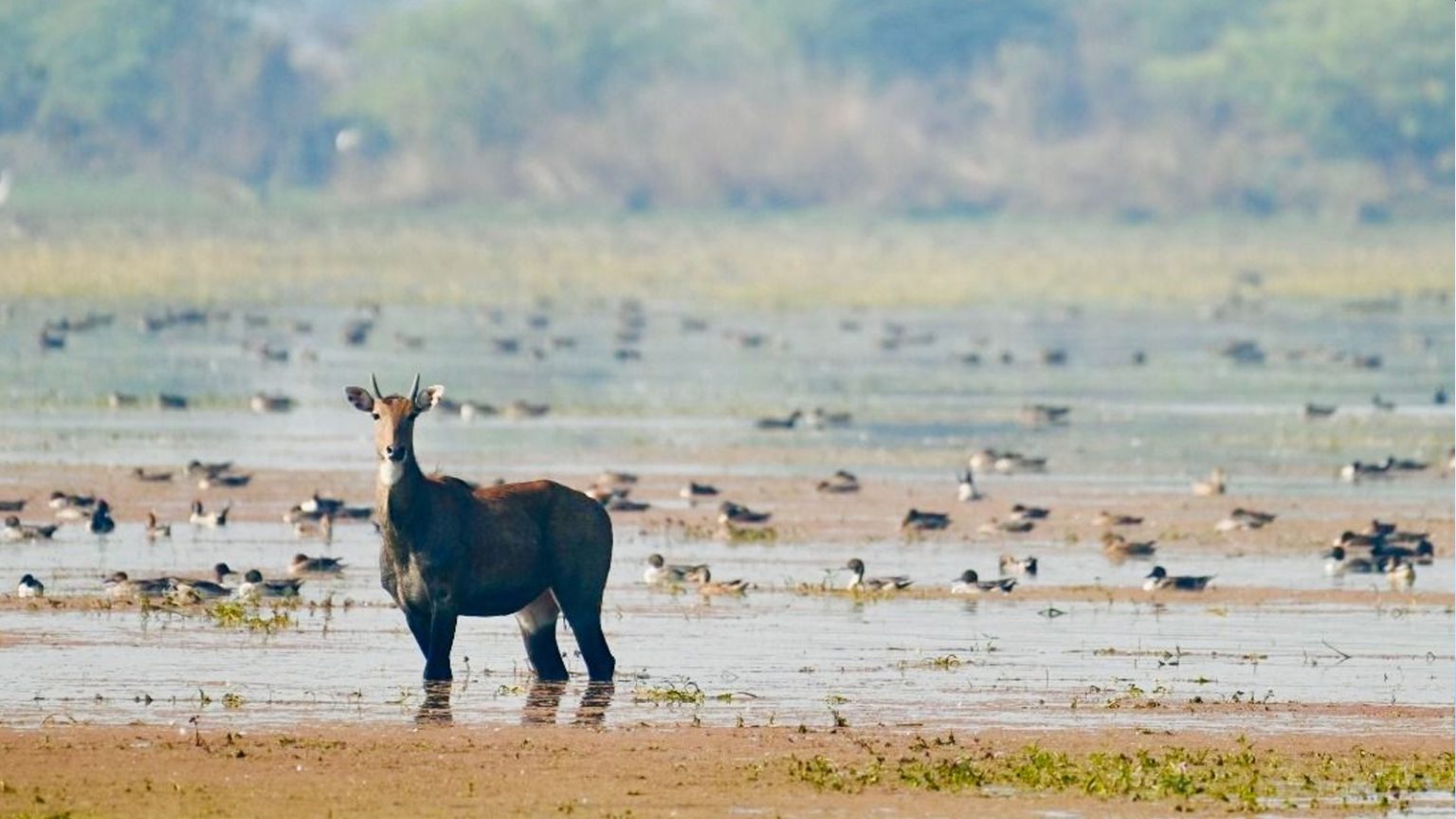
Sauj Jheel, in Mainpuri district, regularly hosts more than 30,000 waterbirds. Its lotus and wild sugarcane beds provide shelter for nesting birds, fish and amphibians, while threatened birds such as the sarus crane and greater spotted eagle use the wetland.
Their designation reflects the diversity of India’s wetlands, which range from Himalayan lakes and river floodplains to mangroves, coral reefs, village tanks and urban marshes.
Tamil Nadu has the highest number of Ramsar Sites, with 20, followed by Uttar Pradesh with 14. The Sundarban Wetland in West Bengal is the country’s largest designated site, covering 4.23 lakh hectares.
The Ramsar Convention, adopted in the Iranian city of Ramsar in 1971, provides an international framework for conserving wetlands and ensuring their wise use. India became a party to the convention in 1982.
A wetland must meet at least one of nine criteria to qualify for designation. These include supporting threatened species, providing refuge during critical stages of their life cycles, sustaining important fish populations or regularly hosting at least 20,000 waterbirds.
In India, state governments and Union Territory administrations identify potential sites. The Environment Ministry coordinates approval and forwards proposals to the Ramsar Secretariat.
Recognition brings international visibility, access to scientific guidance and opportunities for cooperation. It also carries responsibilities: maintaining a wetland’s ecological character, preparing management plans, monitoring its condition and updating its Ramsar Information Sheet every six years.
The experience of Chilika Lake in Odisha illustrates what sustained conservation can achieve. One of India’s first two Ramsar Sites, alongside Keoladeo National Park in Rajasthan, Chilika was removed from the Montreux Record in 2002 following ecological restoration.
The record identifies Ramsar Sites where adverse changes in ecological character have occurred, are occurring or are likely to occur. Removal follows documented remedial action or the disappearance of the threat.
Today, Chilika supports 118 fish species and provides breeding, wintering and staging grounds for waterbirds. Its restoration shows how ecological recovery can also benefit communities dependent on a wetland.
The relationship between conservation and livelihoods is particularly visible in the East Kolkata Wetlands. Around 4,000 hectares of fish ponds naturally treat the city’s wastewater, produce approximately 10,500 tonnes of fish annually and directly support about 50,000 people.
In the Sundarbans, mangroves provide another form of essential service. They help protect inland areas from storms, tidal surges and saltwater intrusion, while serving as nurseries for fish and shellfish.
River wetlands also shelter species whose survival depends on healthy aquatic habitats. Punjab’s Beas Conservation Reserve holds India’s only known population of the endangered Indus River dolphin. A gharial reintroduction programme launched in 2017 released 47 animals, nearly three decades after they had disappeared from the river.
Community involvement is equally important. At Khichan, a wetland covering just 54 hectares, residents help protect wintering cranes from power-line collisions and stray dog attacks. Such local stewardship connects international conservation goals with everyday action.
India’s wetland protection framework rests on the Wetlands (Conservation and Management) Rules, 2017. These establish state and Union Territory wetland authorities and prohibit activities such as encroachment, waste dumping and the discharge of untreated effluents.
The National Plan for Conservation of Aquatic Ecosystems provides an integrated framework for managing lakes and wetlands. Updated guidelines issued in 2024 emphasise scientific planning and management.
Under Amrit Dharohar, conservation efforts cover species and habitats, nature tourism, wetland livelihoods and carbon assessment. The Botanical Survey of India and Zoological Survey of India have conducted flora and fauna inventory studies covering 75 Ramsar Sites. Carbon stocks have been assessed at 39 sites using a standard operating procedure developed for wetlands.
Participatory initiatives seek to widen the effort beyond government agencies. According to the ministry, more than two million citizen volunteers have helped map over 1.7 lakh wetlands through the Save Wetlands Campaign under Mission Sahbhagita.
Mangrove restoration is being pursued through the Mangrove Initiative for Shoreline Habitats and Tangible Incomes, or MISHTI. The initiative targets 540 square kilometres across nine states and four Union Territories. So far, ₹88.44 crore has been released for restoring 9,949.5 hectares of degraded mangroves.
Urban conservation has also gained recognition. Indore and Udaipur became India’s first Ramsar-accredited Wetland Cities in January 2025, highlighting the place of wetlands within growing urban landscapes.
As India’s list expands, the challenge is to turn designation into sustained protection. That requires regular monitoring, effective regulation, reliable data and development planning that accounts for the water flows and habitats on which wetlands depend.
For fishing communities, farmers and residents vulnerable to floods, those outcomes have immediate value. The strength of India’s Ramsar network will ultimately be reflected in wetlands that continue to hold water, shelter wildlife and sustain the people living around them.
[DD News]