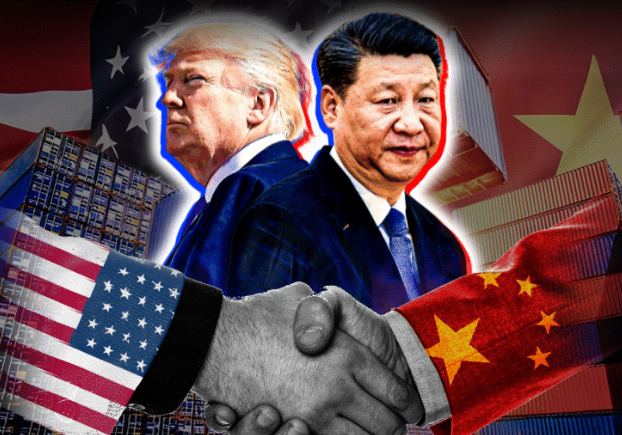
Roving Periscope: Trump to meet ‘frenemy’ Xi next week in Beijing—with little expectations







Virendra Pandit
New Delhi: Amid the ongoing geopolitical circus in West Asia, the US imposing huge tariffs on China last year and blockading the Strait of Hormuz chiefly to halt the flow of Iranian oil to China recently, pulling Islamabad away from Beijing, and the Taiwan tensions, President Donald Trump will meet his Chinese counterpart Xi Jinping on May 14 and 15—with little breakthroughs expected.
In a US President meeting Xi in almost a decade, Trump will meet the Chinese President as both countries seek to stabilise a relationship strained by tensions over trade, Taiwan and the Iran war, the media reported on Thursday.
Business leaders and analysts are, however, not expecting big breakthroughs at their summit, although there could be minor successes such as an extension of a trade truce signed in October 2025.
Deals ‘expected’
Trump expects major trade concessions from China ahead of the November 2026 midterm elections to US Congress. Both countries are working on a Board of Trade mechanism aimed at finding products that will boost trade without compromising each other’s national security or critical supply chains. The proposals include potential Chinese purchases of US poultry, beef and non-soybean crops and a commitment to buy 25 million metric tons of soybeans for each of the next three years. The US also wants China to buy Boeing aircraft and US coal, oil and natural gas.
China has for long been talking with Boeing for a deal that could include 500 737 MAX jets, plus dozens of wide-body planes. The deal has remained stalled for years as Trump threatened to cut off access of critical spare engine parts to China.
Rare Earths
Beijing wants the US to ease curbs on exports of advanced semiconductors, and has raised concerns about a bill to keep critical chip making equipment from China. Washington wants Beijing to allow shipments of rare earths and critical minerals to US companies. China’s controls on rare earths exports have caused widespread disruptions to US automotive and aerospace manufacturing. Both countries have been shoring up economic pressure tools that can be used as additional leverage during the talks.
The US in March began investigations into alleged excess industrial capacity and the use of forced labour in China. In April, the US Treasury Department imposed sanctions on a refinery in China for buying Iranian oil and threatened to impose secondary sanctions on Chinese banks for facilitating such purchases.
Beijing also hit back with legal countermeasures. In April, Premier Li Qiang signed two new regulations granting authorities sweeping powers to investigate foreign firms, governments and individuals that seek to shift their supply chains away from China. The new regulations could also be used to retaliate against Western sanctions on Chinese businesses overseas.
The Iran War
US Treasury Secretary Scott Bessent has said that the two presidents will also discuss the Iran war, and urged China to “join us in this international operation” to open the Strait of Hormuz to international shipping.
The war, which Beijing views as Washington’s responsibility to end, has threatened China’s energy supplies and risks straining its relationship with Gulf countries. But while Beijing worked behind-the-scenes to convince Iran to hold peace talks with the US in Pakistan last month, analysts said it would not want to be seen as doing Trump’s bidding. Iranian Foreign Minister Abbas Araqchi was in Beijing this week and briefed his Chinese counterpart Wang Yi on the talks with the US.
Taiwan
Wang also stressed the importance of the Taiwan issue to China during a call with US Secretary of State Marco Rubio, describing the democratically-governed island as “the biggest point of risk” for relations. The US should “keep its promises and make the right choices in order to open up new space for China-US cooperation,” Wang said.
China claims Taiwan as its own ‘overseas’ territory and has threatened even the use of force to bring the island under its control. Taipei strongly rejects China’s claim and says only Taiwan’s people can decide their future.
Beijing has been privately signalling to the Trump administration to change US language on Taiwan independence, the way Xi did with President Joe Biden in their 2024 summit as well. Xi asked Biden to alter the US position to say “we oppose Taiwan independence.”. The current US has rephrased it as it “does not support” independence for Taiwan.
Any change in the US’ wording, however subtle, could affect Beijing’s assessment of US resolve to support the island and raise fresh questions about Washington’s security commitments in Asia.