




Virendra Pandit
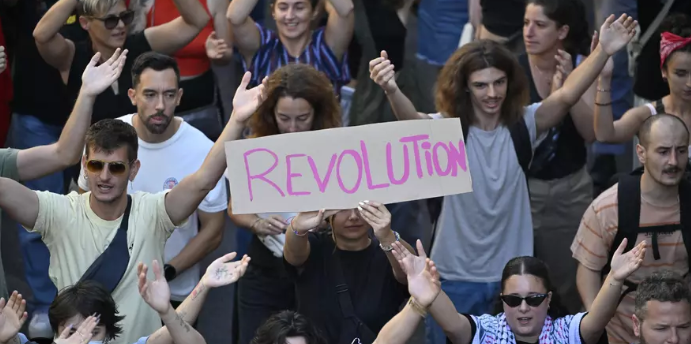
New Delhi: Amid fresh fears of the Russian-Ukraine war spreading deeper in Europe, France came to a boil on Wednesday as thousands of demonstrators, protesting against increasing political uncertainties ahead of the 2027 presidential polls, poured out on the streets in several French cities in what could degenerate into a chaotic situation, as witnessed in Sri Lanka, Bangladesh, and Nepal in recent past.
In Rennes, demonstrators set a bus on fire and caused damage to a power line in the southwest. Around 200 arrests have taken place so far, the media reports, quoting authorities, said.
To manage the unrest, Interior Minister Bruno Retailleau confirmed that nearly 80,000 security personnel had been deployed nationwide.
The protesters hit the streets in Paris and other cities after French President Emmanuel Macron appointed Sebastian Lecornu as the country’s fifth Prime Minister in less than two years, following the resignation of Francois Bayrou who lost a parliamentary vote on Monday.
As Lecornu prepared to take office on Wednesday, France witnessed widespread protests led by a left-wing grassroots movement known as “Block Everything” (Bloquons Tout). He is facing a twin challenge – managing a politically fractured parliament and a highly mobilised public against the government’s spending cuts and austerity measures, the reports said.
The “Block Everything” collective is a citizen-led movement calling for boycott, civil disobedience, and solidarity in response to controversial government policies. Unlike traditional strikes led by trade unions or political parties, the new movement is independent, organised primarily through social media platforms such as X, TikTok, Telegram, and Facebook the way protesters did in Sri Lanka, Bangladesh, and Nepal.
Anti-government protesters are using hashtags like #10septembre2025 and #10septembre to spread their message, encouraging actions such as boycotting major retailers like Carrefour, Amazon, and Auchan, withdrawing money from banks, peaceful occupation of symbolic sites like town halls, and organising neighbourhood assemblies and strike funds.
Although the protests did not fully achieve their self-declared goal of “blocking everything,” they caused widespread disruption and reflected growing public anger.
The immediate trigger point for this flareup was PM Bayrou’s 2026 budget, which proposed cutting 43.8 billion Francs from the national budget, reducing the country’s deficit, removing two national holidays, freezing pensions, and slashing 5 billion Francs from healthcare budget.
Protesters are predominantly left-wing voters, with 69 percent of surveyed supporters who voted for former parliamentarian Jen-Luc Melenchon in the 2022 election.
However, major unions largely refused to participate, citing alternative strike dates (September 18). Only the hard-left CGT union formally backed the protests.
The protests caused significant disruption across France. Demonstrators attempted to block highways in Bordeaux, while a cable fire in Toulouse affected rail traffic. Early actions in Paris led to 75 arrests, and the highway operator Vinci reported blockages in Marseille, Montpellier, and Nantes.
Nine months into his term after failing to secure support in the National Assembly for his deficit-cutting budget, Francois Bayrou quit the PM’s office on Monday. He had replaced Michel Barnier, who also stepped down in December 2024 after losing a no-confidence vote.