



Virendra Pandit
New Delhi: Although the US has cancelled its trade negotiators’ planned New Delhi visit from August 25 to 29, dashing hopes that the levies may be lowered or postponed, India has said trade negotiations with America are still in progress.
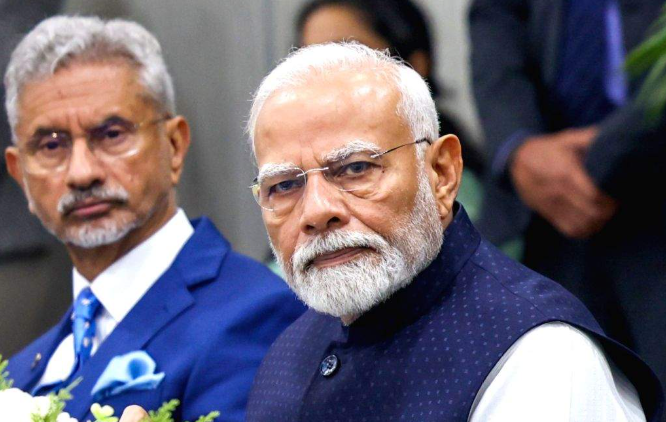
External Affairs Minister S. Jaishankar said on Saturday that trade negotiations with Washington are continuing but there are lines that New Delhi needs to defend.
On the India-US ties, he said talks were ongoing despite tensions. “We are two big countries, as I say, the lines are not cut, people are talking to each other, and we will see where it goes,” he added.
Indian goods face additional US tariffs of up to 50 percent, among the highest imposed by Washington, because of its increased purchases of Russian oil. A 25 percent tariff has already come into effect while the remaining 25 percent is set to be enforced from August 27, the media reported.
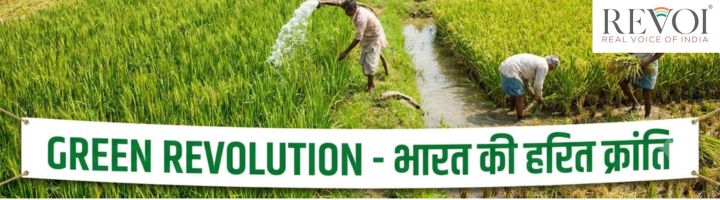
“We have some redlines in the negotiations, to be maintained and defended,” Dr. Jaishankar said at an event in New Delhi, singling out the interests of India’s farmers and small producers.
Prime Minister Narendra Modi has also said multiple times that India will defend its national interests, including those of its agri-farmers, dairy farmers, fishermen, and small entrepreneurs at all costs.
The ongoing India-US trade talks collapsed earlier this year due to India not agreeing to open its vast agricultural and dairy sectors. Bilateral trade between the world’s largest and fifth largest economy is worth over USD 190 billion.
Describing US President Donald Trump’s policy announcements as “unusual” he said t is India’s right to make decisions in its ‘national interest, he said.
According to analysts, India’s economic growth could be 0.8 percentage points less in FY26 and FY27 if the full US tariffs come into force and stick.
The longer-term harm could be even greater as a high tariff could negate India’s appeal as a global manufacturing hub, they claimed.
“We have not had a US President who conducts his foreign policy so publicly as the current one and (it) is a departure from the traditional way of conducting business with the world,” Dr. Jaishankar said.
He also said Washington’s concern over India’s Russian oil purchases was not being applied to other major buyers such as China and European Union.
“If the argument is oil, then there are (other) bigger buyers. If the argument is who is trading more (with Russia), than there are bigger traders,” he said.
Russia-European trade is bigger than India-Russia trade, he added.
Dr. Jaishankar also said India’s purchases of Russian oil had not been raised in earlier trade talks with the US before the public announcement of tariffs.
He said India’s priority was to protect farmers and small producers, stressing that New Delhi would not compromise on their interests
He hit out at the US for “unjustified and unreasonable” tariffs on Indian goods, after the Trump administration raised duties to over 50 per cent as a penalty for India’s purchase of Russian oil.
“What we are concerned about is that red lines are primarily the interest of our farmers and, to some extent, our small producers. So, when people pronounce that we have succeeded or failed, we as a government are committed to defending the interests of our farmers and small producers. We are determined on that. That’s not something we can compromise,” Dr. Jaishankar said.
He also argued that the tariff issue was being wrongly presented as an “oil dispute.” He noted that the same criticism levelled at India for purchasing Russian energy had not been applied to larger importers, such as China and European nations.
“The second issue is that this is being presented as an oil issue. But why I say ‘being presented’ is because the same arguments that have been used to target India have not been applied to the largest oil importer, which is China, and have not been applied to the largest LNG importer, which is the European nations,” he said.
He also pointed out the contradiction in the West’s stance, saying Europe trades far more with Russia than India does.
“And when people say we are funding the war and putting the money, Russia-European trade is bigger than India-Russia trade. So European money is not putting coffers? The overall Russia-EU trade is bigger than the Russia-India trade. If the argument is energy, they (EU) are bigger buyers. If the argument is who is the bigger trader, they are bigger than us. India’s exports to Russia have grown, but not that much,” he added.
India has every right to take decisions in its own national interest. “The issue of decisions which we make in our national interest is our right. And I would say that’s what strategic autonomy is about,” he said.
When asked about Sergio Gor, Washington’s new Ambassador to India, Dr. Jaishankar avoided comment, saying, “Look, I am the Foreign Minister, I don’t comment on ambassadorial appointments of other countries.”
Earlier this week, Dr. Jaishankar visited Russia, where he met Russian President Vladimir Putin, Deputy First PM Denis Manturov and Foreign Minister Sergey Lavrov.
He also co-chaired the 26th session of the India-Russia Inter-Governmental Commission on Trade, Economic, Scientific, Technological and Cultural Cooperation (IRIGC-TEC).
According to the Ministry of External Affairs (MEA), the visit included discussions on terrorism, the conflict in Ukraine, and regional developments in West Asia and Afghanistan. Dr. Jaishankar also conveyed Prime Minister Narendra Modi’s greetings to President Putin and discussed key bilateral and global issues.