Crude: With low discounts, India reducing Russian oil imports





Virendra Pandit
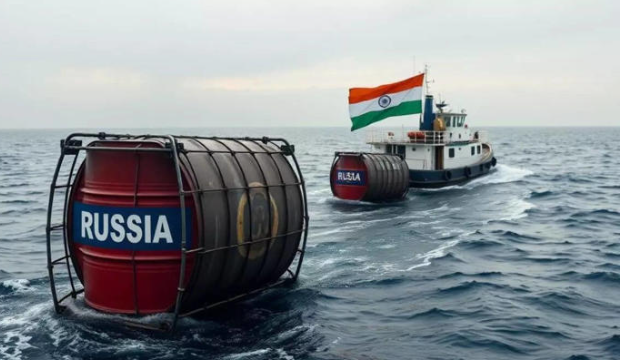
New Delhi: With US President Donald Trump slapping high tariffs left, right, and centre, and Russian discounts on crude falling, India is gradually reducing imports from Russia, indicating a calibrated move to look for other resources.
Russia is the largest oil supplier to India, accounting for about 35 percent of India’s overall supplies.
President Trump recently warned of heavy tariffs and penalties for countries still buying Russian oil, prompting Indian refiners to turn to the Middle Eastern and West African suppliers instead, according to a media report on Friday.
India’s four state-owned refiners—Indian Oil, Bharat Petroleum, Hindustan Petroleum, and Mangalore Refinery—reportedly stopped buying Russian oil in the past week as price discounts narrowed in July.
Energy-hungry India, the world’s third-largest oil importer after China and Europe, is the biggest buyer of seaborne Russian crude, a vital revenue earner for Russia which is waging a relentless war in Ukraine since February 24, 2022.
Globally, the largest oil importer is China which, in 2023, imported around 13.7 million barrels of oil and its byproducts daily, followed by Europe with 12.8 million barrels per day.
India’s state-run refiners having been regularly buying significant amount of discounted Russian oil since 2022 on a delivered basis but have now turned to spot markets for replacement supply, mostly for Middle Eastern grades like Abu Dhabi’s Murban crude and West African oil.
Privately-owned refiners Reliance Industries and Nayara Energy, whose majority is owned by Russian entities including oil major Rosneft, have annual deals with Moscow and are the biggest Russian oil buyers in India.
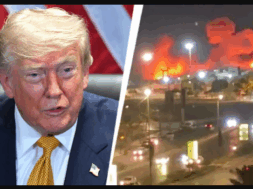
Unable to persuade Russia to stop the ongoing war against Ukraine, Trump, on July 14, threatened 100 percent tariffs on countries buying Russian oil unless Moscow reached a major peace deal with Kyiv.
Indian refiners are pulling back from Russian crude as discounts shrink to their lowest since 2022, when Western sanctions were first imposed on Moscow, due to lower Russian exports and steady demand.
Refiners fear the latest European Union curbs could complicate overseas trade including fund raising — even for buyers adhering to the price cap. India has reiterated its opposition to “unilateral sanctions.”
Trump on Wednesday announced a 25 percent import duty on goods imported from India from August 1, but added that negotiations were ongoing. He also warned of potential penalties for purchase of Russian arms and oil.
On Monday, he cut the deadline to impose secondary sanction on buyers of Russian exports from the previous 50-day period to 10-12 days, if Moscow does not agree a peace deal with Kyiv.
Private refiners bought nearly 60 percent of India’s average 1.8 million barrels per day (bpd) of Russian oil imports in the first half of 2025, while state refiners that control over 60 percent of India’s overall 5.2 million bpd refining capacity, bought the remainder.
Reliance purchased Abu Dhabi Murban crude for loading in October this month, an unusual move by the refiner, the reports said.
This week, Trump imposed 25 percent retaliatory tariff on India and Brunei each, followed by Bangladesh, Sri Lanka, and Vietnam (20 percent each), and Pakistan, Indonesia, Thailand, Philippines, and Malaysia (19 percent) each. Myanmar and Laos got slammed with higher tariffs of 40 percent each.
The new tariffs will be imposed in seven days’ time, the White House said. The penalty threatened by Trump on India for doing business with Russia has, however, not yet been announced so far. These tariffs would be inclusive of the 10 percent baseline tariff already imposed on trading partners by the US in April this year.
Commerce and Industry Minister Piyush Goyal said on Thursday in Parliament that “The implications of the recent development are being examined by the government. The Ministry of Commerce and Industry is engaged with all stakeholders including exporters and industry for taking feedback of their assessment of the situation,”
India will continue to engage with the US on the proposed bilateral trade agreement (BTA) being negotiated by the two sides. A US delegation will be in India on August 25 for this purpose. Its first tranche is scheduled to be finalised by Fall 2025 (October-November).
Officials said on Thursday that India would stick to its stand of not taking retaliatory action against the US at the World Trade Organization (WTO) on the higher tariffs while the BTA negotiations were on.
“India is negotiating in good faith with the US. We don’t want to take action at the WTO while the negotiations are on,” an official said.
The US was India’s largest export destination in FY25 with shipments valued at USD 86.51 billion. But it accounted for less than a fifth of its total goods exports of USD 437.42 billion.
India is not alone to face a 25 percent US tariff. Switzerland faces 39 percent, Serbia 35 percent, Myanmar 40 percent, Libya 30 percent and Bosnia & Herzegovina at 30 percent.