




Virendra Pandit
New Delhi: Ahead of the International Monetary Fund (IMF)’s crucial meeting on Friday to finalize the USD 1.33 billion instalment of the USD 7 billion bailout package to rescue Pakistan’s ‘cashless’ economy, India has sacked its representative K.V. Subramanium, New Delhi’s nominee on the global lender’s board, six months before his term was to end.
World Bank Executive Director Parameswaran Iyer will represent India on the IMF until further orders.
India’s vote will be critical in the IMF’s decision to assist Pakistan. New Delhi has urged the global lender to review its loans to Pakistan after the Pahalgam massacre of April 22, carried out by Islamabad-supported terrorists.
Dr. Subramanian, 54, who was the Chief Economic Advisor (CEA) to the Government of India from 2018 to 2021, was appointed as the Executive Director to the IMF in late 2022, representing India, Bangladesh, Sri Lanka, and Bhutan. However, New Delhi abruptly recalled him on April 30, just two and a half years into his three-year term.
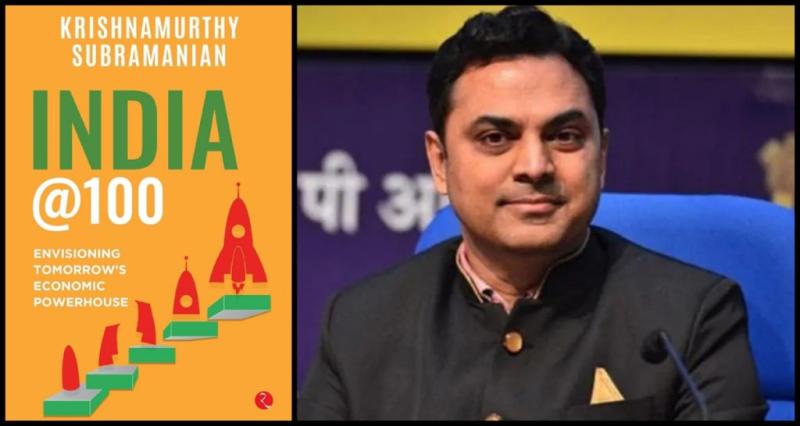
According to the media reports, he has been accused of using his position to promote his new book, India@100: Envisioning Tomorrow’s Economic Powerhouse, and get a Rs. 7.25 crore deal with public sector Union Bank of India to buy nearly two lakh copies.
The bank purchased 189,450 paperback and 10,422 hardcover copies of Dr. Subramanian’s book for distribution among customers, corporates, schools, colleges, and libraries across India. Priced at Rs. 350 and Rs. 597 respectively, the total procurement cost amounted to Rs. 7.25 crore. The bank has also sacked a general manager in this case, the reports said.
Even before the publication, the bank allegedly paid a 50 percent advance to the publishers, Rupa Publications, in August 2024, while the balance amount would be covered through the bank’s miscellaneous revenue budget.
The reports said English-language books in India rarely sell beyond 10,000 copies. This made the bank’s purchase of nearly 200,000 copies highly unusual. The order was executed through the bank’s 18 zonal offices, each assigned over 10,000 copies for further distribution.
The book, published on August 1, 2024, outlines India’s roadmap to transform into a USD 55 trillion economy by its centenary in 2047. Drawing from the author’s own experience as India’s CEA, Subramanian presents a strategic framework based on four pillars: fostering consistent macroeconomic growth, promoting inclusive development, advocating ethical wealth creation, and leveraging investment-led growth.
The book boasts of bringing together economic theory with practical policy insights, aiming to guide India on a path of sustainable and equitable prosperity over the next two decades.
Initial speculation linked Dr. Subramanian’s abrupt exit to tensions over his criticism of the IMF datasets published in the book. The latest report, however, suggests ‘wrongdoing’ in how the book was promoted. The government may have viewed the Union Bank procurement as excessive, if not inappropriate, particularly given Subramanian’s high-profile position.
On its part, the IMF distanced itself from Dr. Subramanian’s exit, clarifying that the decision to terminate his tenure was made solely by New Delhi.
Meanwhile, Islamabad claimed that New Delhi’s plan to ask IMF to review Pakistan’s loans is politically motivated. The IMF Executive Board will meet Pakistani officials on May 9 for the first review of the Extended Funding Facility.
India on Friday last week said it would be asking global multilateral agencies, including the IMF, and the Asian Development Bank (ADB), to have a relook at funds and loans provided to Pakistan.
The media reports said Pakistan’s USD 7 billion IMF bailout, secured last year, remains “well on track” and was critical for macroeconomic stability.
Islamabad also received an additional USD 1.3 billion in climate resilience funding in March 2025.