


Virendra Pandit
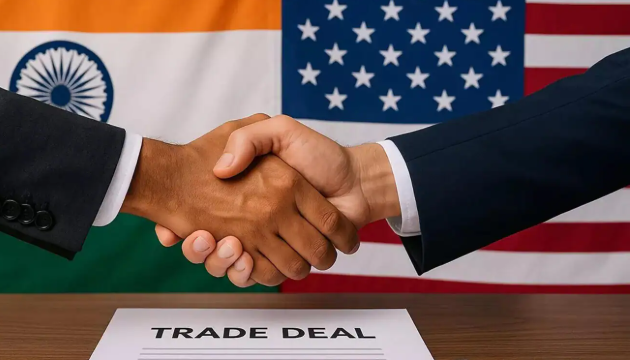
New Delhi: As trade negotiations between the US and India resumed in New Delhi on Tuesday, former diplomat and Union Minister for Petroleum and Natural Gas Hardeep Singh Puri asserted that “India First” policy will be the focus for any potential deal.
As a fresh round of trade talks, leading to a likely Bilateral Trade Agreement (BTA) began between India and the US, he said the government will prioritise national interests, with farmers and MSMEs at the heart of its strategy, the media reported.
US chief negotiator Brendan Lynch arrived in New Delhi late Monday for a one-day visit, joining the latest round of trade talks between the two countries. This happened after US President Donald Trump suddenly called India a “special partner”, a sentiment Prime Minister Narendra Modi “fully reciprocated”. Trump’s U-turn came after the ‘bonhomie’ between Russian President Vladimir Putin, Chinese President Xi Jinping, and Prime Minister Narendra Modi in Tianjin, China, early this month.
Puri said India was entering the talks with confidence. “India is opening up for trade talks, but we are confident of a good outcome under the Prime Minister’s guidance. An ‘India First’ approach will guide our discussions,” he said.
Asked about the possible direction of the negotiations, he was cautious. “As a trade negotiator and diplomat, one lesson I have learnt is never to speculate on the outcome while talks are on. Wisdom and maturity lie in not speculating,” he remarked, refusing to share details.
Energy remains one of the most sensitive issues. India has faced additional tariffs, from the US over its purchase of Russian oil. On August 27, Washington imposed an extra 25 percent penalty on Indian goods for buying Russian crude, in addition to the 25 reciprocal tariffs already in place from early August on imports from India.
New Delhi has all along asserted that its farmers and small businesses will be a priority. The PM has reiterated that “the interests of farmers and MSMEs will not be compromised.” Agriculture is where India is unlikely to make major concessions, even as it moves forward with broader trade discussions in other sectors.
Experts believe India is treading carefully and keeping its options open. Officials have not revealed much about their strategy, but Rajesh Agrawal, India’s Commerce Secretary and chief negotiator, is expected to play a key role in the meetings with Lynch in New Delhi.
India said the fresh meeting doesn’t mark the start of the next round of negotiations, describing it as a “discussion” about “trying to see” how an agreement can be reached.
Negotiations on a trade deal had stalled after Trump imposed a hefty 50 percent tariff on Indian goods in August. India has defended its decision, citing domestic energy needs, and called the tariffs “unfair.”
The hefty duties, along with strong criticism of India by Trump and his acolytes led to a swift and surprising deterioration in ties between the allies.
“This is not an official round of negotiations but it will definitely be a discussion on the trade talks and on trying to see how we can reach an agreement between India and the US,” Agrawal said on Monday.
A round of negotiations was called off last month following Trump’s tariff announcement and India’s refusal to stop buying Russian oil. But over the past few days, hopes have risen. The Trump administration officials have sounded more conciliatory and India has confirmed that the discussions are still on.
On Monday, US trade adviser Peter Navarro told CNBC News: “India is coming to the table. We will see how this works.”
He has been one of the most vocal critics of India, calling Russia’s ongoing war with Ukraine Prime Minister Narendra “Modi’s War.”
He also referenced last week’s social media exchange between Trump and PM Modi.
Trump said that the US and India were “continuing negotiations to address the trade barriers” between the two countries. In response, PM Modi echoed the US President’s optimism and said the two countries were “close friends and natural partners.”
Sergio Gor, Trump’s nominee to be the next US Ambassador to India, also said that the trade deal “will get resolved in the next weeks.”
“We are not that far apart right now on the deal. In fact, they’re negotiating the nitty-gritty of the deal,” he said during a confirmation hearing in the US Congress last week.
For years, Washington has pushed for greater access to India’s farm sector, seeing it as a major untapped market. But New Delhi has fiercely protected it, citing food security, livelihoods and the interests of millions of small farmers.
Last week, US Commerce Secretary Howard Lutnick repeated his earlier criticism of India’s fierce safeguards, asking why a country of 1.4 billion people wouldn’t “buy one bushel of US corn.”
But Indian experts have argued that Delhi shouldn’t give in to pressure to open up its agricultural market, keeping national sovereignty and food security in mind.