




Manas Dasgupta
NEW DELHI, July 16: Though the union minister of state for science and technology Jitendra Singh attempted to downplay the reported manpower crisis in key development areas, the Department of Space (DoS) has tightened rules governing voluntary retirement and resignations of scientists working on Indian Space Research Organisation’s (ISRO’s) flagship programmes, including the Gaganyaan human spaceflight mission following a recent wave of departures from key centres.
A fresh internal memorandum issued on July 14 directs that resignation and voluntary retirement requests from scientists associated with critical national missions should no longer be processed routinely.
The July 14 memorandum signed by S.R. Rajashekar, Joint Secretary (Personnel), Department of Space, states, “Of late, it is noticed that there has been spate of requests for voluntary retirement and resignation from Group ‘A’ Scientific/Technical personnel of ISRO including those associated with the prestigious Gaganyaan and other important missions/projects severely impacting the implementation of projects of national importance.”
While the Department of Space has not officially disclosed the scale of the resignations, some media reports citing sources said between 100 and 120 scientists may have resigned in recent months. The departures include personnel from some of ISRO’s most strategically important centres, raising concerns about the continuity of major space projects.
Mr Singh, however, downplayed suggestions of a manpower crisis. “I believe Mr Narayanan (ISRO Chairman V. Narayanan) has made a statement on that. As many go, that many will come – the project shouldn’t suffer. The team is large; nobody is going away; they come and go. The memo was issued so that decisions can be taken at a much more mature level. ISRO has a culture of working in continuity, with even retired personnel involved in projects. It is a different kind of work culture there. For instance the former chief S Somanath worked closely on Gaganyaan. Now he’s not there. Does that mean work on Gaganyan stops?”
The memorandum addressed to Directors of ISRO Centers and Heads of Units has asked them to address this issue and not to accept any requests for voluntary retirement or resignation from scientific and technical personnel of Group ‘A’ associated with the Gaganyaan or other important missions or projects till their realization.
“It has been decided that voluntary retirement and resignation requests from scientific and technical personnel associated with Gaganyaan and other important mission/projects may not be accepted as a matter of routine,” the memorandum said.
Under the new rules, directors of ISRO centres have been instructed not to accept resignation or voluntary retirement requests from scientists involved in major missions until those projects are completed. Instead, every case must be forwarded to the Department of Space along with the centre director’s recommendations for a final decision.
The Satish Dhawan Space Centre (SDSC), the Liquid Propulsion Systems Centre (LPSC), the Space Applications Centre (SAC), the National Remote Sensing Centre (NRSC), ISRO Telemetry, Tracking and Command Network (ISTRAC), and the Master Control Facility (MCF) were also among the centres that were issued the directive.
Among those who have reportedly resigned are LVM-3 project director Victor Joseph from Vikram Sarabhai Space Centre (VSSC), the SpaDeX project director from URSC, and Aditya Rallapalli, Chandrayaan-3’s project manager (simulations), who played a key role in validating the Moon landing sequence by leading simulations that generated nearly 25 terabytes of mission data through over one lakh tests.
ISRO chairman V Narayanan acknowledged the resignations but said the organisation was equipped to manage the situation. He admitted a lot of people have left and that it happens in every organisation.
“The move isn’t only to retain, but also to ensure that important projects don’t suffer all of a sudden. But if someone is still going, someone else will take responsibility. We’re taking care of it,” he said.
Some of the scientists who had quit are said to have joined space startups, which have successfully taken off since the Centre opened the space sector for private players in 2020 and launched the Indian Space Policy in 2023. India currently has more than 400 registered space start-ups, which have attracted investments worth $500 million, with nearly $150 million in 2025 alone. Companies like Pixxel, Dhruva Space, Skyroot Aerospace Agnikul Cosmos, and Bellatrix Aerospace are leading the race.
Although the reported departures represent a small share of the ISRO’s workforce of over 14,600 employees, they are concentrated in strategically important centres. At the end of the last financial year, URSC had 1,339 employees, while VSSC, ISRO’s largest centre, had 4,577.
The July 14 memorandum also reverses an administrative relaxation introduced in November 2020. Earlier, directors of ISRO centres and heads of units had the authority to approve voluntary retirement and resignation requests from Group ‘A’ scientific and technical personnel up to the Scientist/Engineer-SG level.
That authority has now effectively been withdrawn for scientists associated with Gaganyaan and other critical missions, with the Department of Space taking over the final decision-making process.
Employee attrition is not new to ISRO and predates the rise of India’s private space sector. Between 2004 and 2007, nearly half of the agency’s new recruits reportedly resigned. Official data also shows that around 700 employees left the organisation between 2012 and 2024.
During the last budget session Mr Singh had informed Parliament that the overall sanctioned strength (Science and Technology and Administration) was 18,142 of this there was a vacancy of 2,613 personnel and that action has been initiated to recruit 1,449 personnel.
In the Science and Technology category there was a vacancy of 1636 personnel and the recruitment process was in progress to hire 1261 personnel. In the Administration category the sanction strength is 4034 and there were 3057 personnel working. The Minister in his reply said there was an overall vacancy of 14.4% and recruitment was in progress to fill 8% of the vacancies and recruitment action is yet to be initiated for the remaining 5%.
“For 1449 posts recruitment actions are in progress and are in various phases. The department ensures that the same are anticipated to be completed by October, 2026. With respect to the remaining 933 posts, recruitment actions are being initiated and filling of vacancies is dependent on the outcomes of the selection processes,” the Minister said in his reply.
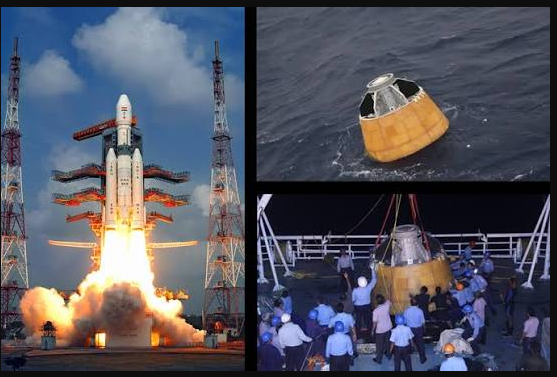
The Gaganyaan mission is running behind schedule. The HLVM3 G1/ OM1 mission, which is the first uncrewed mission of Gaganyaan, was scheduled to be launched in the first quarter of 2026. However, it has been delayed.