


Virendra Pandit
New Delhi: The rollout of India’s four new labour codes, as part of ongoing reforms, could sharply lift employment, accelerate formalisation, and push up household consumption, according to an SBI Research report released on Tuesday
Proper implementation of the four labour codes could generate employment for 77 lakh people and boost domestic consumption by Rs. 75,000 crores, SBI’s Ecowrap report said.
With a saving rate of approximately 30 percent, this would potentially lead to a consumption boost of Rs. 66 per person per day, after the implementation
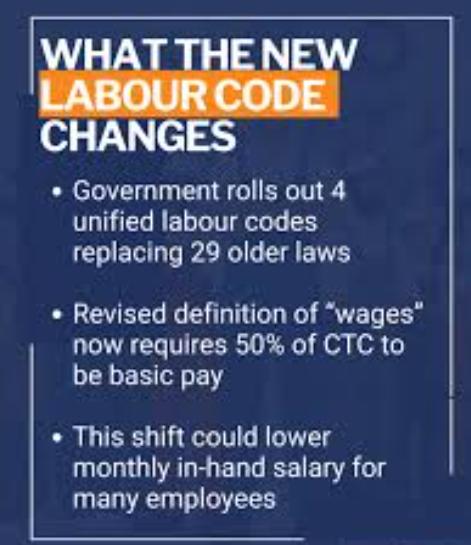
On November 21, the Centre notified the implementation of four Unified Labour Codes, replacing 29 older laws: the Code on Wages, 2019, the Industrial Relations Code, 2020, the Code on Social Security, 2020, and the Occupational Safety, Health and Working Conditions Code, 2020. |
In view of the current unemployment rate of 3.2 percent, the report presents three likely scenarios — conservative, mid-range, and optimistic. Under the first scenario, unemployment could fall by 0.28 percent to reach 2.9 percent. In the mid-range scenario, a one percent employment gain may reduce overall unemployment by 0.57 percent to 2.6 percent. Under the optimistic scenario, unemployment could fall to 1.9 percent.
“This would imply additional employment generation of around 77 lakh people based on current labour force participation rate at 60.1 percent and average working age population at 70.7 percent across rural and urban workforce,” the report said.
These new Labour Codes, after a short transition phase, could reduce unemployment by 0.3 percent to 1.3 percent over the medium term, depending on reform implementation, firm-level adjustment costs, and complementary state-level rules.
On the impact on wages and consumption, the SBI report noted the current minimum wage rate in India is Rs. 546 per capita per day. This includes average wage across all categories and areas of the workers. The average wage as reported by the International Labour Organization (ILO) is Rs. 451 per capita per day. With the implementation of the new Code on Wages, all workers will be entitled to the minimum wage rate. This would imply that disposable income of workers on an average may rise by Rs. 95 per day, the report said.
With a saving rate of approximately 30 percent, this would lead to a consumption boost Rs. 66 per person per day post implementation. “This could lead to an approximate consumption boost of Rs. 75,000 crores.”
The report also highlighted that implementation could lead to more formalisation. It expects 15.1 percent increase in the formalisation rate to reduce the compliance burden. Hence, “we believe that post labour laws implementation, based on PLFA data, formalization is likely to increase to 75.5 percent,” the report said.
Approximately 44 crore people are working in India’s unorganized sector, including 31 crores registered on e-shram portal. By assuming that a fifth of them will shift from informal pay-roll to formal payroll, it will benefit around 10 crore beneficiaries. With this “we expect, India’s social security coverage may reach 80-85 percent in the next 2/3 years. Though there could be additional cost for employers, but compliance burden will be reduced substantially.”
The Industrial Relations Code, 2020, has reduced number of rules from 105 to 51, forms from 37 to 18 and registers from three to zero, thereby reducing the overall compliance burden to spur employment, the report said.