


Virendra Pandit
New Delhi: Rapper-turned-politician Balendra Shah, tipped to become Nepal’s next Prime Minister after his reformist Rastriya Swatantra Party (RSP)’s projected landslide victory in general election, is likely to face challenges from his Generation Z-led supporters as well as veteran politicians of the vanquished rival parties.
According to Nepal’s Election Commission data, the RSP has so far secured 34 seats and is leading in another 86 constituencies. It also swept all 10 constituencies in Kathmandu district in the parliamentary elections held on Thursday (February 5), the first since the September 2025 uprising led by Gen. Z.
In contrast, the Nepali Congress won only six seats and is leading in another 10, while the Nepali Communist Party secured just two seats and is leading in eight, the media reported on Saturday.
The Communist Party of Nepal (Unified Marxist-Leninist), led by ousted prime minister K P Sharma Oli, has managed to win only one seat so far, and is leading in eight others.
RSP Chairman Ravi Lamichhane registered a decisive victory in the Chitwan-2 constituency, securing 54,402 votes against Nepali Congress candidate Mina Kumari Kharel, who polled 14,564 votes.
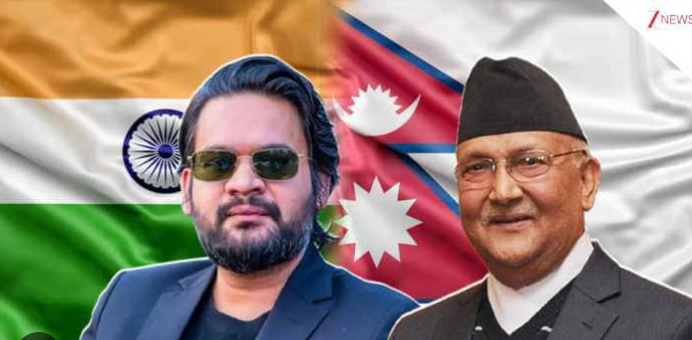
Popularly known as “Balen Shah,” Balendra, who recently stepped down as the mayor of Kathmandu, contested from Jhapa-5, where he secured 42,532 votes, defeating Oli in the latter’s stronghold. Oli received a meagre 11,427 votes.
The 35-year-old engineer-turned-rapper-turned-politician emerged as a prominent political figure during and after the last year’s Gen. Z-led uprising, which triggered widespread violence in the national capital, and shook Nepal’s political establishment. The demonstrations forced the collapse of Oli’s coalition government and led to the dissolution of the House of Representatives.
Gen. Z’s influence
The fresh election has been widely viewed as a referendum against Nepal’s traditional political leadership, which many young voters accused of failing to deliver governance reforms as well as jobs they promised.
For many young Nepalis, the verdict comes with a clear message for the new leadership as well: “Deliver.”
In Kathmandu, muted celebrations were seen despite the scale of the RSP’s victory becoming clear. The national capital largely continued with its routine, reflecting a cautious mood among voters who played a key role in the September 2025 uprising that eventually forced snap elections, the reports said.
Many youths said the poll outcome was a punishment for traditional political parties, but warned that the deeper issues that drove people onto the streets remain unresolved. These include corruption, unemployment, weak public services, nepotism, political impunity, and the lack of opportunities at home.
They said the success of the new leadership would be judged not by speeches or symbolic gestures but by visible improvements in everyday life of the people.
“What we are asking for is a minimum basic, an environment to live in our own country. Fix corruption, healthcare and education,” one protester was quoted as saying.
Accountability
Some activists warned the new leadership against treating the victory as unconditional public support. Others said the election results were less a loyalty to a party than as a test for the new political leadership.
Nepal has seen 14 governments in the past 18 years, underscoring the political instability that many voters hope the new leadership will address.
Results of the latest election is also being closely watched by India, which hopes the outcome will lead to a stable government in the Himalayan nation and strengthen bilateral cooperation.
India’s Ministry of External Affairs Spokesperson Randhir Jaiswal said New Delhi looks forward to working with the new government to further strengthen the “robust multifaceted ties” between the two countries.