Congress Criticises Modi Government for Failure to Condemn Israel-US Attack on Iran




Manas Dasgupta
NEW DELHI, Mar 21: Even as the Prime Minister Narendra Modi on Saturday while conveying the Id and Nowruz greetings to the Iranian President Masoud Pezeshkian condemned the attacks on the critical infrastructure in the region, the Congress strongly criticised the Centre’s “failure” to condemn the U.S.-Israel air strikes on Iran for the past three weeks, which have resulted in economic disruptions.
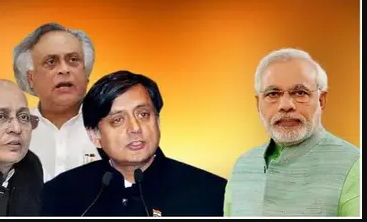
The Congress communications chief Jairam Ramesh in a long social media post on X on Saturday questioned “has the Modi Govt condemned or criticised or deplored the launch of the heavy aerial assault on Iran by the US and Israel that has now led to severe economic dislocations everywhere including India? The answer is NO,” Mr Ramesh said. He further claimed that New Delhi had remained silent on the targeted killings of senior Iranian leaders and attempts to bring about regime change in Iran.
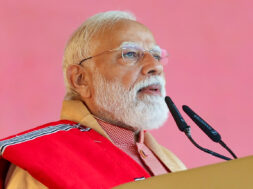
In his telephonic conversation with Mr Pezeshkian, Mr Modi had expressed hope that this festive season would bring peace, stability and prosperity to West Asia and condemned the attacks on critical infrastructure in the region, which threaten regional stability and disrupt global supply chains, and reiterated the importance of safeguarding freedom of navigation and ensuring that shipping lanes remain open and secure.
“Spoke with President Dr Masoud Pezeshkian and conveyed Eid and Nowruz greetings. We expressed hope that this festive season brings peace, stability and prosperity to West Asia,” the prime minister said in a post on X. “Condemned attacks on critical infrastructure in the region, which threaten regional stability and disrupt global supply chains,” he said. The prime minister also appreciated Iran’s continued support for the safety and security of Indian nationals in Iran.
Mr Ramesh’s condemnation of the Centre comes days after the Congress MP Shashi Tharoor in an opinion piece took a more nuanced stance on the government position. Mr Tharoor in his article had said for “a government to recognise geo-political realities and weigh consequences for India’s economy and strategic position before taking a public stand is not moral surrender. It is responsible statecraft,” Mr Tharoor wrote.
He had also pointed to external pressures behind the rupee’s fall, saying the decline was “because of international forces beyond our government’s control.” He added that the situation should put in perspective similar currency movements during the Congress-led UPA government, and said the BJP-led Centre should have the “grace” to withdraw its earlier claims blaming the previous government for rupee depreciation. The Lok Sabha member from Thiruvananthapuram had also called the Modi government to “take a lead in demanding an end to this conflict.”
Mr Ramesh in his post also questioned whether the government had undertaken any significant diplomatic initiatives to de-escalate the situation or to push for a ceasefire, including engagement with the leadership of the United States and Israel. “Has the PM used his much-claimed friendship with the US President and the Israeli PM to bring about a cease-fire? The answer is NO. These 4 NOs reflect the moral cowardice and political betrayal of India’s civilisational values,” Mr Ramesh said.
This was the second telephonic conversation between Prime Minister Modi and the Iranian President since the present conflict started on February 28. On March 12, President Pezeshkian briefed Prime Minister Modi on the current situation in Iran and shared his perspective on recent developments in the region.
The prime minister had expressed deep concern about the evolving security situation in the region and reiterated India’s consistent position that all issues must be resolved through dialogue and diplomacy, according to the Ministry of External Affairs. The U.S. and Israel attacked Iran on February 28, drawing retaliation from Iran which targeted its neighbours and Israel.
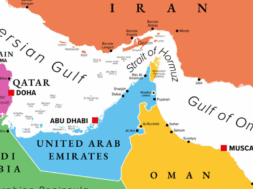
Iran also controls the Strait of Hormuz, a key shipping route through which 20 per cent of the world’s energy is transported. Since the conflict, very few ships have been allowed by Iran to cross it. PM Modi has also spoken to a number of world leaders since the conflict started. These include leaders from Saudi Arabia, UAE, Qatar, Bahrain, Kuwait, Jordan, France and Malaysia.
Meanwhile, the Congress leader and the Leader of the Opposition in the Lok Sabha Rahul Gandhi also on Saturday warned that India could be headed for a fresh wave of inflation, linking it to the weakening rupee and rising fuel costs amid the Israel US War against Iran. “The rupee weakening against the dollar and heading towards 100, along with a sharp rise in industrial fuel prices — these aren’t just numbers; they’re clear signals of the inflation to come,” he wrote on X.
Mr Gandhi argued that the currency slide and fuel price surge would have a cascading effect across the economy, saying that the government may call it “normal” but this was not the “reality.” He outlined how this would certainly have a “direct and deep impact on every family’s pocket”:
“Production and transport will become more expensive; MSMEs will be hit the hardest; Prices of everyday items will go up; and FII money will flow out even faster, putting more pressure on the stock market.” “And it’s just a matter of time—after the elections, prices of petrol, diesel, and LPG will be hiked too,” he added. The Congress leader was referring to the upcoming assembly elections in four states, West Bengal, Assam, Kerala and Tamil Nadu; and the UT of Puducherry.
Taking a direct swipe at the Centre, Gandhi said the government lacked a clear plan to tackle the unfolding economic challenges. “The Modi government has neither direction nor strategy – just empty rhetoric. The question isn’t what the government is saying – it’s what’s left on your plate,” he said.
The Congress leader’s concerns come against the backdrop of ongoing disruptions linked to the West Asia conflict, which have pushed up energy costs and raised fears of supply constraints in India. The ministry of petroleum and natural gas has already urged commercial LPG users to shift to piped natural gas where available, in a bid to ease pressure on cylinder supplies.
Despite government assurances of adequate stock, reports of panic buying and long queues at LPG depots have surfaced in several parts of the country. The situation has been particularly acute in Kerala, where the ongoing LPG crunch has forced several restaurants and hotels to shut operations temporarily, earlier this month.