


Virendra Pandit
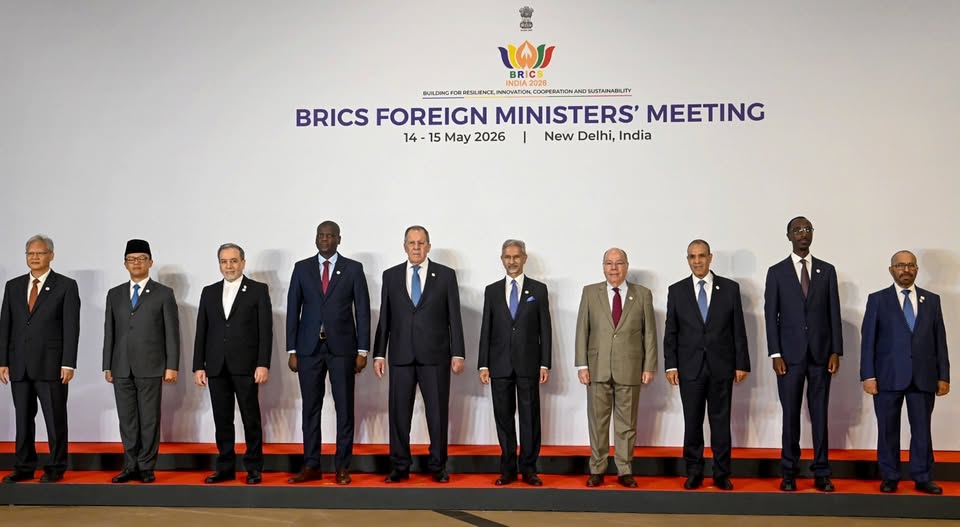
New Delhi: Iran on Thursday called on BRICS member states to condemn what it called violations of international law by the US and Israel, as India underlined the need to find “practical ways” to better navigate the fallout of geopolitical upheavals and trade disruptions while underlining the critical importance of dialogue and diplomacy in resolving global conflicts.
BRICS nations include Brazil, Russia, India, China, South Africa, Egypt, Ethiopia, Iran, the UAE and Indonesia. They represent about 49.5 per cent of the global population, around 40 per cent of the global GDP and around 26 per cent of the global trade.
“The West’s false sense of superiority and immunity must be shattered by all of us,” Iran’s Foreign Minister Abbas Araghchi said in a statement on his Telegram account. He also called on the BRICS nations to prevent the politicisation of international institutions.
The India-hosted two-day meet assumes greater significance as the bloc grapples with the geopolitical and economic fallout of the West Asian crisis, particularly the severe energy supply disruptions caused by the ongoing war.
“We meet at a time of considerable flux in international relations,” India’s External Affairs Minister S. Jaishankar said in his opening address at the conclave of BRICS Foreign Ministers. As the bloc’s chair, India is hosting the BRICS’ FM’s conclave, ahead of the grouping’s annual summit in September 2026.
“The ongoing conflicts, economic uncertainties and challenges in trade, technology and climate are shaping the global landscape,” he said.
Dr. Jaishankar said there has been a growing expectation, particularly from emerging markets and developing countries, that BRICS will play a constructive and stabilising role to navigate the current challenges.
“In this background, our discussions today are an opportunity to reflect on global and regional developments, and to consider practical ways to strengthen our cooperation,” he said.
Developmental issues remain central. Many countries continue to face challenges on energy, food, fertiliser and health security, as also access to finance, he said.
“BRICS can help them respond more effectively. Economic resilience is also a key. Reliable supply chains and diversified markets are its essential components. We must focus on both,” he added.
Dr. Jaishankar noted that peace and security remained central to the global order.
“Recent conflicts only underline the importance of dialogue and diplomacy. There is also a deeply shared interest in strengthening cooperation against terrorism,” he said.
Tariffs
In an indirect reference to sweeping US tariffs on Indian imports, Dr. Jaishankar called for addressing unilateral sanctions that he said violate international law.
He said the global system is under pressure from multiple crises, including armed conflicts, climate disruptions and the after-effects of the Covid-19 pandemic.
“We must also address the increasing resort to unilateral coercive measures and sanctions inconsistent with international law and the UN Charter. Such measures disproportionately affect developing countries. These unjustifiable measures cannot substitute dialogue, nor can pressure replace diplomacy,” Dr. Jaishankar said.
In 2025, US President Donald Trump had levied 25 per cent reciprocal tariffs on Indian imports and another 25 per cent over New Delhi’s continued purchase of Russian oil. He warned of further sanctions if India did not stop the Russian oil imports.
However, a US International Trade tariff ruling in February 2026 pushed the levies back toward standard WTO most-favoured-nation levels, with some products facing a 10 per cent duty, which is a temporary import surcharge on goods exported to the US.
These developments are not isolated events but interconnected challenges that are straining multilateral institutions and worsening vulnerabilities for developing nations.
Dr. Jaishankar’s remarks come as the BRICS meeting has been overshadowed by divisions within the expanded bloc over the ongoing US-Israeli military campaign against Iran.
India for Two-States
Diplomats said differing positions between Iran and the UAE—both BRICS members!– have complicated efforts to issue a joint closing statement.
The meeting in New Delhi brought together foreign ministers from most member states, including Abbas Araghchi and Khalifa Shaheen Al Marar. India holds the BRICS chairmanship for 2026.
Dr. Jaishankar said the impact of regional conflicts extends well beyond their immediate geography, creating stress on energy supplies, food and fertiliser security, supply chains and inflation. These pressures are particularly severe for emerging markets, where economic resilience remains fragile.
Referring to the situation in West Asia, he said continued instability has raised concerns over maritime security and energy infrastructure.
He stressed that uninterrupted movement through key waterways such as the Strait of Hormuz and the Red Sea remains critical for the global economy.
He also pointed to the humanitarian crisis in the Gaza Strip and reiterated India’s support for a two-state solution to the Palestinian issue. A sustained ceasefire, unhindered aid access and a credible peace process were essential.
Dr. Jaishankar said instability in Lebanon, Syria, Sudan, Yemen and Libya required continued diplomatic engagement, warning that peace cannot be selective or partial.
On terrorism, he said there could be no justification “in any form,” adding that cross-border terrorism violates the basic principles of international relations and that zero-tolerance must remain universal.
Dr. Jaishankar called for reforms to the UN system, saying current institutions are failing to keep pace with global realities.
He renewed India’s push for reform of the UN Security Council, including expansion in both permanent and non-permanent membership categories.
“The message from our times is clear: cooperation is essential, dialogue is necessary, and reform is overdue,” Dr. Jaishankar said, adding that India remains committed to working with all partners to build a more equitable and inclusive international order.