




Manas Dasgupta
NEW DELHI, July 17: Even though the 8 MPs the Nationalist Congress Party (Sharad Pawar) faction currently has in Parliament will come handy for the ruling BJP in increasing the number of supporters for the proposed constitution amendment to increase the number of seats in the Lok Sabha, the party high command is understood to have a firm stand that only a merger of the two factions to become an united NCP and support the NDA would be acceptable to it.
Setting at rest all speculations that the NCP (SP) may extend limited support to the NDA only on the constitution 131st amendment bill increasing the number of seats in the Lok Sabha from present 543 to 850, the BJP central leadership is understood to have conveyed to the party’s Maharashtra leadership that only a unified Nationalist Congress Party (NCP) is acceptable to the BJP as an NDA ally.
This has been reportedly conveyed by the top leadership of the BJP to its allies in Maharashtra, amid speculations that the NCP (SP) may reconsider its support to the Delimitation Bill under certain conditions, and that this softening of stand could be a precursor to a wider move of the faction later extending issue-based support to NDA.
The speculations became rife after a statement by the NCP(SP) working president Supriya Sule on Thursday that there would be nothing wrong in supporting the bill to increase the number of seats in the Lok Sabha if the government accepted the demand for a flat 50 per cent rise in seats in all states instead of the hike awarded on the basis of population increase in each state.
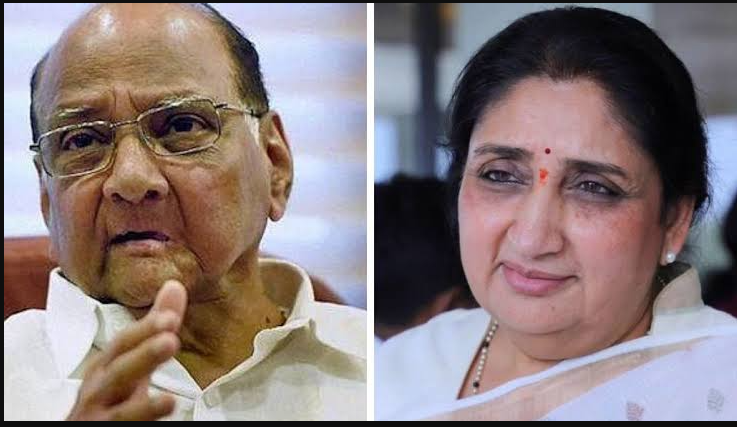
For the merger of the two NCP factions, the BJP leadership is learnt to have offered two Union Cabinet berths to balance the power equations on both sides — the Sunetra Pawar-led NCP and Sharad Pawar’s NCP (Sharadchandra Pawar) if both agree to merge into one party, highly placed sources said.
The sources said the BJP high command was very clear that it did not want any insecurity among its current allies — Eknath Shinde-led Shiv Sena and the NCP (led by former Deputy Chief Minister Ajit Pawar) — on their position within the NDA bloc. “There is no question of merger of NCP or any party within the BJP, and if any other faction of these parties wants to join the NDA, it has to be a unified entity that then joins the NDA,” the source said.
While the BJP has been reaching out for support to various parties to shore up numbers for the Delimitation Bill and the Women’s Reservation Bill, the NDA is expecting a rise in the support from the newly formed the Nationalist Citizens Party of India (NCPI) that broke away from the Trinamool Congress, and six MPs from the Shiv Sena (UBT) who have declared that they have joined the Eknath Shinde led Shiv Sena. The eight MPs of the NCP (SP) would also come in handy in such a scenario.
In the midst of all this, however, the outreach to the NCP (SP) has created a few jitters within the other faction of the NCP, that is now led by Maharashtra Deputy CM Sunetra Pawar. “It has been conveyed that there will be no separate joining of the Sharad Pawar faction of the NCP with the NDA, without the merger of the two factions,” the source added.
A major reason for this is the fact that the BJP’s “Madhav” support base, consisting of the OBC Mali, Dhangar and Vanjari communities runs counter to the Maratha support base of the NCP. “Thus, merger of NCP with the BJP itself will be unacceptable to our support base, but as an NDA ally it could work,” the source said.
Speculation that the NCP (SP) was on its way to join the NDA also gained ground after a photograph of a meeting between Deputy CM Shinde and NCP (SP) leader Sharad Pawar made the rounds last week, which, however, Ms Sule later claimed was a mere courtesy call and imputing political motive on the issue was a “storm over tea cup.”
In April 2026, the government’s Constitution (131st Amendment) Bill, 2026 – clubbed with the Delimitation Bill, 2026 and a Union Territories Laws (Amendment) Bill – failed in the Lok Sabha, as it required a two-thirds majority to be passed by Parliament and the government did not have the requisite number in either houses of Parliament.
The Bills had, apart from restarting the delimitation process based on the 2011 census, had sought to operationalise the 33% women’s reservation in legislatures by increasing the strength of the Lok Sabha to around 850 seats and reorganising constituencies, linking women’s quota to a fresh round of delimitation.
The journey of that Bill and the BJP’s hunt for enough numbers to ensure its passage has thrown the cat among pigeons in the volatile situation currently prevailing in Maharashtra politics. The current power struggle within the NCP between its chief Sunetra Pawar and the faction’s veteran leaders has also added fuel to the uncertain situation.
Sunetra’s elder son Parth, a Rajya Sabha member, wanted his mother to hold the finance portfolio in the Maharashtra government, his father Ajit Pawar held it but not passed on to his successor Sunetra Pawar and the portfolio was taken back by the chief minister Devendra Fadnavis, and the NCP national president post in the event of a merger. However, senior leaders such as NCP state president Sunil Tatkare, working president Praful Patel, and Chhagan Bhujbal want power-sharing to be more inclusive.
This will also not be acceptable to the NCP(SP) in the event of a merger. “There will be issues if they insist on having a Cabinet portfolio, the state finance ministry, and the national president post, as the other side (NCP-SP) is unlikely to agree,” sources said.
The NCP’s entry into the NDA will bring the Narendra Modi government closer to a two-thirds majority in Parliament, which is a requirement for the passage of Constitutional amendment bills. The government has been trying to cobble up the numbers for the passage of the Constitutional amendment Bills to roll out the women’s reservation law and expand the strength of Parliament and state legislatures through the Delimitation Bill. The government’s attempts had been defeated in a special session of the Lower House of Parliament in April.
Since then, 37 Lok Sabha and Rajya Sabha MPs from four Opposition parties have defected to the ruling side, making it the largest floor-crossing from the Opposition to the Treasury side in Parliament since the enactment of the anti-defection law in 1985.
With three vacancies, the current strength of the Lok Sabha is 540, including two MPs who are in jail, making the two-thirds mark 360. In April, when 528 MPs voted, the two-thirds mark was 352. The government had then secured the support of 298 MPs and the Opposition got 230 votes. The NDA had 293 MPs in the Lok Sabha at the time, and after the splits in the Trinamool Congress and Shiv Sena (UBT), its tally is now 319. If the NCP (SP) supports the Bill, the NDA tally will go up to 327, but still 33 short of the two-thirds mark, with the BJP hoping to bridge the gap with support from more parties and abstentions by some.