




Manas Dasgupta
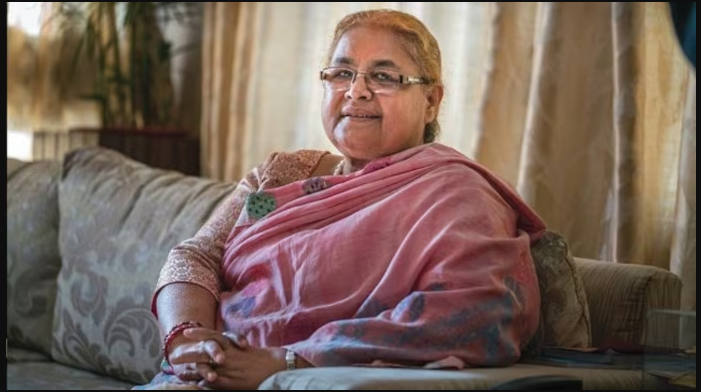
NEW DELHI, Sept 12: Ending the days of turmoil, the Nepal president’s office on Friday announced that the former chief justice Sushila Karki, who was the first woman chief justice of the Nepal Supreme Court, baceme the interim prime minister of the Himalayan nation.
She was administered the oath of office on Friday night capping days of speculations about the choice over heading the interim government. The decision was arrived at following a consensus between Gen-Z protesters, President Ram Chandra Paudel and army chief Ashok Raj Sigdel. The deal was reached after Mr Paudel agreed to dissolve the House, in line with the youth campaigners’ demand, sources at the President’s office said.
Sources said Ms Karki, who will create history by becoming the first woman prime minister of Nepal, will have a small cabinet in the caretaker government, and the first meeting will be held on Friday night itself. The cabinet is likely to recommend the dissolution of the federal parliament as well as all seven provincial parliaments.
After three days of protests, which were triggered by a ban on some social media platforms and anger against corruption, a consensus appeared to be building among the Gen-Z protesters on Wednesday around Ms Karki’s name to head a caretaker government until the next elections. On Thursday, however, reports suggested that there were differences among the protesters and the name of Kulman Ghising, an engineer known for solving Nepal’s power crisis, was being put forward as the interim prime minister.
Kathmandu Mayor Balendra Shah – better known as Balen – a 35-year-old rapper-politician, was also seen as a key contender. Popular among most protesters, Mr Shah was not keen on taking on the role of interim prime minister, however, and had also endorsed Ms Karki. Ms Karki was Nepal’s first woman chief justice and served between 2016 and 2017. She is popular among young Gen-Z protesters – who led a revolt against the KP Sharma Oli government, forcing him to resign on Tuesday, because of her tough stand on corruption during her tenure as a judge. The former chief justice studied at the Banaras Hindu University and, in an interview with an Indian channel, said India has helped Nepal a lot.
Sushila Karki’s tenure in Nepal’s Supreme Court, and later as Chief Justice, was marked by politically sensitive and socially transformative judgments. Back in 2017, just months before her retirement, the then Prime Minister Pushpa Kamal Dahal ‘Prachanda’ and a large number of MPs wanted her removed as SC chief justice.
Her confrontation with ex-radical Maoist leader Prachanda’s coalition government in 2017 began after she overruled its appointment of the national police chief. Her bench ruled that the highest-ranking officer instead should get the job.
Her ruling was seen as a pro-democracy move after a history of political parties determining police appointments on the basis of “undue favours rather than merit.”
At least 249 MPs of the then ruling Nepali Congress and Community Party of Nepal-Maoist (CPN-M) registered an impeachment motion against Karki. She was accused of “visibly taking sides in cases” viewing the judgement as the judiciary interfering in the executive’s powers.
There were protests by civil society groups, calling for an end to her suspension. It drew global attention as she was seen as a symbol of unbiased judicial corrections in an otherwise unstable polity of Nepal. Global body Human Rights Watch noted: “Regardless of the merits of the court’s ruling in the (police chief appointment) case, the ruling coalition’s move to impeach Chief Justice Karki is nothing short of an attempt to override a judicial decision… This violates the fundamental principle that the judiciary should be able to function without interference from political forces.”
The International Commission of Jurists (ICJ), a non-governmental organisation of leading judges and lawyers from around the world, also issued a statement in her support. She has been known to be a strong voice against corruption. She once convicted and imprisoned a sitting minister on corruption charges. One of her landmark rulings allowed Nepali women to pass citizenship on to their children, a right otherwise limited to men.
During the 2017 move against her, Lok Raj Baral, a political analyst, told Al Jazeera that the impeachment motion was only the latest case of a judiciary-versus-executive in Nepal.
“Karki took a tough stance against corruption, but she was a bit aggressive – that annoyed the politicians,” he told the news outlet.
Eventually, the then home minister Bimalendra Nidhi jumped into the fight to say he was never consulted before choosing the police chief. This meant Prachanda had to back down. Eventually a patch-up between Prachanda and Nidhi came about. The SC also ordered Parliament to put the impeachment motion on hold. She retired in June, 2017.
The Nepal SC at the time said the accusations against Karki — including the charge that her verdict in the case related to the appointment of the new police chief went against standard legal practice — were baseless. She has since been active in civil society movement, and was seen among the protesters in the latest demonstrations too.
In 2016, Sushila Karki ascended to the position of Chief Justice of the Nepal Supreme Court following a recommendation by the Constitutional Council, which was headed by then Prime Minister K.P. Sharma Oli. Now, nine years later, Ms Karki is poised to take over the reins of Nepal as its interim head, following Mr Oli’s resignation, as the country gathers itself following days of bloody protests.