Ahmedabad Plane Crash: India Working Closely with UK to Identify Body of British Victims





Manas Dasgupta
NEW DELHI, July 23: The Indian government is working closely with U.K. authorities to “address concerns” raised by an aviation lawyer about families of the victims of the June 12 London-bound Air India plane crash in Ahmedabad receiving wrongly identified last remains, including in one case where remains of more than one person were placed in the same casket.
The families of two Air India crash victims in the UK have alleged that the bodies repatriated to them were misidentified. DNA testing conducted on the repatriated remains has allegedly revealed discrepancies in at least two caskets, as the DNA does not match that of the victims’ families.
According to media reports, relatives of one victim had to abandon funeral plans after being informed that their coffin contained the body of an unknown passenger. In another case, the “commingled” remains of more than one person killed in the crash were mistakenly placed in the same casket and had to be separated before the burial could go ahead.
Media report quoted James Healy-Pratt, an aviation lawyer representing many of the British families say saying, “some have got the wrong remains and they are clearly distraught over this. It has been going on for a couple of weeks [and] I think these families deserve an explanation.” The mix up emerged when the Inner West London coroner Dr Fiona Wilcox sought to verify the repatriated Britons’ identities by matching their DNA with samples provided by the families, the report said.
Reacting to the news, the Indian government said it was “working closely with the UK side” from the moment these concerns and issues were brought to its attention. The government underlined that in the wake of the crash, the authorities had carried out “identification of victims as per established protocols and technical requirement.”
“In the wake of the tragic crash, the concerned authorities had carried out identification of victims as per established protocols and technical requirements. All mortal remains were handled with utmost professionalism and with due regard for the dignity of the deceased. We are continuing to work with the U.K. authorities on addressing any concerns related to the issue,” Randhir Jaiswal, Spokesperson of Ministry of External Affairs posted on X.
Sources say in accidents of such nature, it is likely that body tissues of different people get fused which may lead to different results when making DNA analysis. According to James Healy, the lawyer representing the British families, 12 to 13 sets of human remains were repatriated to the United Kingdom after the June 12 crash of Air India flight AI171 in Ahmedabad. Of those, two families were informed, following DNA analysis, that the remains they received were not those of their relatives.
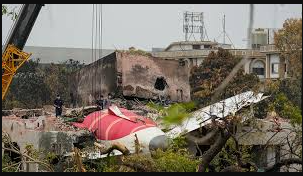
The Boeing 787-8 Dreamliner, operating as London-bound flight AI171, had taken off from Ahmedabad’s Sardar Vallabhbhai Patel International Airport at approximately 1:30 pm. The aircraft crashed moments later into the residential quarters of BJ Medical College in the city’s Meghaninagar area, triggering a fire that spread rapidly. Among the 242 passengers and crew members on board, only one survived.
According to sources, the DNA sampling was done by the government civil hospital in Ahmedabad and not Air India. The airline was not involved in the identification process or in handing over the bodies. The caskets carrying the remains of the bodies were sent to the UK on Air India Cargo facilitated by Kenyon, an international emergency service.
Air India, which is owned by the Tata Group, has acknowledged that it was investigating the matter, but has not issued an official confirmation regarding the alleged body mix-up. Earlier this month, families of the victims accused Air India of coercive tactics in handling compensation. In a statement, Stewarts, the UK’s largest litigation-only law firm, alleged that families were being compelled to complete complex legal questions under threat of being denied compensation. The firm claimed these documents were issued without appropriate explanation or legal guidance.
“Our clients were told by Air India that they have to complete a questionnaire to receive an advance payment, forcing them to fill out this questionnaire in intense heat with no guidance on the terms and questions within it. We have now heard that Air India is following up with families and pressuring them to complete the questionnaire under threats of receiving no compensation,” Stewarts claimed in a statement.
The forms, according to Stewarts, contain legally significant terminology that could be used by the airline in ways not fully understood by grieving families. “The information being asked could be used against families by Air India in the future, even though few families will understand how the questions should be interpreted,” the firm added.
Air India, in response, categorically denied the allegations, calling them “unsubstantiated and inaccurate.” In a statement, the airline said, “Air India has been making considerable efforts to process payment of interim compensation (also referred to as advance compensation) as soon as possible, in order to meet the immediate financial needs of affected family members, with the first payments having been made within days of the accident.”
In the days following the accident, the Tata Group announced a compensation of Rs 1 crore (approximately 85,000 pounds) for the families of the victims. Separately, Air India pledged an interim payment of Rs 25 lakh (approximately 21,500 pounds) to cover immediate financial needs.