Zelensky Supports US Imposing High Tariffs on India


Manas Dasgupta
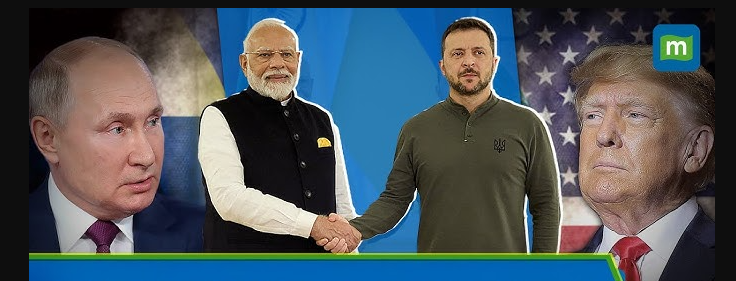
NEW DELHI, Sept 8: Even as a federal appeals court in the US last month ruled that Donald Trump overstepped presidential powers by imposing hefty duties, the Ukrainian President Volodymyr Zelensky supported the imposition of tariffs on countries like India maintaining economic ties with Russia despite New Delhi stepped up its diplomatic efforts to help broker an end to the Ukraine war.
“I think the idea to put tariffs on the country…continuing to make deals with Russia is the right idea,” said Mr Zelensky in a media interview on Monday.
Mr Zelensky was asked about his views on the Prime Minister Narendra Modi’s visit to China for a summit of the Shanghai Cooperation Organisation (SCO), where he was pictured alongside the leaders of China and Russia. His statement came as the Trump administration prepares to expand sanctions against Russia after his summit with President Vladimir Putin in Alaska last month failed to achieve a diplomatic breakthrough.
In a series of posts on X, Mr Zelensky also said it was important that there is a broad response from Ukraine’s partners to this strike. “Clearly, Russia is trying to inflict pain on Ukraine with even more brazen attacks. This is a clear sign that Russian President Vladimir Putin is testing the world,” he said.
Russian missiles and drones rained down across Ukraine early on Sunday killing four people and setting government offices in the capital Kyiv ablaze. Russia fired at least 810 drones and 13 missiles at Ukraine between late Saturday and early Sunday in a new record, according to the Ukrainian Air Force.
Mr Zelensky has said he was counting on a “strong” U.S. response. “That is why statements by state leaders and institutions must be backed by strong actions— sanctions against Russia and individuals connected with Russia, tough tariffs and other restrictions on trade with Russia. Their losses must be felt. That is what is truly convincing,” the Ukrainian President said in a post.
He further said Mr Putin did not want negotiations, he is clearly hiding from them, so Russia’s fuel shortages and other economic troubles are the logical response to its refusal to agree to a ceasefire or a meeting at the leaders’ level. Mr Trump has imposed tariffs against many countries across the world, including a whopping 50% against India, 50% for goods from Brazil, 39% from Switzerland, and 35% from Canada.
On Sunday, Trump said he was ready to expand sanctions against Russia. National Economic Council director Kevin Hassett also hinted at new sanctions that will be levelled against Moscow, citing India as a particular example. “At the National Economic Council, we are responsible for making sure that sanctions get enforced and that people who are helping Russia with their war against Ukraine…for example, what India has been doing by buying Russian oil…that we’re ready to respond to them economically,” said Hassett after the latest Russian military strikes on Ukraine.
“I’m sure there’s going to be a lot of talk today and tomorrow about the level of sanctions and the timing of sanctions.”
In recent weeks, India had stepped up its advocacy to end the Ukraine war. Modi spoke to Zelensky twice last month over it. Modi said he was glad to speak with Zelensky and hear his perspectives on recent developments. “I conveyed India’s consistent position on the need for an early and peaceful resolution of the conflict. India remains committed to making every possible contribution in this regard, as well as to further strengthening bilateral ties with Ukraine,” Modi had said on X.
Last week, Modi also spoke with the European Commission’s president, Ursula von der Leyen, European Council chief Antonio Costa, and French president Emmanuel Macron about the situation in Ukraine. External affairs minister S Jaishankar spoke with his Ukrainian counterpart, Andrii Sybiha, and said India supports an early end to this conflict and the establishment of an enduring peace.
On the federal appeals court’s order, the US Treasury Secretary Scott Bessent has said the US would issue “rebates” if the country’s Supreme Court decides to strike down “reciprocal tariffs” imposed by Mr Trump on almost all of Washington’s trading partners. The federal appeals court had paused its ruling from taking effect until October 14, giving Trump time to appeal to the Supreme Court.
Mr Bessent said, “We would have to give a refund on about half the tariffs, which would be terrible for the Treasury…If the court says it, we’d have to do it.” Without citing details, the Treasury Secretary, however, said there were “numerous other avenues” that can be taken on tariffs, though they would “diminish President Trump’s negotiating position.”
Earlier, during an interview with CBS News, National Economic Council Director Kevin Hassett stated that there were “other legal authorities” available to implement tariffs if the Supreme Court ruled against the Trump administration. According to him, “Section 232” investigations, which were used to implement steel and aluminium tariffs, were among other options.
Last week, Trump asked the Supreme Court to swiftly overturn a lower court decision that found many of his sweeping tariffs illegal. The petition comes after the US Court of Appeals for the Federal Circuit on August 29 ruled in a 7-4 vote that Trump overstepped his authority when he implemented the tariffs on nearly all trading partners through an emergency economic powers act, saying his action did not fall within the president’s mandate and that imposing tariffs was “a core Congressional power.”
Earlier in May, the New York-based Court of International Trade had declared the tariffs were unlawful. Filings by the Trump administration say that “delaying a ruling until June 2026 could result in a scenario in which 750 billion to one trillion dollars in tariffs have already been collected, and unwinding them could cause significant disruption.”
“The stakes in this case could not be higher,” Solicitor General John Sauer said in Wednesday night’s filing. US businesses have paid over 210 billion dollars as of August 24 to cover the tariffs deemed illegal by US courts. If the Supreme Court upholds the decision, the US Treasury could have to “give back” tariff revenue collected, per media reports.
Trump used the International Emergency Economic Powers Act to impose steep levies on trading partners, declaring a national emergency in April and arguing that a trade imbalance had harmed domestic manufacturing and posed a threat to national security.