West Asia War: Iran Confirms Assassinations of Larijani, Soleimani, but No Word on Khatib





Manas Dasgupta
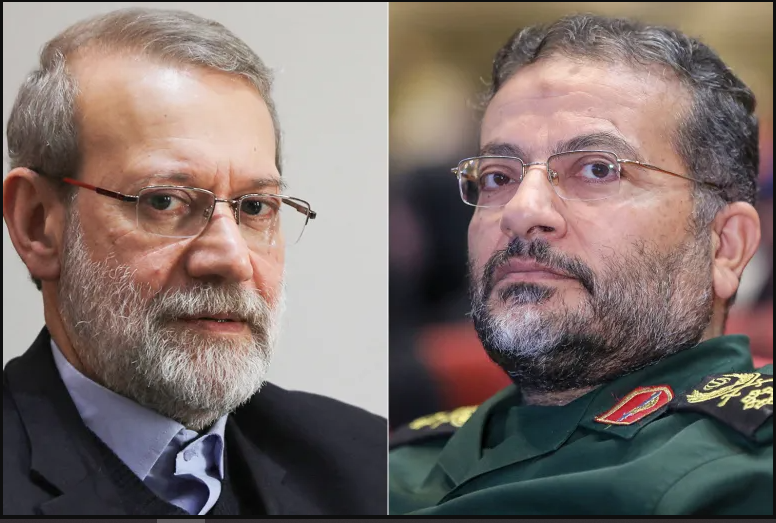
NEW DELHI, Mar 18: Iran has confirmed the killing in the on-going West Asia war of its security chief Ali Larijani and the head of the Basij forces, Major General Gholamreza Soleimani,
However, there was no confirmation from Iran of Israel’s claims of having eliminated Iranian Intelligence Minister Esmail Khatib. Israel’s Defence Minister Israel Katz said on Wednesday that the Israeli military killed Mr Khatib and said “significant surprises are expected throughout this day on all the fronts,” without elaborating.
“We will continue to thwart and hunt them all down,” he said. Katz said the Israeli Prime Minister Benjamin Netanyahu has given the military a free hand to kill any other senior Iranian official being targeted without taking additional approvals.
Khatib’s killing. If true, follows Israel’s killing of top Iranian security official Ali Larijani and the head of the paramilitary Revolutionary Guard’s all-volunteer Basij force. Iranian media reported about funeral ceremony held in Tehran on Wednesday for Ali Larijani and Major General Soleimani, as well as for the slain sailors of the Iranian naval vessel IRIS Dena. “The ceremony is taking place in Tehran as the country mourns the loss of top officials and sailors,” media reports said.
Iranian Foreign Minister Abbas Araghchi has said the assassination of Larijani will not destabilise Iran’s political system, even as the Iran Guards vowed “definite revenge.”
Earlier in the day, Iran’s judiciary reported an “attack” hit southern Iran, killing and wounding civilians and judicial staff. The judiciary’s Mizan news agency reported the attack at a judiciary site in Larestan County in Iran’s Fars province.
The US Intelligence chief Tulsi Gabbard, however, has said though Iran’s government has suffered heavy blows in the U.S.-Israeli war, Iran had remained “intact” and would rebuild its military if it survived. “The U.S. intelligence community assesses the regime in Iran to be intact but largely degraded due to attacks on its leadership and military capabilities,” Gabbard, director of national intelligence, told a Senate hearing on Wednesday.
Intelligence minister Khatib was a Shiite cleric who worked in a variety of positions in Iran’s judiciary and the Intelligence Ministry. He served in the Revolutionary Guard in the Iran-Iraq War in the 1980s and was wounded in combat. The US Treasury, which sanctioned Khatib in 2022 over the Intelligence Ministry “engaging in cyber-enabled activities against the United States and its allies”, put his year of birth as either 1960 or 1961. It said Khatib had been born in Ghayenat in Iran’s South Khorasan Province.
Khatib “directs several networks of cyber threat actors involved in cyber espionage and ransom ware attacks in support of Iran’s political goals,” the Treasury said at the time. “In addition to conducting malicious cyber activity that affected Albanian government websites, (Intelligence Ministry) cyber actors were also responsible for the leaking of documents purported to be from the Albanian government and personal information associated with Albanian residents.”
Larijani is the most prominent figure of the Islamic republic killed since Israel and the United States launched their attacks on Iran on February 28 with a wave of strikes that killed supreme leader Ayatollah Ali Khamenei and ignited a war across West Asia.
Iran’s security chief Ali Larijani’s killing deals a major blow to Tehran’s power structure. Widely known as a “backroom powerbroker” and the architect of Iran’s security policy, his assassination marks the fall of a most senior leader after Khamenei’s death on February 28. A right-hand man to senior Khamenei, whose son Mojtaba has succeeded him as the supreme leader, local media described him as one of Iran’s “prominent and prudent” officials.
Larijani oversaw Iran’s internal security and defence strategy, according to analysts. Iran has confirmed his killing and called him a martyr, honouring him for his role in protecting the Iranian regime.
After the assassination of the powerful Ayatollah Ali Khamenei, security chief Larijani was the “number one target” for the Israeli forces. But pursuing him wasn’t easy since Khamenei’s death had already sent the senior Iranian figures into complex security folds. Larijani was no exception. He knew how to avoid detection and activated precautionary plans to delay any Israeli efforts to identify his locations.
The security chief kept changing his location, constantly moving to new secret hideouts over the last two weeks. That would mean, by the time Israeli intelligence located Larijani’s hideout, he would have already moved to another. Larijani was ultimately located when he was visiting his daughter on Tuesday. He was eliminated in a strike on his daughter’s house in Pardis in Tehran’s suburbs, reported the Iranian semi-official Fars news agency. His son, a deputy, and several bodyguards were also killed in the attack.
Israeli intelligence services reportedly received inputs about Larijani’s whereabouts from Tehran’s residents. The assassination was made possible due to the “valuable intelligence” from the residents, Israeli official said. The idea of scooping information from the people emerged out of Larijani’s recent public appearances despite threats of strikes. The official called out what he said was an “arrogant behaviour” of the late Iranian leader, referring to him attending the Quds Day rallies. Such appearances in rallies and the media interactions exposed him to public view and led to his identification, he said.
A senior Israeli military intelligence official said Israel killed the head of Iran’s Basij force while he was hiding in a tent hidden in a wooded area under some trees. The official said Soleimani was killed with his top staff in the strike. The official said such strikes, which have killed many members of Iran’s leadership, were meant to send a message that “they have no safe place.”
Iran has vowed to avenge Larijani’s assassination. Its army chief Amir Hatami said Tehran’s response to the high-profile killing would be both “decisive and regrettable.”