


Manas Dasgupta
NEW DELHI, Dec 18: Amidst protests from Opposition members who tore papers in the well of the House, the Lok Sabha on Thursday passed the Viksit Bharat Guarantee for Rozgar and Ajeevika Mission (Gramin) Bill, 2025” (VB-G RAM G), which seeks to repeal MGNREGA, by a voice vote. The House was adjourned for the day after the Bill’s passage.
The government has maintained that the VB – G RAM G bill would not only accelerate rural development, but also provide transparency and accountability mechanisms with enhanced security features and administrative provisions.
However, the opposition has claimed that the new measure would not only attempt to remove Mahatma Gandhi’s name, but a measure to dilute the effectiveness of the employment scheme by putting more burden on the state governments, making the scheme ineffective.
The Centre has asserted that VB-G RAM G Bill will enhance the statutory wage employment guarantee to 125 days in every financial year for unskilled worker, against MGNREGA’s 100 days.
Along with bringing in transparency and accountability, the new bill would also empower the gram panchayats and sabhas to make plans on what work needed to be undertaken.
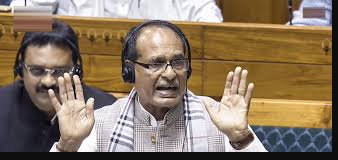
Agriculture minister Shivraj Singh Chouhan, who piloted the bill, said the proposed law would lead to “comprehensive development of villages” and “meant to provide abundant employment to every poor person, uphold their dignity, and offer additional protection to the differently-abled, elderly, women, Scheduled Castes, and Scheduled Tribes.”
Chouhan said the bill would focus on water security by creating lakes, micro-irrigation channels, developing core rural infrastructure, livelihood related infrastructure and special works to mitigate extreme weather events. The government has said the proposed law align with the vision of Viksit Bharat and empower the rural households through increased employment opportunities.
However, the Opposition has raised concerns over not just renaming it, but also state’s expenditure, centralised decision-making and dilution of the law. The Centre has been maintaining that MGNREGA was riddled with corruption during the UPA rule and the expected funds, meant for procuring material, was not used for designated jobs.
However, the new bill is not just about corruption of material procurement, there are several changes in guaranteed days, funding pattern, wage payment, along with new provisions like 60-day pause.
While MGNREGA was demand driven depending on availability of worker, the new initiative is supply-driven framework, where the allocations have been capped. Any excess expenditure will have to be borne by the state concerned. The Centre has earmarked ₹ ₹95,000 crore for the initiative.
Under MGNREGA, the Centre used to pay 100% of wages and 75% of the material costs. But, the new scheme operate as a Centrally Sponsored Scheme (CSS), where all the states will bear 40% of the costs, while the North-Eastern and Himalayan States/UT will bear 10% of the costs. There is also a fresh provision of 60-day mandatory ban during the agricultural seasons to facilitate the availability of farm labour during peak sowing and harvesting seasons.
While MGNREGA was based on water supply, drought proofing and land development, the new initiative is based on four priority areas:
Water security: irrigation support, groundwater recharge, etc
Rural infrastructure: roads, public buildings, school infrastructure, sanitation systems
Livelihood related infrastructure: agriculture, livestock, fisheries
Extreme weather events: Disaster preparedness works like shelters, embankments, flood management structures, etc.
There is also a provision of unemployment allowance, where eligible applicants, who are not provided work within designated time-frame, will be provided an unemployment allowances by state governments.
The introduction of the Bill on Tuesday had seen protests by the Opposition, with demands that it be withdrawn. On Wednesday, the Lok Sabha debated the Bill for eight hours, stretching up to 1.30 am, past midnight. Mr Chouhan replied to the debate on Thursday amid constant slogans from Opposition members, who were chanting MGNREGA.
Chouhan said in his reply that it was violence on the part of the Opposition to say what they wanted without listening to the government’s reply, adding that they were going against the teachings of Mahatma Gandhi in doing so. He added that he was “bowing before the feet of Mahatma Gandhi”, and asserted that Gandhi was the government’s inspiration and that the ruling party followed his teachings.
NREGA was first not named after Mahatma Gandhi. It was when the 2009 elections came that they remembered Bapu and added his name. But if someone implemented it properly, it was Prime Minister Narendra Modi,” Chouhan said. “They do drama. The Modi government actually works.” Chouhan said the expenditure on MGNREGA was about Rs 2,13, 220 crore under the UPA Government and about Rs 8,53,810 crore under the Modi government. He gave other statistics to assert that the Modi Government had done much better than the UPA government.
“There were many faults with MGNREGA. We have brought a new Bill to replace it,” Chouhan said. He said 60 per cent of the money in MGNREGA was for workers and it came from the Centre, while 40 per cent of the funding that should be borne by the states was for material. But the states made no expenses on materials. “Some states spent 19-20 per cent on material,” he said, adding that corruption had become rampant under MGNREGA. “Did they not pocket the money?” he asked, adding that it had become necessary to make it more transparent.
Chouhan said after much consultation, it was found necessary to have a rethink on MGNREGA. “So we decided to bring a new scheme in place of MGNREGA. We have made a provision for more employment and to use the large amounts to create fully developed villages. We are guaranteeing employment in this scheme. Its aim will be Viksit Bharat,” Chouhan asserted, saying that VB-G RAM G scheme aims at a developed India through developed villages. He alleged that the Congress, during its tenure, had reduced the expenditure on MGNREGA, and that they did not provide adequate employment.
Referring to Priyanka Gandhi’s objections to the Bill, Chouhan said the Congress has stolen the name of Gandhi for itself, but named most schemes, airports, universities, buildings, and hospitals after the Nehru family. Chouhan asserted that in 1948, Gandhi had said that the Congress should be dissolved because Independence had been achieved, but Jawaharlal Nehru did not budge. He also blamed the Congress for the Partition as well as the Emergency.
Meanwhile some scholars and experts in an open letter to the government requested the Centre to retain MGNREGA, which they said had earned global recognition.
Signed by about a dozen experts, it said, “We, the undersigned scholars, policymakers, lawyers, and civic actors (all friends of India), write to express profound concern regarding the imminent repeal of the Mahatma Gandhi National Rural Employment Guarantee Act (MGNREGA). We urge a recommitment to this landmark legislation, which stands as the world’s most significant policy operationalizing a demand-driven, legal right to employment.
“Originally passed with unanimous parliamentary support, MGNREGA transcends political lines. Its foundational principle — that the national government must guarantee an employment safety net — affirms economic dignity as a fundamental right. Empirical evidence underscores its impact.
MGNREGA routinely generates over 2 billion person-days of work annually for some 50 million households, with transformative equity: more than half of all workers are women, and about 40% are from Scheduled Castes or Tribes. The early years of the Act coincided with unprecedented rural wage growth, and studies confirmed the program’s positive effects on economic output and efficiency, dispelling myths of unproductivity.
“However, chronic underfunding and payment delays have long hampered implementation. The current shift to devolve the scheme to states and without commensurate fiscal support, now threatens its existence. States lack the central government’s financial capacity. The new funding pattern creates a catastrophic Catch-22: states bear legal liability for providing employment, while central financing is withdrawn. Previously contributing only 25% of material costs, states now face burdens of 40% to 100% of total costs, ensuring poorer states will curb project approvals, directly stifling work demand.
“This structural sabotage is compounded by discretionary “switch-off” powers, which allow the scheme to be suspended arbitrarily and render the guarantee meaningless. The unexplained defunding of West Bengal in the last three years exemplifies this political misuse. The new framework institutionalizes this risk, imposing unfunded mandates on states without consultation.
“MGNREGA’s demand-driven design not only provides wages but also builds vital rural assets such as wells, roads, ponds, stimulating local economies. By making projects financially untenable for states, these multiplier effects are extinguished.
“MGNREGA has captured the world’s attention with its demonstrated achievements and innovative design. To dismantle it now would be a historic error. It would abandon a proven instrument for poverty alleviation, social justice, and care for the environment. We call for its restoration through assured central funding, timely wages, and an unequivocal return to its foundational guarantee of the right to work,” the letter said.