


Virendra Pandit
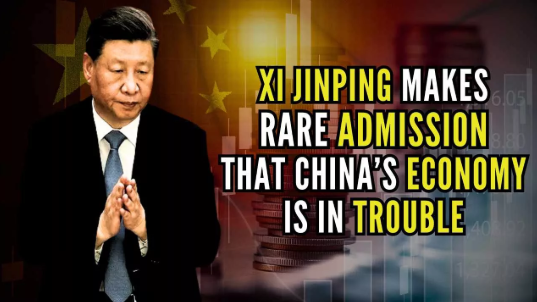
New Delhi: China on Thursday lowered its GDP target from 5 percent to 4.5 percent for 2026 in the face of US President Donald Trump’s trade tariff war, the worsening global crisis following the US-Israeli attacks on Iran, and headwinds in the domestic economy because of a property market slump and unemployment crisis, the media reported.
The target close to that of last year was announced by Chinese Premier Li Qiang in his work report presented to the annual National People’s Congress (NPC), the country’s parliament, which opened in Beijing on Thursday.
China has been setting a 5 percent target for the GDP for the last three years amid growing domestic economic challenges.
Its economy grew by 5 percent last year to USD 20.01 trillion, riding high on the robust exports, despite US tariffs, while domestic consumption, its bugbear, remained sluggish.
Thursday’s opening session of the NPC is being attended by President Xi Jinping and over 2,000 deputies.
Presenting his work report, an annual feature, Premier Li said the government targets an economic growth of 4.5 percent to 5 percent this year and will strive for better in practice.
Main targets for development this year also include: a surveyed urban unemployment rate of around 5.5 percent, creation of over 12 million new urban jobs and an increase in consumer price index of 2 percent.
Li also spoke of growth in personal income in step with economic growth, basic equilibrium in the balance of payments, stable grain output of 700 million tonnes and a drop of 3.8 percent in carbon dioxide emissions per unit of gross domestic product (GDP).
On the domestic demand, which has remained stagnant for years, making China dependent more on its exports for its GDP growth, Li said his country will actively boost consumption and implement an income growth plan for urban and rural residents.
China will advance special initiatives to bolster consumption, with the roll-out of a range of practical measures to boost the earnings of low-income groups, increase property income, and refine the remuneration and social security systems in 2026.
A total of 250 billion yuan (USD 36.17 billion) in ultra-long special treasury bonds will be earmarked for consumer goods trade-in programmes, and a special fiscal-financial coordination fund of 100 billion yuan will be created to facilitate domestic demand expansion, he said.
On Wednesday, China commenced its annual parliament season amid international turmoil over the ongoing US-Iran war, massive military purges carried out by President Xi Jinping and ambitious plans to develop new productive forces like AI to revitalise the slowing-down economy.
President Xi, 72, who is into his unprecedented third term in office since 2013, with little indication of any organised political challenge from within the ruling Communist Party and the powerful military, on Wednesday attended the opening session of the national advisory body of the Chinese People’s Political Consultative Conference (CPPCC), comprising over 2,500 civil society, party and military officials.
He also attended the NPC opening session on Thursday, flanked by the top leadership of the ruling Communist Party of China (CPC).
The two sessions marked the beginning of a fortnight-long China’s annual political season during which the leadership appears in public and takes part in internal debates.
Xi’s presence was regarded as significant as he appeared for the first time along with party officials of all ranks besides PLA members and sat through the proceedings after the recent massive purges of the Chinese military.