UK to Host Global Summit to Explore Ways to Reopen Strait of Hormuz, UAE, Saudi Arabia may Join War against Iran



Manas Dasgupta
NEW DELHI, Apr 1: In another snub to the United States President Donald Trump, the British Prime Minister Keir Starmer on Wednesday said his country would not be drawn into the Iran war but would host a global summit to explore ways to reopen the Strait of Hormuz, a crucial shipping route blocked by Tehran, even as the United Arab Emirates (UAE) is reportedly preparing to join forces with the US and other allies to open the fuel shipping channel amidst fear of further escalating the West Asia war.
Mr Starmer while asserting that he would act in his country’s interest whatever may be the “noise” apparently referring to Mr Trump’s criticism of NATO allies, said the UK would host an international diplomatic conference this week on ways to reopen the Strait of Hormuz. He further stated that 35 countries have signed a statement committing to work together on restoring maritime security to the key oil transport route.
The meeting would “assess all viable diplomatic and political measures that we can take to restore freedom of navigation, guarantee the safety of trapped ships and seafarers and resume the movement of vital commodities. Following that meeting, we will also convene our military planners to look at how we can marshal our capabilities and make the strait accessible and safe after the fighting has stopped,” he added. Britain, France, Germany, Italy, Japan and the Netherlands are among those to have signed it.
The UAE, which is on the frontline of Iranian attacks, if joined the military conflict, would become the first Persian Gulf country to become a combatant against Iran. According to media reports, the Arab nation is lobbying for a United Nations Security Council resolution that could authorise such action. The country’s diplomats have urged the United States and military powers in Europe and Asia to form a coalition to open the Strait by force, the report said. Bahrain, a close US ally that hosts the American Navy’s Fifth Fleet, is sponsoring the US resolution, with a vote expected on Thursday.
Saudi Arabia, which sees itself as the economic and political leader of the Arab world, has also threatened that it will enter the war if Tehran does not stop military aggression against the country. In the strongest remarks from the country so far, Saudi Foreign Minister Prince Faisal Bin Farhan warned Iran on March 19 that his country and its regional partners possess “very significant capacities and capabilities that they could bring to bear.”
Saudi Arabia has so far held back from military retaliation against Iran, fearing it would expose the kingdom to even greater aggression. But its patience appears to be wearing thin. Prince Farhan said the “little trust” rebuilt with Iran after diplomatic ties between the two nations were restored in 2023 has been “completely shattered,” adding that continued aggression would leave “almost nothing” to salvage in the relationship.
Rejecting the US request, Mr Starmer said, “Whatever the pressure on me and others, whatever the noise, I’m going to act in the British national interest in the decisions that I make.” He added that Foreign Secretary Yvette Cooper would lead the global conference while military planners were working on security plans for the period after the Iran war. Starmer said “a united front of military strength and diplomatic activity” was needed to restore stability.
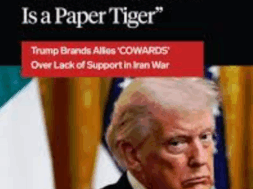
Starmer’s address came hours after US President Donald Trump indicated he was considering pulling out of NATO over the bloc’s refusal to support Washington in the war. The remarks followed decisions by two NATO allies, Italy and Spain, to deny the use of their military bases for US jets involved in the conflict. Trump has also repeatedly singled out the UK and Starmer in his criticism.
However, Starmer made it clear that he was not choosing Europe over the US, while stressing that the UK remained “fully committed to NATO.” “It’s in our interest to have a strong relationship with the US and with Europe. But when it comes to defence and security, energy and the economy, we need a stronger relationship with Europe,” he said, underlining the UK’s current priorities.
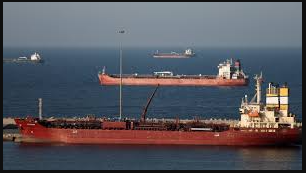
The British PM said the impact of the West Asia war would “define us for a generation” and could be similar to hike in energy prices in the 1970s. Iran has threatened to hit ships that try to cross the Strait, choking one-fifth of the world’s oil and gas supplies and triggering energy security concerns in Asian markets such as India and China. The blockade of the Strait is driving inflation across the globe, and pressure is building on the US, which targeted Iran along with Israel on February 28.
The Gulf countries particularly rely on the Strait of Hormuz for both exports and imports, including food. The majority of Gulf oil — about 20 per cent of the global supply — also flows through it. But in retaliation against the US-Israeli aggression, Iran has implemented a chokehold over the crucial waterway, disrupting the world’s supply of oil and natural gas, roiling global markets.
The UAE officials said it was actively reviewing how it could play a “military role” in securing the strait, including efforts to help clear it of Iranian mines and other support services. The Gulf nation is also reportedly lobbying for the United States to occupy islands in the strait in the strategic waterway, including Abu Musa, which is currently administered by Iran but claimed by the UAE.
The UAE’s Foreign Ministry also said there was “broad global consensus that freedom of navigation in the Strait of Hormuz must be preserved.” The UAE’s newly assertive approach is a fundamental shift in its strategic outlook, as the country’s commercial centre, Dubai, has long financed the Iranian regime. The officials said other Gulf States, including Saudi Arabia, are also now turning against Iran and want the war to continue until the Islamic regime is disabled or toppled, though they have stopped short of committing their military.
The UAE has also barred Iranians from entering or transiting the country as the war rages, three major airlines said Wednesday. The long-haul carriers Emirates and Etihad, as well as the lower-cost airline FlyDubai, made the announcements on their websites.
Entry rules can sometimes be opaque in the autocratic UAE, a federation of seven sheikhdoms. But the airlines’ websites all displayed the order. It said holders of golden visas, 10-year residency permits in the country, could still enter. Authorities offered no official comment. But the change comes as Dubai already has shut down the Iranian Hospital and the Iranian Club in the city, two institutions in the city-state dating back to the time of the Shah.
The report of the UAE joining the war followed Israeli Prime Minister Benjamin Netanyahu’s claim that his country was building “new alliances with important countries in the region” to counter Tehran. According to Israeli media reports, Netanyahu told ministers at a cabinet meeting that some “Arab countries” were “talking about fighting together on our side.”
“In the past, I had secret conversations with Arab leaders,” Netanyahu reportedly said. “I told them, ‘As soon as Iran can, it will conquer you and overthrow your kingdoms.’ Back then, they didn’t really internalise things. Today they understand.”