Two Oil Tankers Arrive Crossing Strait of Hormuz, Brightens Hope of Easing Crude, LPG Supplies







Manas Dasgupta
NEW DELHI, Mar 12: Amid escalating tensions in the West Asia and massive disruption in maritime traffic through the Strait of Hormuz, two crude oil tankers—cumulatively carrying roughly 3 million barrels of West Asian oil—have arrived in India after transiting the fraught waters of the Strait, according to official sources.
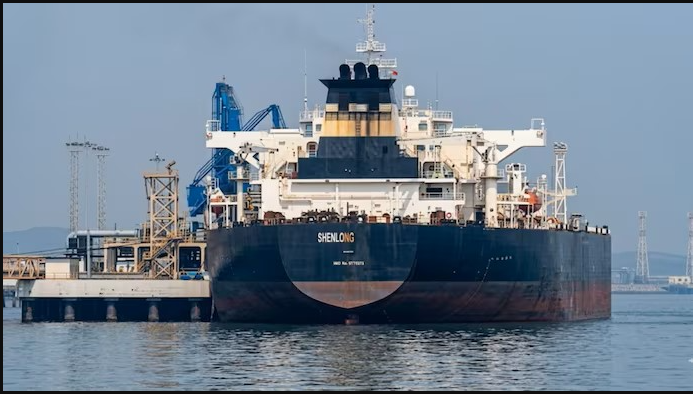
One of the tankers–Liberia-flagged Shenlong carrying around 1 million barrels of Saudi Arabian crude oil—arrived at the Mumbai port on Wednesday, shipping data showed. Another tanker—an India-flagged very large crude carrier (VLCC) with around 2 million barrels of crude from Iraq—also arrived at Mumbai, from where it is headed to Paradip in Odisha. Both tankers are estimated to have crossed the Strait of Hormuz—the narrow waterway between Iran and Oman that connects the Persian Gulf with the Gulf of Oman and the Arabian Sea—sometime in the past five-six days.
The Liberian-flagged tanker was the first vessel to safely transit the Gulf waterway and arrive in India amid the US-Israeli war against Iran. The Shenlong Suezmax oil tanker, captained by an Indian, had passed through the conflict-hit Strait of Hormuz just two days ago. Unrelenting attacks on shipping traffic and energy infrastructure have pushed oil above $100 a barrel on Thursday as American and Israeli strikes pounded the Islamic Republic, with no sign of an end to the war in sight. The India-bound ship reportedly crossed the war-hit waters after briefly going “dark” to avoid detection.
The ship loaded with crude had departed from the Saudi port of Ras Tanura on March 1. Maritime tracking data showed the vessel’s signals were last visible on monitoring systems inside the Strait of Hormuz on March 8 before they disappeared. This suggests the crew had switched off the ship’s Automatic Identification System (AIS) transponders while navigating the dangerous stretch of water.
After successfully navigating the high-risk area, the vessel reappeared on maritime tracking systems the next day as it continued its journey toward India. Shipping companies often use this tactic, also known as “going dark,” to avoid the risk of being targeted or tracked by hostile forces. But the measure is only used in exceptional situations because international maritime rules require AIS to remain active for safety and tracking.
The vessel is reportedly owned by Shenlong Shipping Ltd and managed by Athens-based Dynacom Tanker Management Ltd. It had 29 crew members, including Indians, Pakistanis and Filipinos, and was commanded by Captain Sukshant Singh Sandhu. The successful passage of the tanker is expected to ease some of the growing concerns in India over possible disruptions in energy supplies as India relies heavily on the Strait of Hormuz for its crude supply.
The arrival of the two oil tankers mark the first known instances of non-Iranian crude oil tankers transiting the critical chokepoint of the Strait of Hormuz, where vessel movements have effectively come to a halt since the West Asia conflict started on February 28. Reports indicate that Iran was allowing only its own oil tankers—headed to China—to cross the Strait. According to sources in India’s oil and gas industry, the arrival of tankers has raised hopes that more of India’s energy supplies that are currently stuck in the Persian Gulf could find their way to the country in the coming days and weeks.
Sources indicated that India was talking to Iran to secure the safe passage of vessels headed to India, particularly oil and liquefied petroleum gas (LPG) tankers, a number of which are stuck on the west of the Strait of Hormuz. Ministry of External Affairs (MEA) Spokesperson Randhir Jaiswal said safety of shipping and India’s energy security have come up in Foreign Minister S Jaishankar’s discussions with his Iranian counterpart.
“The External Affairs Minister and the Foreign Minister of Iran have had three conversations in recent days. In the last one, they discussed issues pertaining to the safety of shipping and India’s energy security. Beyond that, it would be premature for me to say anything,” Jaiswal said on Thursday.
According to sources, the two oil tankers that have arrived in India may have sought permission from Iran to cross the Strait of Hormuz, although there was no confirmation on that. As per vessel tracking data, the tankers had switched off their Automatic Identification System (AIS) transponders—also called “going dark”—to avoid public detection before crossing the Strait, and switched them on only after clearing the waterway, which usually handles approximately one-fifth of global liquid petroleum consumption and global liquefied natural gas (LNG) trade.
Around 2.5–2.7 million bpd of India’s crude imports—accounting for around half of the country’s total oil imports—have transited the Strait of Hormuz in recent months; the longer-term average is around 40%. This oil is mainly from Iraq, Saudi Arabia, the UAE, and Kuwait; India doesn’t buy Iranian oil due to American sanctions on Tehran.
While India is in a relatively comfortable position with around eight weeks’ worth of stocks of crude oil, petrol, and diesel, the buffers are significantly lower when it comes to LPG, which crores of Indian households use as cooking fuel. In LPG, India’s reliance on West Asia is even more acute; the country depends on imports to meet around 60% of its LPG requirement, around 90% of which comes through the Strait of Hormuz. With over half of India’s LPG supplies effectively cut due to the conflict, supply disruptions in India are evident with all LPG now being diverted to households, thereby hitting commercial and industrial users of the fuel. If LPG cargoes stuck in the Persian Gulf manage to arrive in India in the coming days, it could provide significant relief on the supply front.