


Virendra Pandit
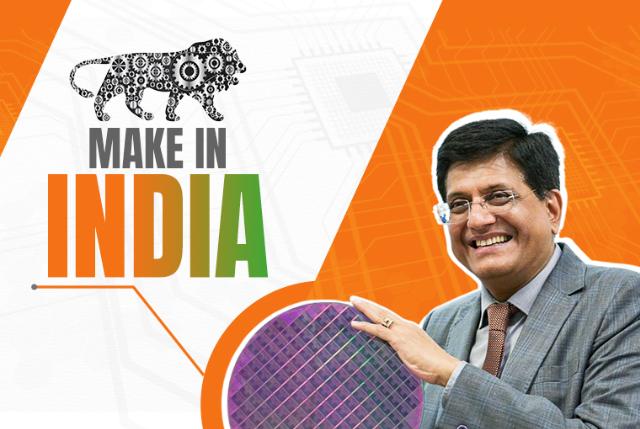
New Delhi: In spite of the world trade facing severe geopolitical and trade challenges, India’s exports will cross the USD 825 billion mark this financial year, Union Minister for Commerce and Industry Piyush Goyal has said.
“The world is going through severe geopolitical and trade challenges…but India has always emerged (as) a winner in challenging times,” he was quoted as saying in the media reports on Wednesday.
Despite global economic uncertainties because of the ongoing Russia-Ukraine conflict, the Israel-Hamas war and the Red Sea crisis, the country’s overall exports touched an all-time high of USD 825 billion in FY 25 against USD 778 billion in 2023-24, Goyal said.
Because of the challenges ahead, some multi-lateral bodies have estimated that global trade would contract this year, he said, adding “We, however, hope to do much better this year.”
The Federation of Indian Exports Organization (FIEO), the top body of Indian exporters, has projected that the country’s overall goods and services exports are likely to grow by over 21 percent year-on-year to USD 1 trillion during FY26.
Its President S. C. Ralhan said the healthy growth is expected because international buyers are seeking to diversify their sourcing in the wake of global economic uncertainties.
In 2025-26, India’s merchandise exports are projected to grow 12 percent to USD 525-535 billion from USD 437 billion in FY25, while services exports are likely to rise by about 20 percent year-on-year to USD 465-475 billion, from USD 387 billion in the last fiscal, FIEO said.
The major sectors that are expected to show a significant jump in the shipments this fiscal include electronics, engineering, chemicals, textile and clothing, pharmaceuticals and also the agriculture sector.
Free trade agreements with countries such as the UAE, Australia and European Free Trade Association (EFTA) will also help boost exports in the coming months. The India-EFTA trade agreement may come into force from October 1, 2025.
Goyal also said that FTAs signed during the previous Congress era were not good and have impacted domestic firms.
The then Congress-led government (2004-14) had signed FTAs with organizations like ASEAN, whose member-countries are India’s competitors. Besides, they were not balanced, he said, adding that while India had opened more markets for those countries. “We did not get” good deals in return.
On finished goods, he said, India removed the duties but import taxes on raw materials created inverted duty issues and that hurt “us a lot,” he said.
Since 2014, the Modi government is going ahead with FTAs with developed countries/regions like Australia, the UK, EFTA, the EU, the UAE, Oman, Peru, and Chile.
“Here we collaborate, there is no competition…so we are doing FTAs with well thought out strategies,” Goyal said.
India and the EFTA signed the Trade and Economic Partnership Agreement (TEPA) on March 10, 2024.
Under the pact, India received an investment commitment of USD 100 billion in 15 years from the grouping while allowing several products such as Swiss watches, chocolates, and cut and polished diamonds at lower or zero duties.
Asked if India would have to ease certain regulations to attract this investment, Goyal said it has been a commitment based on today’s situation.
“Prime Minister Narendra Modi is continuously focusing on ease of doing business, deregulation, reducing compliance burden, decriminalizing the laws, making it attractive to do business in India,” he said, adding that “I think this USD 100 billion will be exceeded and come faster.”