TMC’s “Bhasha Andolan” Turning into Anti-BJP Agitation in West Bengal, Thanks to Amit Malviya


Manas Dasgupta
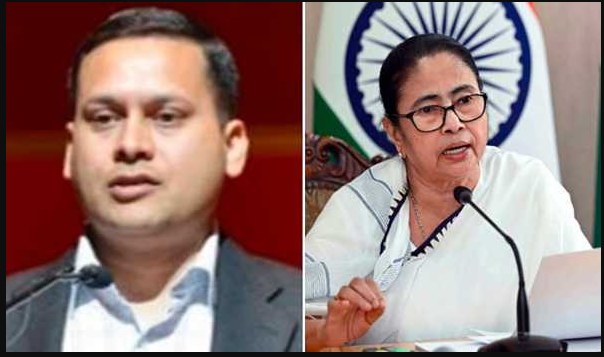
NEW DELHI, Aug 6: The peaceful “Bhasha Andolan” (Language Agitation) launched by the West Bengal chief minister Mamata Banerjee from Rabindranath Tagore created “Shantiniketan” in Bolpur last week to protest against alleged harassment of Bengali-speaking people in the BJP-ruled states, is threatening to become a fierce agitation against the ruling party at the Centre after its IT cell chief and party co-observer for West Bengal passed some derogatory remarks against the chief minister and Bengali language.
Not only from the opposition, Mr Malviya is under fire even from some of his Bengali-speaking party colleagues after the IT cell chief made a posting on the “X” earlier this week that there was no language called “Bengali” and the state chief minister being “poorly lettered” did not understand the nuances of the language. He also attempted to school the Bengali-speaking chief minister on the phonology of Bangla across borders. He argued that Bangla spoken in Bangladesh and West Bengal were different.
Malviya focused on Bangla phonology and dialects, missing the point by miles that the Delhi Police’s goof-up had to do with the script used in the documents recovered from the suspected Bangladeshi illegals, which, in all likelihood, was Bangla, a script which is common to the dialects spoken on both sides of the border.
Bangla, with around 300 million speakers across the world, is among the Top 10 spoken languages globally. Despite the existence of numerous dialects of Bangla, they use a uniform script across both India and Bangladesh.
The controversy sparked off from Ms Mamata Banerjee raising strong objections to a letter from Delhi police to the Resident Commissioner of New Delhi’s Banga Bhavan for assistance to decipher some documents allegedly recovered from some arrested people in the national capital suspected to be Bangladeshi nationals. The police used the term “Bangladeshi language” for the script used in the documents instead of Bengali. Ms Banerjee said the letter of the Delhi police was “scandalous, insulting, anti-national, unconstitutional.” She pointed out that Nobel laureate Rabindranath Tagore and Bankim Chandra Chattopadhyay wrote the National Anthem and the National Song in Bengali.
But what started from ignorance of the Delhi police sparked off a major controversy when a day after Mr Malviya jumped in to defend the Delhi police communication as “Bangladeshi language.” It evoked strong criticism from the Trinamool Congress (TMC) and even from some Bengali-speaking leaders of the BJP on Mr Malviya’s remarks on Monday that there was no language called “Bengali” and “poorly lettered” Ms Banerjee did not understand the nuances of the language.
Justifying the Delhi Police’s description in a social media post, Mr Malviya wrote, “There is, in fact, no language called ‘Bengali’ that neatly covers all these variants. ‘Bengali’ denotes ethnicity, not linguistic uniformity. So when the Delhi Police says ‘Bangladeshi language’, it’s shorthand for the linguistic markers used to profile illegal immigrants from Bangladesh — not a commentary on Bengali as spoken in West Bengal,” Mr Malviya said. He also claimed that Bengali of West Bengal was different from the script of the language used in Bangladesh.
Mr Malviya stated, “It is beyond shameful that West Bengal Chief Minister Mamata Banerjee is defending a lawful police action against illegal Bangladeshi infiltrators by weaponising language and stoking sentiment. Let us be absolutely clear: all illegal Bangladeshi infiltrators and Rohingyas will be dealt with strictly, as per the law of the land.”
“Mamata Banerjee’s reaction to Delhi Police referring to the language used by infiltrators as ‘Bangladeshi’ is not just misplaced, it is dangerously inflammatory.” Malviya hinted at and claimed the police used “Bangladeshi language” to describe dialects like Sylheti, which he described as “nearly incomprehensible to Indian Bengalis,” asserting, “There is, in fact, no language called ‘Bengali’ that neatly covers all these variants. Bengali denotes ethnicity, not linguistic uniformity.”
He added literary context, saying, “Ananda Math was written in Bangla of that era and Vande Mataram was composed separately, in Sanskrit. Jana Gana Mana, originally composed in Sanskritised Bangla. Such nuances are clearly lost on the poorly lettered Mamata Banerjee.” “Delhi Police is absolutely right in referring to the language as Bangladeshi in the context of identifying infiltrators,” Malviya posted on X.
The remarks left the Trinamool Congress leadership fuming, with several leaders of the party condemning them strongly. The TMC accused the BJP of “systematically promoting xenophobia” with Bengalis being deliberately targeted across states.” “Such dangerous narratives must be condemned and resisted at every level,” the party said.
Ms Mamata Banerjee said, “Bengali, our mother tongue, the language of Rabindranath Tagore and Swami Vivekananda, the language in which our national anthem and the national song (the latter by Bankim Chandra Chattopadhyay) are written, the language in which crores of Indians speak and write, the language which is sanctified and recognised by the Constitution of India, is now described as a Bangladeshi language!”
Ms Banerjee had further said: “We urge immediate strongest possible protests from all against the anti-Bengali Government of India, which is using such anti-Constitutional language to insult and humiliate the Bengali-speaking people of India.”
Her nephew and TMC MP Abhishek Banerjee went a step further, demanding an apology from Home Minister Amit Shah and calling the episode a “calculated attempt by the BJP to defame Bengal” and “equate Indian Bengalis with foreigners.”
Trinamool Congress spokesperson Kunal Ghosh equated the remarks to “linguistic fascism.” “The BJP is hellbent on erasing one of the richest, oldest, Constitutionally-recognised languages of India just to whitewash the Delhi Police’s bigoted profiling tactics. This is linguistic fascism, plain and simple. We dare the BJP to say this on the floor of the Parliament. We dare them to erase Bengali from the Eighth Schedule of the Constitution. We dare them to call Kobiguru’s [Rabindranath Tagore] Jana Gana Mana a foreign song,” Mr Ghosh said.
Bengali artists like Srijit Mukherji echoed the sentiment. “That’s not Bangladeshi language, that’s Bangla, the same language in which your national anthem was originally written,” the film director posted on X.
A former BJP MP from Assam’s Bengali-speaking region Barak Valley hit out at Mr Malviya for his take on Sylheti where he said the Sylheti dialect of Bengali was “nearly incomprehensible to Indian Bengalis.” Taking to social media, the BJP’s former Silchar MP, Rajdeep Roy, wrote: “Sylheti is far older than the modern state of Bangladesh, or even East Pakistan. It transcends the borders and histories of today’s political entities.” Pointing out that Sylheti is the lingua franca of Barak Valley, Mr Roy said more than 70 lakh people in Assam, Meghalaya and Tripura speak it. He said dismissing Sylheti as alien to Bengalis in India was “inaccurate, deeply unfortunate, and condemnable.”
The former MP also reminded Mr Malviya that some of the historical figures that the BJP reveres spoke Sylheti. They include Chaitanya Mahaprabhu, the founder of Gaudiya Vaishnavism, and Bipin Chandra Pal, one of the Lal-Bal-Pal trio of India’s freedom movement.
Other BJP leaders in Barak Valley also spoke out against Mr Malviya. “Silchar’s incumbent MP, Parimal Suklabaidya, is a Sylheti speaker. So is Kabindra Purkayastha, who became our party’s first-ever MP from the northeast in 1991,” a BJP leader in Barak Valley said.
The Trinamool Congress’s Rajya Sabha member and a resident of Silchar, Sushmita Dev, slammed Mr Malviya too. “It is disgraceful that the BJP’s loudmouth does not know the history of those of us who speak in Sylheti. The Prime Minister’s Office needs to sack this incompetent and ignorant bigot,” she said.
Assam Congress president Gaurav Gogoi said it was not surprising for the “arrogant BJP” to dehumanise Bengali people living in West Bengal and the north-eastern States of the country. “First, the BJP asks the Bengali people to declare themselves as Bangladeshis through the CAA, and now the party insults their language as being foreign. The BJP does not want a united India. They are only interested in reopening old scars,” he posted on X.
Pradyot Kishore Manikya Debbarma, the founder of Tripura’s Tipra Motha Party and an ally of the NDA, also expressed his indignation at the letter. “This is deeply concerning. Today it is Bengali, tomorrow it can be any other language. There is no such thing as the Bangladeshi language! How can we forget that even our National Anthem ‘Jana Gana Mana’ was originally composed in Bengali by Tagore,” he asked.
West Bengal Minister Shashi Panja described the BJP leader’s assertions as an attempt to erase, belittle, and vilify the culture, history, and pride of Bengal. “In his usual cocktail of arrogance, ignorance, and deep-seated hatred, @BJP4India’s certified troll and keyboard mercenary @amitmalviya has now declared that ‘there is no language called Bengali’. This is a calculated attempt to erase, belittle, and vilify the culture, history, and pride of Bengal,” Dr Panja said.
“The BJP is threatened by Bengal. By its intellect. By its spine. By its refusal to bow down. And so, they try to delegitimise our language, our people, and our very existence,” she said. Apart from leaders of the ruling party, prominent people of the State criticised the BJP leader’s comments.
The controversial remarks have come at a time when the TMC has been raising its pitch in protest against the alleged targeting of migrants from the State over the past few months. The party has called for a “language movement”, and invoked Bengali asmita (identity) over such protests.
The Tamil Nadu Chief Minister M.K. Stalin expressed solidarity with his West Bengal counterpart Mamata Banerjee, and objected to the Delhi Police – under the Union Home Ministry – reportedly describing Bengali as a “Bangladeshi language.” “This is a direct insult to the very language in which our national anthem was written,” Mr Stalin said in a social media post.
Mr Stalin said such statements were not inadvertent errors or slip-ups, but they exposed “the dark mindset of a regime that consistently undermines diversity and weaponises identity.” In the face of this “assault on non-Hindi languages,” Ms Banerjee stood as a shield for the language and people of West Bengal, who would not let this attack pass without a fitting response, Mr Stalin said.
Initially Ms Banerjee had given a call at her July 21 rally for “Bhasha Andolan” at different district headquarters every weekend to continue till the coming state Assembly elections only to express solidarity with the Bengali-speaking people allegedly being harassed in the BJP-ruled states. But Mr Malviya’s uncalled for comments against Bengali seems to have added fuel to fire to help spread the language issue as an anti-BJP agitation across the state.
Linguistic experts said the source of the entire controversy was ignorance on the part of the Delhi police and should have been possibly ignored. At best, an honest, corrective statement was all it demanded. But Mr Malviya’s jumping into the fray to defend the ignorance of the Delhi police has only helped the West Bengal ruling party to turn issue into controversy to suit its political narratives.