




Manas Dasgupta
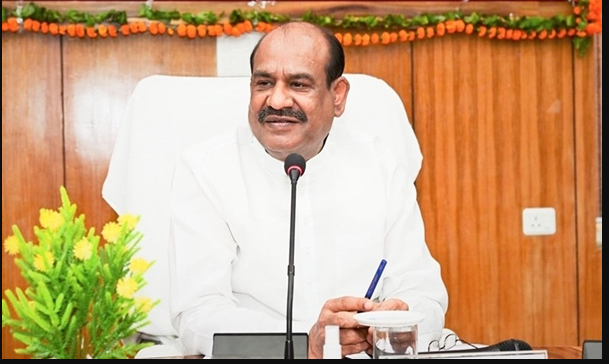
NEW DELHI, Mar 7: The West Bengal ruling party the Trinamool Congress, which had refused to sign the opposition notice for no confidence in the Lok Sabha speaker Om Birla, has decided to support the motion when it is taken up in the House on Monday.
The party sources said the TMC chief and the West Bengal chief minister Mamata Banerjee has directed her party MPs to support the motion, though it was not among the signatories when the opposition submitted to the Lok Sabha secretariat on February 10 expressing no confidence in the Speaker.
While the TMC has 12 members in the Rajya Sabha, it has 28 members in the lower House. On February 10, the Opposition had submitted a notice with signatures of 118 MPs for a no-confidence motion against Birla, after the Speaker did not let Leader of the Opposition in the Lok Sabha, Rahul Gandhi, quote from or speak about former Indian Army chief General M M Naravane’s unpublished memoir.
Birla had also claimed that he cautioned Prime Minister Narendra Modi not to come to the House, as he may be attacked there, an allegation the opposition bloc had stoutly refuted. Amid disruptions, Birla had suspended eight Opposition MPs from the House.
As Parliament meets for the second phase of the Budget session on Monday, the Lok Sabha has listed the notice by the Opposition to move a resolution to remove Om Birla as the Speaker for allegedly acting in a “blatantly partisan” manner.
At least 118 opposition MPs had submitted the notice for not allowing the Leader of the Opposition in the Lok Sabha Rahul Gandhi and other opposition leaders to participate in the debate on the motion of tanks to the President for address to the joint House of Parliament as well as for suspending eight MPs in the first phase of Budget session. The TMC MPs then had not signed the notice.
The TMC then had said it would like to wait for a few more days to give the Chair the time to reconsider the issues. The TMC Parliamentary Party leader Abhishek Banerjee had said that his party “believed in being more tolerant” and did not want to “flex muscles” through the notice.
The Congress has said the resolution followed the rules and conventions, with Opposition MPs having cited specific instances of “partisan behaviour” by him, which calls for a debate. The Congress general secretary in-charge of communications, Jairam Ramesh, said: “All the Opposition parties other than the Trinamool Congress have signed the motion for the removal of the Speaker. Let us see. They have said it is going to be taken up on March 9.” He added that 118 Opposition MPs belonging to all political parties, barring the Trinamool, signed the notice.
“It’s a healthy, democratic practice. We have submitted a motion, which is according to the rules, according to the conventions… There have been previous occasions, for example, in 1954, when the combined Opposition strength was hardly 50, and the Congress had 364 MPs in a House of 489. A no-confidence motion was brought against the Speaker, the great G.V. Mavalankar,” Mr Ramesh said. “These are democratic instruments, instruments of parliamentary democracy. The Opposition has every right. We will have a debate, let’s see what happens after that,” the Congress leader said.
“We had given specific instances of partisan behaviour [by the Speaker], while false allegations were levelled against the Opposition members. We have given the context, and a debate should take place,” Mr Ramesh said. The Lok Sabha will witness a rare moment, most likely next Monday, when Mr Birla will not chair the proceedings but will be seated among the members as the House takes up a notice seeking his removal from office.
According to the rules and laid-down procedures, Mr Birla will have the right to defend himself when the resolution is discussed by the Lower House. He will also have the right to vote against the resolution, Constitution expert P.D.T. Achary said. He said while Mr Birla would not chair the proceedings when the resolution comes up before the House, he would be seated in the prominent rows in the Treasury benches.
In fact, Mr Birla had stopped chairing the House the day the notice was submitted, taking a stand. The Congress deputy leader in the Lok Sabha, Gaurav Gogoi, chief whip K. Suresh and whip Mohammed Jawed submitted the notice to the Lok Sabha Secretariat on behalf of several Opposition parties, including the Samajwadi Party and the DMK.
Article 96 of the Constitution bars a Speaker or a Deputy Speaker from presiding over the House while a resolution for his removal from office is under consideration. The Speaker has a constitutional right to defend himself in the House if the resolution is discussed in the Lok Sabha.
At least two Lok Sabha members have to sign the notice to move a resolution for the Speaker’s removal. Any number of members can sign the notice, but a minimum of two is mandatory. The Speaker can be removed from office if a resolution is passed by the House by a simple majority. Article 94C of the Constitution has provisions for such a move.
Article 96 allows the Speaker to defend himself or herself in the House. The language of the proposed resolution is usually examined by the Deputy Speaker, but since the present Lok Sabha does not have a Deputy Speaker, it may be examined by the senior-most member of the panel of chairpersons. The committee helps to run the House in the Speaker’s absence.
The resolution alleged that Mr Birla as Speaker acted in a “blatantly partisan” manner in conducting the business of the House and “abused” the constitutional office he occupies. Three Lok Sabha speakers — G.V. Mavalankar (1954), Hukam Singh (1966) and Balram Jakhar (1987)— faced no-confidence motions in the past, which were all defeated.