




Manas Dasgupta
NEW DELHI, Aug 15: The Prime Minister Narendra Modi on Friday announced the nomenclature for the proposed initiative for a robust aerial defence system the need for which was felt during the recent “Operation Sindoor” against Pakistan in response to the brutal Pahalgam terror attack killing 26 tourists.
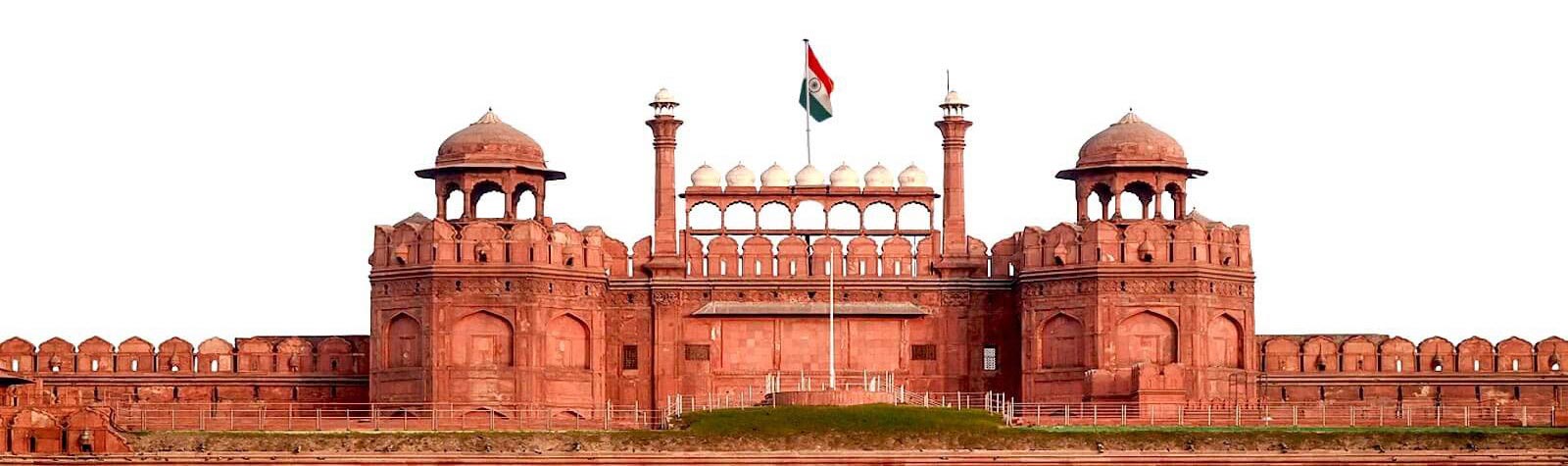
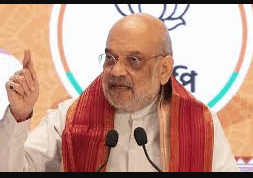
Addressing the nation from the ramparts of the Red Fort to celebrate the 79th Independence Day, Mr Modi announced the initiative as “Sudarshan Chakra,” a programme over a decade in the making, aimed at creating a comprehensive, indigenous, and integrated aerial defence system.
During a high-level security meeting in June, India’s leadership had formally set its sights on building its own indigenous multi-layer aerial defence shield. The idea gained urgency during Operation Sindoor, when the need for a more robust system to counter multiple layers of aerial threats became evident.
According to officials, the project was still in its early stages, with the overall structure and specific technologies yet to be finalised. A senior government official said the system would be calibrated to integrate with India’s existing minor aerial defence framework, protecting cities, military bases, and critical infrastructure such as power plants, railways, ports, and hospitals from a wide spectrum of aerial threats.
The officials described the envisioned technology as “a nationwide network of radars, command-and-control centres, and interceptor missiles, capable of detecting, tracking, and neutralising incoming missiles, drones, artillery shells, and even swarms or loitering munitions in real time, with artificial intelligence likely playing a central role.”
The “Sudarshan Chakra” is likely to form part of a multi-layer strategy, operating alongside current systems like Akash, S-400, and QR-SAM, as well as future laser-based interceptors, to provide overlapping protection against short-, medium-, and long-range threats — effectively functioning as an umbrella defence network.
Developed under the Aatmanirbhar Bharat initiative, the programme will involve the Defence Research and Development Organisation (DRDO) and multiple private-sector partners already working on related projects. Unlike Israel’s Iron Dome, which is focused on short-range rocket and mortar attacks, India’s system is designed to counter a far wider range of threats, including long-range ballistic and cruise missiles — reflecting the need to deter and respond to potential hostilities from both Pakistan and China across diverse terrains.
The government aims for full operational deployment of the Sudarshan Chakra by 2035. Speaking from the Red Fort, PM Modi said, “We have chosen the path of Lord Krishna’s Sudarshan Chakra. For the security of the country and its citizens, we will continue to upgrade our capabilities. I assure you that in the next 10 years, whether it is a place of strategic importance, a civilian area, or our centres of faith, we will build a ‘Rashtriya Suraksha Kavach’ capable of withstanding any attack.”
Referring to recent events, he added, “We have shown the world our capabilities and proved that India is ready to face any kind of warfare. We demonstrated this in Operation Sindoor. Pakistan attacked our military bases, civilian areas, and our temples, but our air defence systems — our Sudarshan Chakra — foiled all their attacks.”
During Operation Sindoor, India’s Integrated Air Command and Control System (IACCS) played a pivotal role in maintaining air superiority over Pakistan; it did so by combining the air defence systems of the Army, the Air Force, and the Navy, into a single system tracking and neutralising incoming threats. The new defensive blanket will be similar to Israel’s much-vaunted Iron Dome and the United States’ proposed Golden Dome – in that it will act as a missile defence shield. India already has a comparable system in IACCS which proved to be a barrier against Pakistan’s missiles which failed to penetrate for nearly 100 hours during Operation Sindoor.
Sources said the Sudarshan Chakra will likely be more than just a shield, offering precision counterstrike capacities and incorporating anti-cyber warfare measures to neutralise digital threats like hacking or phishing. It will involve collaboration between premier scientific and defence research agencies, the military, and private sector innovators.
The Sudarshan Chakra will likely be developed with the IACCS and its own multi-layered air defence systems at the core, including the Army’s indigenous Akashteer network. Missile defence systems are an increasingly critical part of a nation’s military capabilities.
Basically, it consists of interlocked, multi-tiered systems designed to detect, track, and intercept incoming ballistic weapons at various stages of flight – boost, midcourse, terminal. The goal is simple – detect and shoot down a missile before it hits. It will be comparable to Israel’s Iron Dome (and Arrow) and the United States’ proposed “Golden Dome.” Israel’s Iron Dome air defence system has intercepted thousands of rockets since it went into operation in 2011, providing the country with crucial cover during times of conflict.
It has been heavily relied upon to protect military and civilian sites from frequent barrages of rockets fired from Gaza and Lebanon in the ongoing war between Israel and Hamas. Israel initially developed the Iron Dome alone after the 2006 Lebanon War and was later joined by the United States, which has provided its defence know-how and billions of dollars in financial support for the program. The system has an interception rate of around 90 per cent, according to Israeli defence firm Rafael, which helped design it.
India, the US, and Israel aren’t the only countries on this list; Russia has the A-135 anti-ballistic system protecting Moscow and other major cities and the potent S-400 that can knock out multiple intermediate-range ballistic missiles. India has three S-400 squadrons with two more to be delivered.
China has several options, including the HQ-9 long-range, surface-to-air, anti-ballistic-capable system sold to Pakistan, Morocco, Egypt, Turkmenistan, and Uzbekistan. Taiwan and Japan also have such systems; the former has the Sky Bow family of surface-to-air, anti-ballistic missile and anti-aircraft defence system, while the latter is set to operationalise the US’ PAC-3 surface-to-air interceptors.