SC Rebukes Rahul Gandhi but Stays Defamation Proceedings against him for Remarks against Army




Manas Dasgupta
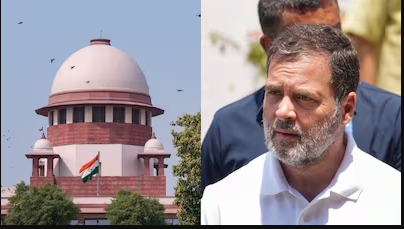
NEW DELHI, Aug 4: The Supreme Court on Monday stayed the proceedings in a criminal defamation case against the Leader of the Opposition in the Lok Sabha Rahul Gandhi in a Lucknow court for remarks made to media persons during his Bharat Jodo Yatra about the reported skirmishes between Indian and Chinese soldiers along the border, but only after giving the Congress leader a sharp rebuke for making irresponsible remarks in the public.
“How did you get to know that 2,000 sq km of Indian territory was occupied? Were you there? Do you have any credible proof? If you are a true Indian, you would not say all these things,” Justice Dipankar Datta, who was heading the bench which also included and Justice AG Masih, reprimanded Mr Gandhi.
Mr Gandhi was given the dressing down for his comment that “Chinese troops are thrashing Indian soldiers in Arunachal Pradesh” which he made during the Bharat Jodo Yatra. The comment was in reference to the India-China face-off in Arunachal Pradesh’s Tawang sector in December 2022. He had also claimed that 2,000 sq km of Indian territory has since been occupied by China and blamed the Prime Minister Narendra Modi and his government for the abject ‘surrender.’
Appearing for the Congress leader, senior advocate Abhishek Singhvi countered, “If he can’t say these things… how can he be the Leader of Opposition?” But Justice Datta shot back, “Then why don’t you say such things in Parliament?”
Nevertheless, the Supreme Court issued a notice against Mr Gandhi’s plea to quash the case after Mr Singhvi pointed out apparent missteps in the filing of charges, including the police not allowing Mr Gandhi a prior hearing before taking cognisance of a criminal complaint. In May the Allahabad High Court had rejected Rahul Gandhi’s plea challenging a February summons that had been issued a special court, for elected representatives, in Lucknow.
Allahabad High Court judge Justice Subhash Vidyarthi overruled Mr Gandhi’s argument – that the special court should have verified the allegations before summoning him – and observed that freedom of speech does not include the right to make statements that ‘defame’ the Army. Mr Gandhi had also argued the charges against him were politically motivated.
Mr Singhvi said his case was centred on the argument that one need not agree with what was said, but the law of defamation cannot be used to freeze dissent to government policies. Mr Gandhi had more than 20 cases in speech-related offences in various courts. They showed a “pattern of several busybodies looking to drown him in cases.”
“These proceedings are all nothing but lawfare – a clear abuse of the process of law in furtherance of wielding the heckler’s veto to muzzle and silence the petitioner [Rahul Gandhi] from articulating his opposition to the ruling government’s policies and positions,” Mr Gandhi argued.
The complaint case was instituted against Mr Gandhi by a retired Border Roads Organisation (BRO) officer, Uday Shankar Shrivastava, before a Lucknow Magistrate court in August 2023. The Lucknow court had issued summons to the Congress leader in February 2025. His appeal to quash the summons was declined by the Allahabad High Court in May, 2025, compelling Mr Gandhi to approach the Supreme Court in a special leave petition.
Mr Gandhi said his statements made during the Bharat Jodo Yatra on December 16, 2022 in response to a media query concerning Indo-China border tensions was “political.” Mr Shrivastava, however, claimed that the Opposition leader had defamed the Army and lowered his own personal reputation in society.
Mr Gandhi argued the High Court had erred in upholding Mr Shrivastava’s locus standi even though he was neither an Army personnel nor directly aggrieved. The Congress leader said the remarks were not intended to damage reputations. The comments were limited to public questions and formed a critique of the governmental policy.
Mr Gandhi referred to judicial precedents which have clearly held that only a “person aggrieved” by the comments could initiate a defamation complaint. The settled law that defamation must relate to an identifiable individual or a determinate body of persons still held the field. “The Magistrate had issued summons to Mr Gandhi without giving him an opportunity to be heard,” the Congress leader alleged.