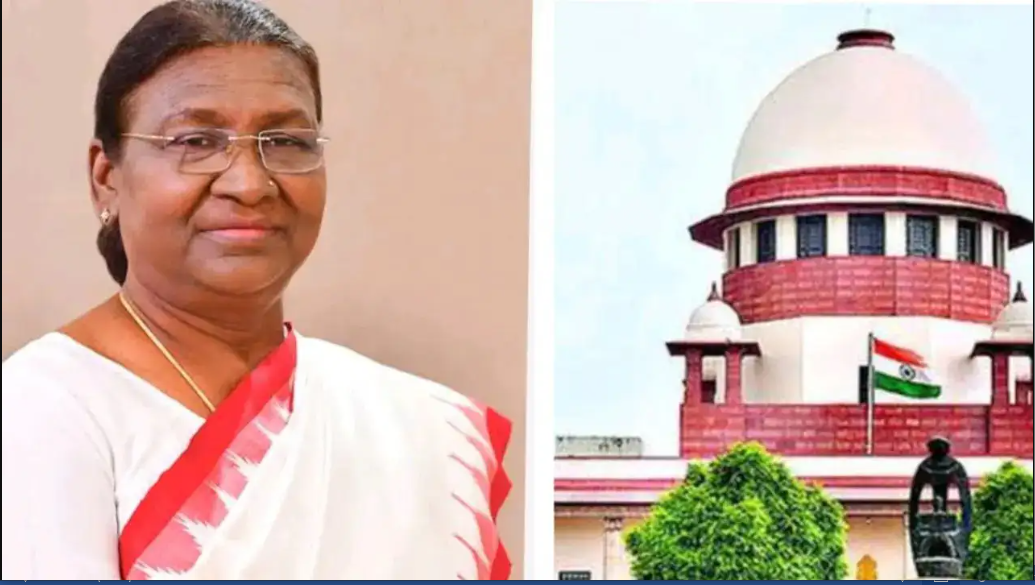
SC Asks Centre: Should Elected Governments Remain at the Mercy of Whims and Fancies of Governors








NEW DELHI, Aug 20: The Supreme Court on Wednesday asked the Centre if elected State governments should remain at the mercy of the whims and fancies of Governors, who could fail Bills by merely withholding assent for them.
A Five-Judge Presidential Reference Bench headed by the Chief Justice of India B.R. Gavai was testing a submission made by the Centre, represented by Solicitor General Tushar Mehta and advocate Kanu Agarwal, that State Bills would lapse if Governors withheld assent to proposed laws presented to them for approval under Article 200 of the Constitution.
“So, are Governors being given total powers to sit in appeal over the elected representatives? This way, if Bills are failed by Governors, governments formed by majority will be at the mercy of their whims and fancies,” Chief Justice Gavai quizzed Mr Mehta’s interpretation of Article 200.
Mr Mehta responded that the power of a Governor to withhold assent was meant to be used sparingly and only in extraordinary situations, especially when a State Bill frustrated the very democratic will of the nation, or violated fundamental rights, or was repugnant to an existing Central law.
Senior advocate Kapil Sibal interjected to point out that if a Governor had the power to lapse a Bill by withholding assent, the same logic would apply to the President of India under Article 111. “The President can also withhold and fail Bills passed in the Parliament,” Mr Sibal submitted.
The Solicitor General argued that a Governor had “four” options under Article 200 — grant assent to the Bill; withhold assent to the Bill due to which the proposed law lapses; reserve the Bill for consideration to the President. But in case the Governor exercises the “fourth” option to return the Bill to the State Assembly, which re-passes the Bill, the Governor is bound to grant assent. He could not withhold the Bill though he could refer it to the President on the ground of repugnancy.
High Constitutional authorities, including the President and Governors, were presumed to act within the law and uphold the dignity of their offices, Mr Mehta said. Governors were not “nobodies,” he submitted. They were representatives of the President, who was bound by the aid and advice of the Union Cabinet, which represented the interests of the nation. “Governorship is not a sanctum for retired politicians,” Mr Mehta said.
The Chief Justice asked the Solicitor General whether, over the years, the expectations of the Founding Fathers and Mothers regarding these Constitutional functionaries had actually been fulfilled. “Governors and the elected Ministers of the States are expected to function in harmony, are they?” the Chief Justice queried.
Justice Narasimha reasoned that Constitutional interpretation by courts could not be idealistic. Judicial review had to take into account the present day realities. Governors and Speakers were idealistically considered high offices, presumed to function within the law, but the flood of litigation said otherwise.
The judge referred to the cases filed in the apex court under the anti-defection law (the Tenth Schedule of the Constitution). The Tenth Schedule was introduced with the best intentions and with ideal expectations about the high office of the Speaker, Justice Narasimha said. But views had changed over the years. “Constitutional interpretation cannot be static,” Justice Narasimha observed.
The Chief Justice said the outcome of the litigation in many Tenth Schedule cases had been “operation success, patient dead.” Mr Mehta enumerated instances when Governors were not bound by the aid and advice of the State Cabinet. One of these instances was the Governor’s application of discretion to decide which party or political front had a majority to form a government in a State.
“We have seen how, in some cases, the Governors have exercised their discretion and end up in litigation in the apex court,” the CJI responded. The Solicitor General dismissed them as “aberrations”. It was “hazardous to interpret the Constitution based on aberrations,” Mr Mehta said.
(Manas Dasgupta)