


Virendra Pandit
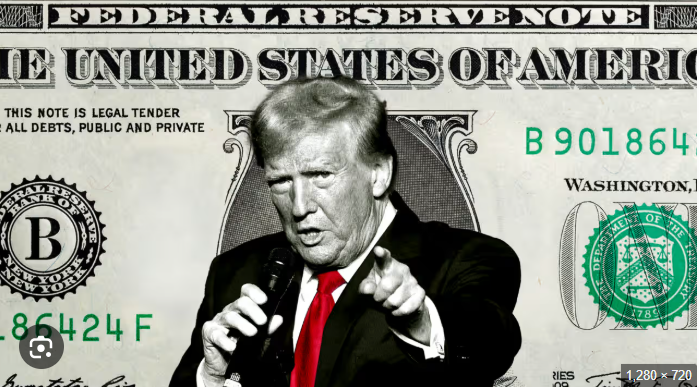
New Delhi: On August 7, President Donald Trump boasted that, with sweeping tariffs taking effect on more than 90 countries, billions of dollars are flowing into the US.
Where is all this dollar inflow going? Why are unemployment and inflation rising across America?
Turns out that these billions of dollars are currently being used to pay down the unprecedented national debt of more than USD 37 trillion that America has piled up over the last few decades.
That’s why US Treasury Secretary Scott Bessent on Tuesday threw cold water on the idea that Americans could soon receive tariff rebate checks.
During an interview on CNBC’s “Squawk Box,” he said that revenue from import tariffs will be put toward paying down the US national debt, the media reported on Thursday.
Some lawmakers have proposed using tariff revenue to send rebate checks of at least USD 600 per adult and dependent child. A family of four could end up with around USD 2,400 from the federal government, a CNN report said.
The US has collected nearly USD 100 billion in tariff revenue between April and July, when a large swath of Trump’s global tariffs went into effect. Trump, in touting the potential revenue from import taxes, has floated a couple of uses for those funds: First, to pay down the nation’s massive debt, but also to potentially give “a dividend” to the American people.
Bessent on Tuesday said that tariff revenue is on pace to exceed expectations.
“I’d been saying that tariff revenue could be USD 300 billion this year,” he said. “I’m going to have to raise that up substantially. I think that we’re going to bring down the deficit-to-GDP, we’ll start paying down debt, and then, at a point, that can be used as an offset to the American people.”
Despite this inflow, unemployment and prices are rising in the US. A July jobs report showed lacklustre employment gains during the past three months. Inflation data, released last week, also showed a pickup in some price hikes both for businessmen and consumers.
On his part, Trump, who has been desperately thirsting for a Nobel Peace Prize—recently, he directly telephoned a Norwegian minister for this!—and nursing wounds from foreign policy setbacks, hailed the dollar inflow and described the moment as a turning point in US trade policy. He also claimed that revenues were largely coming from nations that had “taken advantage of the United States for many years, laughing all the way.”
“The only thing that can stop America’s greatness would be a radical left court that wants to see our country fail!” he added.
Brazil and India face 50 percent tariffs. Trump framed Brazil’s hike as retaliation for the prosecution of his political ally, former President Jair Bolsonaro. India was targeted over its continued purchase of Russian oil with Trump initially threatening a 25 percent tariff before increasing it to 50 percent.
However, not all US trade partners faced equal treatment. Eight major countries, including Japan, South Korea, and the EU, secured negotiated reductions to 15 percent. The UK received a 10 percent rate, while Vietnam, Indonesia, Pakistan, and the Philippines saw duties adjusted to around 19–20 per cent.
While the Trump administration sees the tariffs as a tool to “reset the global trading order,” economists warn of broader market disruptions and potential cost increases for American consumers.
Since April, when trump began imposing a 10 percent tariff across nearly all goods, among several other steeper levies that followed, the government collected a total of USD 100 billion in tariff revenue, three times the amount collected during the same four months last year.
It might appear to some Americans that these dollars flowing in from tariffs, coming primarily out of the pockets of US businesses footing the initial bills to import foreign goods, are collecting dust.
But there’s much more going on behind the scenes.
When the amount of revenue the government takes in falls short of its bills, meaning it runs a budget deficit, it borrows money to make up the difference. In all, the government is currently on the hook to repay more than USD 37 trillion, an amount that has been steadily growing, raising alarm bells among many economists claiming it’s weighing on economic growth.
That’s because, like any American borrowing money, the government has to pay interest on its loans. The more the government borrows, the more interest it has to repay, which is yet another expense the government has to pay that doesn’t go toward public-good investments, such as improving highway roads.
While the tariff revenue being collected isn’t sufficient to wipe away the $1.3 trillion budget deficit the government’s running for the current fiscal year, tariff collections have caused that figure to shrink. That means the government doesn’t have to resort to borrowing as much money as it otherwise would without the tariff revenue.
Even though tariff revenue may help the government’s financial situation on paper, it’s not necessarily coming pain-free. Some businesses–appliances, toys, consumer electronics tariffs and other goods– that are sensitive to tariff changes are getting more expensive. And many companies, including Walmart and Procter & Gamble, are warning of forthcoming price hikes.
The uncertainty tied to tariffs has also caused businesses to put off hiring more workers, leading to fewer job openings, several economic surveys indicate.
Trump and his administration see it differently, however, arguing that the recently enacted mega tax cuts and spending bill, combined with the tariff revenue, will supercharge the US economy over time.