


Virendra Pandit
New Delhi: The People’s Republic of China (PRC)—yes that’s the official name of China!—maybe wary of its own people. Especially Generation Z, those born in the internet era, who have suddenly toppled governments in multiple countries in the last couple of years.
A sudden mobbing by Gen. Z (born between 1997 and 2012) has toppled governments in China-friendly countries like Nepal, Sri Lanka, and Bangladesh. The young aspirants are active now in the Philippines, Bulgaria, and others. Pakistan is waiting for its own turn.
Nobody in China knows what its own Gen. Z would do, where, and when.
That’s why President Xi Jinping’s “Communist” regime, following all capitalist policies sans political democracy for four decades, is worried and falling back on its familiar platform to keep itself in power.
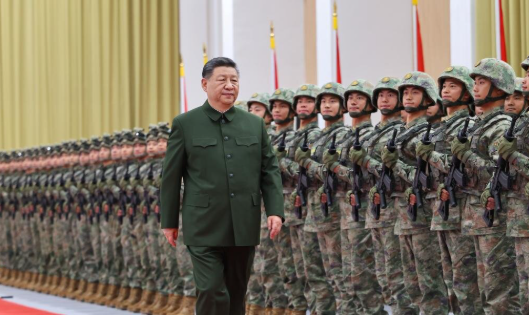
The People’s Liberation Army—that’s the official name of China’s defence forces—Beijing believes, can protect it from any wrath of the youth and unpredictable ouster.
To ensure the PLA’s continued support, China has issued fresh discipline guidelines underlining its ‘political loyalty,’ the media reported on Wednesday.
Revised PLA discipline rules, effective January 1, 2026, will tighten political control, expand anti-corruption checks, and bar “erroneous” political remarks across the military.
According to the South China Morning Post, Beijing has announced new disciplinary rules for the PLA, reinforcing political loyalty to the Communist Party and tightening internal controls amid an ongoing anti-corruption drive that has brought down several senior military figures in recent times.
The official newspaper of the Chinese military, the PLA Daily, said the updated framework would “prioritise strict political discipline and rules.” The revisions explicitly list disciplinary breaches such as “erroneous political remarks”, non-compliance with orders from the Central Military Commission (CMC) and failures to implement the CMC Chairman’s responsibility system.
The CMC is China’s highest military decision-making body. Under the chairman responsibility system, its Chairman — currently President Xi Jinping — functions as Commander-in-Chief and holds the final vote on major military decisions. The structure is designed to ensure absolute party leadership and control over the armed forces.
Although details of these changes have been kept under wraps, the SCMP report, citing PLA Daily, said the revisions strengthen requirements related to war readiness, including instructions to eliminate “fake combat capabilities” and clarify the role of party committees in military discipline. Updates similar to these were last issued in 2017 when China was restructuring its armed forces and completing a 300,000-troop cut.
The fresh rules also aim to address personnel management and military involvement in business activities. These additions seek to better regulate how officers are selected and appointed, and to tighten oversight of commercial engagements by the armed forces, the report noted.
The December 1 announcement follows a string of high-profile dismissals in the Chinese military. In October, China removed nine top generals from the party and the military, including former CMC Vice-Chairman He Weidong, former ideology and personnel head Miao Hua, and his deputy, He Hongjun. They were accused of disloyalty to the party, serious disciplinary violations and grave duty-related offences. Their expulsions were endorsed at the fourth plenum of the Central Committee.
Over the last few years, the Xi regime has sacked, arrested, and jailed hundreds of thousands of employees on “corruption” charges. The drive also ousted dozens of bureaucrats and ministers, generals, and other high-ranking officials whose loyalty to the regime was suspected but they were accused of corruption.
China’s top leadership has repeatedly identified corruption in the military and defence industry as a major obstacle to the PLA’s modernisation efforts. The party’s proposals for the next five-year period (2026-2030), emphasised the need for “political rectification” in the military, a term that covers both anti-corruption work and political discipline.
The PLA Daily also said the new rules support reforms to the military procurement system and strengthen the management of defence spending. “The principle of building the armed forces through diligence and thrift must be fully implemented to ensure that military development is efficient, cost-effective and sustainable.”
China has been running a nationwide campaign since March to reinforce its eight-point austerity rules, which have been in place since 2012. These rules target bureaucratic excesses and luxurious official spending, including the misuse of public funds for entertainment.
The anti-corruption push has extended beyond the military into the wider defence sector. In recent years, executives from major arms suppliers, aerospace firms and defence research institutes have been investigated or removed from their posts.
Corruption allegations in the defence industry contributed to the postponement or cancellation of major arms contracts in 2024, according to a report released on Monday by the Stockholm International Peace Research Institute (SIPRI). The cancellations resulted in a significant drop in revenue for eight Chinese military suppliers, the reports added.