


Virendra Pandit
New Delhi: For once, Pakistan, always in a denial mode, found itself on the same page as India!
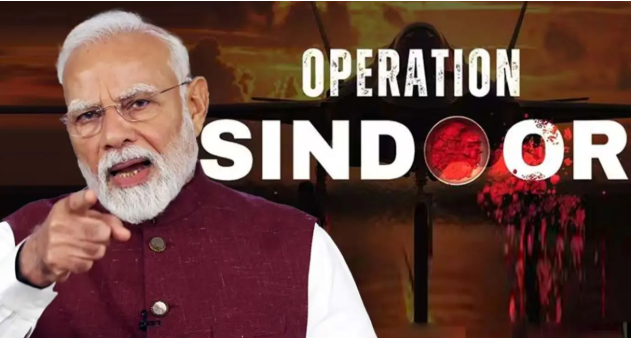
In a rare public admission, Pakistan’s Deputy Prime Minister and Foreign Minister Muhammed Ishaq Dar has said that India never agreed to any third-party mediation on bilateral issues, directly undercutting US President Donald Trump’s repeated claim that he had brokered a ceasefire during Operation Sindoor in May 2025.
“India never agreed to any third-party mediation,” Dar told Al Jazeera, adding that while Pakistan is open to dialogue with India, New Delhi has not responded, the media reported.
His response came when asked, “Any negotiations happening with India? Is there any third-party involved? Are you open to third-party involvement?”
To this, Dar replied, “We don’t mind third-party involvement, but India has categorically been stating it’s a bilateral matter. We don’t mind bilateral, but the dialogues have to be comprehensive, on terrorism, trade, economy, Jammu and Kashmir, all subjects that we have discussed earlier.”
He claimed a ceasefire offer had come via the US, and also there was a suggestion that there would be a dialogue between India and Pakistan at an independent place. When Pakistan asked US Secretary of State Marco Rubio about President Trump’s mediation claim, he categorically clarified that India has always maintained it is a “bilateral issue.”
“When I met Rubio on July 25 in Washington, I asked him what happened to the dialogue. He said that India says that it is a bilateral issue,” he said.
While Pakistan wants to have a dialogue, it is not possible unless India wishes to do so, he said.
“If any country wants dialogue, we are happy. It takes two to tango. Unless India wishes to have a dialogue, we can’t force dialogue,” he added.
Dar’s admission that India always refused a third-party involvement, busts President Trump’s repeated claims that he brokered a ceasefire after four days of strikes and counter-strikes between the two countries in May 2025.
Trump, who was the first one to announce a ceasefire between India and Pakistan on his social media platform Truth Social, has repeatedly claimed—more than 40 times since May—credit for the truce. India, however, maintained that there was no third-party involvement and the understanding was reached only when Pakistan Army’s Director-General of Military Operations (DGMO) dialled his Indian counterpart and pleaded for a truce after India’s relentless counter-strikes during Operation Sindoor.
Dar also said that Washington had earlier conveyed a ceasefire offer in May, suggesting talks between India and Pakistan at a neutral venue. But in a follow-up meeting with Rubio in Washington, he was informed that India had not agreed to the proposal.
“When the ceasefire offer came on May 10, Rubio told me that dialogue between India and Pakistan would happen soon at an independent location. By July 25, when I asked him about it, he said India insists it is a bilateral issue,” Dar said.
On May 10, Trump jumped the guns and unilaterally announced a ceasefire between India and Pakistan on Truth Social even before the two countries could make it official. He wrote, “After a long night of talks mediated by the United States, I am pleased to announce that India and Pakistan have agreed to a Full and immediate ceasefire. Congratulations to both Countries on using Common Sense and Great Intelligence. Thank you for your attention to this matter!”
Resisting this claim, India always maintained the ceasefire offer was made by Pakistan through its DGMO on May 10. India not only rejected the prospect of any third-party involvement on Indo-Pak matters, but also clarified that any talks with Pakistan can only be on terrorism, and that Operation Sindoor had not ended but only paused. It could resume if Pakistan-based terrorists struck again.
Shortly after Trump’s social media post, Indian Foreign Secretary Vikram Misri told a press conference that the two sides agreed to hold strikes only after Pakistan reached out to India requesting for truce.
“The Director-General of Military Operations of Pakistan called the Director-General of Military Operations of India at 3:35 pm. It was agreed between them that both sides would stop all firing and military action on land and in the air and sea with effect from 5 pm today. Instructions have been given on both sides to give effect to the understanding,” Misri said.
Later, External Affairs Minister S. Jaishankar also stated that the two nations had “worked out an understanding on stoppage of firing and military action.”
Since May 10, Trump repeatedly claimed credit for the ceasefire between the two countries, claiming that he threatened to not do trade any more if “they continued to fight.”
On May 31, Trump told reporters, “I think the deal I’m most proud of is the fact that we’re dealing with India, we’re dealing with Pakistan and we were able to stop potentially a nuclear war through trade as opposed through bullets. Normally, they do it through bullets. We do it through trade. So, I’m very proud of that. Nobody talks about it but we had a very nasty potential war going on between Pakistan and India. And now, if you look, they’re doing fine.”
However, addressing the nation on May 11, PM Modi reaffirmed India’s firm stance and long-standing policy that any discussions with Pakistan will focus solely on terrorism and any negotiations with Pakistan will center around Pakistan-Occupied Kashmir (PoK).
Post the 1971 Simla Agreement, India always maintained that all the pending matters between India and Pakistan will be resolved bilaterally. Earlier in 2019, Trump made a bizarre claim during his first term that India offered him to mediate on Kashmir. India not only vehemently denied this claim, but Prime Minister Narendra Modi also made this thing clear before Trump during their meeting on the sidelines of the G7 Summit in France’s Biatiz in August 2019.
Tensions between India and Pakistan hit an all-time high after Pakistan-backed terror attack in Jammu and Kashmir’s Pahalgam claimed 26 lives on April 22. In response, India launched Operation Sindoor, hitting nine terror camps across Pakistan and Pakistan-Occupied Kashmir, killing more than 100 terrorists. Pakistan escalated and launched relentless strikes on India’s border cities and got a befitting response. After four days of strikes and counter-strikes, India announced, in an official press conference, that an understanding had been reached but maintained that it was not a ceasefire.
Trump claimed that “We stopped India and Pakistan from fighting. I believe that could have turned out into a nuclear disaster. We talked trade, and we said we can’t trade with people that are shooting at each other and potentially using nuclear weapons.”