






Virendra Pandit
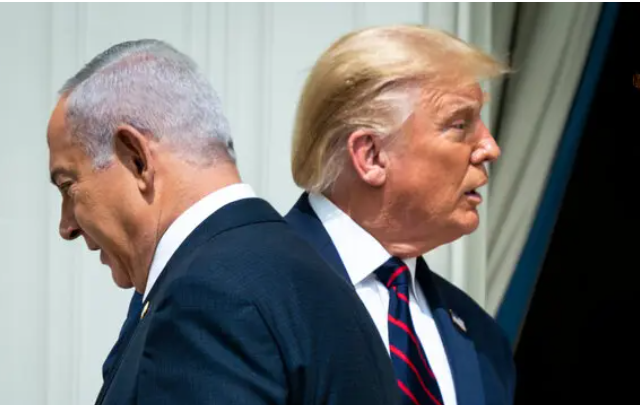
New Delhi: The 20-day-long, ongoing war in West Asia is unlikely to end soon as Israeli Prime Minister Benjamin Netanyahu seems to have freed himself from US President Donald Trump’s partnership, much the same way Iran’s Islamic Revolutionary Guard Corp (IRGC) is attacking neighbours despite President Masoud Pezeshkian’s ‘apologies’ to the neighbours
Trump said Israel attacked Iran gas field without US and Qatari involvement, and warned Iran against attacks on Qatar
“The US knew nothing about this particular attack, and the country of Qatar was in no way, shape, or form, involved with it, nor did it have any idea that it was going to happen,” Trump wrote on his personal social media outlet Truth Social.
Trump said late on Wednesday the attack on Iran’s South Pars gas field was carried out by Israel, and the US and Qatar were not involved in it.
He also said Israel would not make any more attacks on Iranian facilities in South Pars unless Iran attacked Qatar, warning that the US would attack those facilities if Iran acted against Doha.
Israel has not publicly claimed responsibility for the South Pars attack. According to the Wall Street Journal and Axios, Trump knew of Israel’s plan to attack the Iranian part of the world’s largest natural gas deposit in advance and supported it. Iran shares the South Pars field with Qatar, a close US ally.
Iran had said earlier that Israel struck its facilities in South Pars on Wednesday in a major escalation in the US-Israeli war on Iran that sent oil prices shooting higher.
Tehran retaliated by promising attacks on oil and gas targets throughout the Gulf, firing missiles at Saudi Arabia and also hitting Qatar’s Ras Laffan Industrial City, an energy-industry hub.
Doha rebuked Israel for a “dangerous and irresponsible” attack on Iran’s South Pars facilities, and condemned Iran for what it called “a flagrant breach” of international law, expelling two senior Iranian diplomats.
Trump said that Iran “unjustifiably and unfairly attacked a portion of Qatar’s LNG Gas facility.”
“NO MORE ATTACKS WILL BE MADE BY ISRAEL pertaining to this extremely important and valuable South Pars Field unless Iran unwisely decides to attack a very innocent, in this case, Qatar – In which instance the United States of America, with or without the help or consent of Israel, will massively blow up the entirety of the South Pars Gas Field.”
The US and Israel launched the war on Iran on February 28. The attacks have killed thousands in Iran, including its supreme leader and security chief.
Tehran has responded with its own attacks against Israel and Gulf countries that host US military bases. The war has shaken markets and caused unprecedented disruption to oil supplies fuelling a surge in prices.
India’s concerns
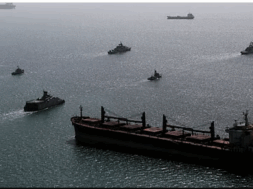
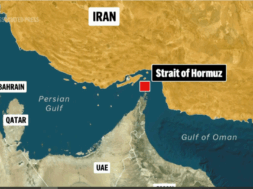
Meanwhile, New Delhi has identified 22 India-bound vessels in the Persian Gulf region for evacuation and safe passage through the Strait of Hormuz. Of these, 20 have been classified as critical to India’s energy security.
These 20 vessels are carrying around 215,000 metric tonnes (mt) of liquefied natural gas (LNG), 321,000 mt of liquefied petroleum gas (LPG), and 1,676,000 mt of crude oil. The ships include both Indian-flagged and foreign-flagged vessels, but all are bound for India, the media reported.
Among the energy-critical vessels, 10 are Indian-flagged. The fleet comprises 3 LNG carriers, 10 LPG carriers, and 7 crude oil tankers. Other flags represented include the Marshall Islands, Liberia, Greece, Malta, and Portugal.
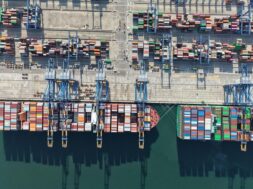
Besides, two Indian-flagged container vessels have also been identified for evacuation to ensure their safe passage through the Strait of Hormuz.
Coordination is ongoing among multiple agencies, including the Ministry of Ports, Shipping and Waterways (MoPSW), the Directorate of Naval Operations (DNO), the Ministry of Petroleum and Natural Gas (MoPNG), and the Information Fusion Centre–Indian Ocean Region (IFC-IOR), to facilitate the evacuation of vessels from the Persian Gulf.
Rajesh Kumar Sinha, Additional Secretary at the (MoPSW), said 611 individuals aboard 22 Indian-flagged vessels operating in and around the Strait of Hormuz, including those positioned west of the key shipping routes, are safe.
This comes as two Indian-flagged LPG carriers safely crossed the Strait of Hormuz and arrived in India on March 16 and 17. Carriers Shivalik and Nanda Devi, carrying approximately 92,712 metric tonnes of LPG, safely passed the Strait last week under the Indian Navy escort.
Shivalik has been partially discharged at Gujarat’s Mundra and is awaiting the start of ship-to-ship operations. The other ship, Nanda Devi, has doubled-banked for ship-to-ship transfer at Gujarat’s Vadinar, with cargo operations expected to begin soon.
Crude oil carrier Jag Laadki, which the Indian Navy also escorted, also reached Mundra Port, carrying approximately 81,000 mt of Murban crude oil from the United Arab Emirates (UAE). The vessel narrowly escaped damage when the Fujairah terminal, where it was loading, on the eastern coast of the UAE, came under attack.
Nearly 23,000 Indian seafarers are currently stranded in the Persian Gulf region, including 658 on Indian-flagged vessels. So far, about 472 seafarers have been evacuated by various shipping companies.
While no Indian ship has been attacked in the ongoing conflict in West Asia since February 28, three Indian seafarers have died, four have been injured, and one remains missing in incidents involving foreign-flagged vessels.
The LPG crisis comes as the Strait of Hormuz, a narrow waterway linking the Persian Gulf to the open ocean, has effectively been shut after US and Israeli strikes on Iran triggered sweeping retaliatory action from Tehran.