


Virendra Pandit
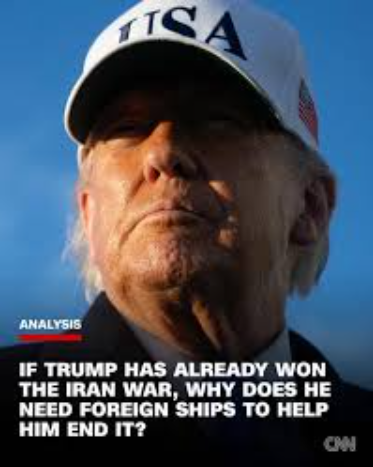
New Delhi: His wild claims, boasts, threats, and requests not working any more anywhere, US President Donald Trump appears bewildered both at home and abroad as none of his frenemies in the West, not even China, are helping him secure the Strait of Hormuz, and the Arab allies are now pushing him harder than ever to punish Iran.
According to media reports on Tuesday, Gulf nations have asked the US to ensure that its military campaign against Iran decisively weakens Tehran’s ability to threaten the region’s oil lifeline—even as they resist their own direct involvement in the conflict, which entered 18th day.
These Arab nations, who believed they were safe under the American security umbrella they paid for, now feel threatened by Iran which has been relentlessly striking them at will. No Arab country, Dubai and Abu Dhabi included, is a safe heaven for the world’s wealthiest any more.
Alarmed at this shattered image built carefully since the1970s, leaders in the Gulf region, which did not initially call for war, now fear that a partial outcome could leave Iran capable of targeting critical energy infrastructure and shipping routes, particularly through the Strait of Hormuz- a key artery for global oil supplies.
But Washington wants these Arab-Gulf states to join the ongoing war too. Trump wants to showcase regional backing for his campaign against Iran, which would bolster his international legitimacy and increase support at home, ahead of the midterm elections to US Congress later this year.
Reports said he was warned that attacking Iran could trigger retaliation against the Gulf allies, despite his claims on Monday that Tehran’s reaction came as a surprise. Pre-war intelligence assessments did not say that Iran’s response was a guarantee, but it certainly was on the list of potential outcomes.
Abdulaziz Sager, chairman of the Saudi-based Gulf Research Centre, was quoted as saying that there is a feeling across the Gulf that Iran has ‘crossed every red line’ with every Gulf country.
“At first we defended them and opposed the war,” he said, adding, “But once they began directing strikes at us, they became an enemy. There is no other way to classify them.”
Despite growing frustration with Iran, Gulf countries remain cautious. Officials and diplomats said unilateral military action by any single state is off the table due to fears of retaliation. Instead, any involvement would likely require a collective approach – something that has yet to materialise.
Regional sentiment has hardened following Iranian strikes on airports, oil facilities, ports, and commercial hubs across Gulf countries including Bahrain, Kuwait, Qatar, Saudi Arabia, Oman and the United Arab Emirates. These attacks, along with disruptions to shipping, have intensified concerns about long-term economic and security risks.
The Iranian strikes have reinforced Gulf fears that leaving Tehran with any significant offensive weaponry or arms manufacturing capacity could embolden it to hold the region’s energy lifeline hostage whenever tensions rise.
As the conflict entered its third week, with US and Israeli airstrikes intensifying and Iran firing at US bases and civilian targets across the Gulf, the prevailing mood among leaders was unmistakable: that Trump should comprehensively degrade Iran’s military capacity.
Of the Gulf countries, only the UAE “does not seek to be drawn into conflicts or escalation” but affirmed its right to “take all necessary measures” to safeguard its sovereignty, security and integrity, and ensure residents’ safety.
Unilateral military action by any Gulf state remained off the table because only collective intervention would avoid exposing individual countries to retaliation.
Analysts say that the region faces a difficult balancing act: confronting what they see as an immediate Iranian threat while avoiding being drawn into a broader war led by Washington and Jerusalem.
Experts warn that Iran’s demonstrated ability to disrupt shipping in the Strait of Hormuz has fundamentally altered the region’s security landscape, raising the stakes not just for Gulf economies but for global energy markets.
The conflict between Iran and Israel entered its 18th day on Tuesday, with both sides intensifying their rhetoric and military operations. US President Donald Trump on Monday reiterated his call on several countries to help reopen the Strait of Hormuz, while oil prices eased 1% even as US allies appear reluctant on Trump’s offer.
Drone strikes were reported near Dubai airport on Monday, which caused flight disruptions and diversions. Meanwhile, Iranian media reported multiple explosions in Tehran as the fighting escalated the same day.