


Virendra Pandit
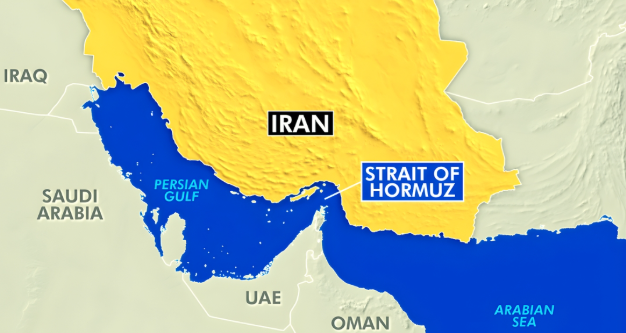
New Delhi: Ignoring the repeated threats of President Donald Trump, and amid the raging war in West Asia involving a dozen countries, Iran has approved a law to levy toll on ships passing through the Strait of Hormuz, from which it has also banned passage of vessels of the US, Israel, and their allies, the media reported on Tuesday.
To assert greater control over the narrow waterway, amid the deepening war in West Asia, Iran’s Parliamentary Security Committee approved the Strait of Hormuz Management Plan. It includes measures to impose tolls on vessels passing through the vital energy corridor and ban American and Israeli vessels from passing through the waterway, according to the Wall Street Journal.
The Iranian plan also includes enhanced security arrangements, ship safety protocols, environmental protection measures, and the implementation of a toll system.
Apart from US and Israeli ships, the new plan also aims to ban vessels from all the countries that have taken part in issuing unilateral sanctions against Iran from transiting the Strait.
The toll plan is meant to reinforce Iran’s sovereign control over the Strait of Hormuz, and establish a legal framework with Oman for the waterway.
Partial closure
Days after the joint US-Israeli military action against Iran, beginning February 28, a senior official from Iran’s Islamic Republican Guard Corps (IRGC) announced a partial closure of the Strait of Hormuz.
It sparked a global energy crisis as the chokepoint was the world’s busiest oil shipping channels, with nearly 20 percent of global oil and liquefied natural gas (LNG) passing through the energy corridor. It triggered an increase in global oil and gas prices affecting several countries.
The conflict in West Asia continues into its fifth week, and, despite the Trump threats, the strait remains largely closed. His statement came even as Iran’s Parliament Security Committee approved a plan allowing the country to charge toll fees from ships passing through the Strait of Hormuz.
Meanwhile, Iranian officials said a US airstrike at Mashhad Airport damaged a Mahan Air aircraft, potentially disrupting a planned mission to India to collect humanitarian aid.
Iran also confirmed the death of IRGC navy chief Alireza Tangsiri, after Israel earlier claimed responsibility for the strike that killed him.
Impact on India
As the global energy crisis began to unfold, India’s fuel exports to the European Union, its third-largest market worth over USD 10 billion, dropped sharply in March. Supplies fell to 18,000 barrels per day — the lowest ever — down 80 percent from February and 94 percent from a year ago.
As of Tuesday, at least 19 vessels carrying LPG, crude oil and LNG meant for India remain stranded in the Strait of Hormuz.
The Ministry of External Affairs said eight Indian nationals have died and one remains missing in “various incidents” across the region.
Meanwhile, India thanked Azerbaijan for helping evacuate Indian citizens from Iran during the conflict. More than 200 Indians have transited through the country since the war began.
The US
The Wall Street Journal, citing US officials, reported that Trump told aides he is willing to end the war even if the Strait of Hormuz remains largely closed, leaving efforts to reopen the crucial shipping route for later. He also warned that Washington could target Tehran’s civilian and energy infrastructure if a ceasefire is not reached soon.
US Secretary of State Marco Rubio said Trump would not allow Iran to control the Strait of Hormuz “in perpetuity,” and said the US expects to achieve its objectives within weeks.
Israeli Prime Minister Benjamin Netanyahu said the ongoing US-Israel military operation against Iran has moved “beyond the halfway point”, with efforts now focused on securing or removing Tehran’s enriched uranium stockpile.
Israel’s parliament approved the 2026 state Budget, including a major defence allocation to fund the war with Iran. The Budget totals 699 billion shekels (about USD 222 billion) and sets a deficit target of 4.9 percent of GDP.
The Gulf countries
Iran attacked a fully-loaded Kuwait-flagged crude oil tanker at anchorage near Dubai Port on Monday, setting it on fire and damaging the hull. Authorities warned of a possible oil spill.
The Islamic Resistance in Iraq said it carried out 19 operations targeting US bases in Iraq and across the region on Monday, using dozens of drones, Al Jazeera reported.
Gulf allies of the US, including Saudi Arabia and the UAE, have urged Trump to continue the military campaign against Iran, arguing that Tehran has not been weakened enough by the month-long bombing campaign.
Oil prices
As the relentless war continues, Brent crude futures fell USD 1.22, or 1.08 per cent, to USD 111.56 per barrel.
The West Texas Intermediate crude dropped 98 cents, or 0.95 percent, to USD 101.90 per barrel.