


Virendra Pandit
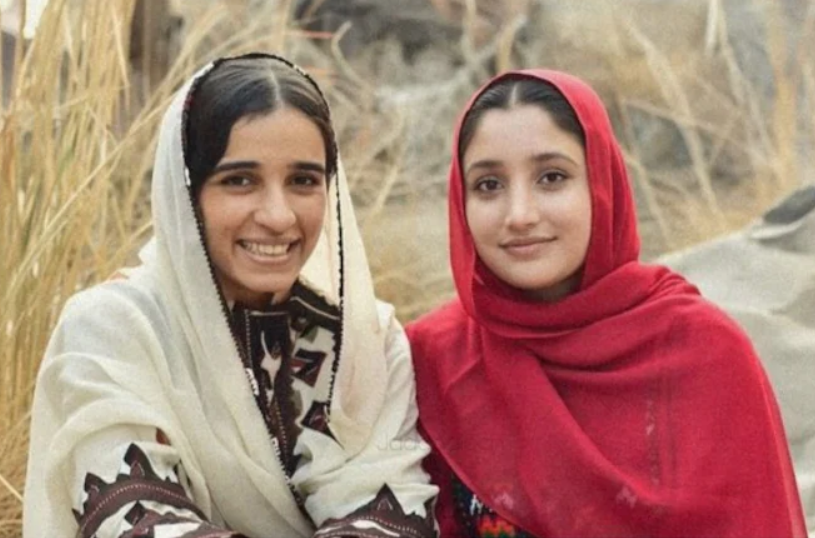
New Delhi: In perhaps the first-ever incident of its kind in the Islamic world, the Baluchistan Liberation Army (BLA), which claimed responsibility for the recent coordinated multiple suicide attacks in Pakistan restive province, claiming over 200 lives, released photos of two of their women fidayeen (suicide attackers), the media reported on Monday.
One of them was identified as Asifa Mengal, 24, while the other woman’s name was not known yet.
The Baluch separatists targeted pro-Pakistani civilians, a high-security prison, police stations and paramilitary installations, according to a report in The Guardian. Among those killed were 18 civilians, 15 security personnel and 92 insurgents, the military said.
Responding to the BLA’s fidayeen attacks, Pakistani security forces launched a 40-hour battle to take down more than 140 militants so far, Baluchistan Chief Minister Sarfraz Bugti said on Sunday.
Pakistan’s Defence Minister Khawaja Asif said that two of the series of attacks involved female perpetrators. He also confirmed that at least two attacks involved women
The banned BLA said Arifa Mengal was the daughter of one Mohammad Ismail and a resident of Nushki in Baluchistan. She joined the BLA’s Majeed Brigade on her 21st birthday, and decided to be a ‘fidayee’ (suicide attacker) in January 2024. She was the one who targeted the ISI headquarters in Nushki on Saturday, the BLA statement added.
The name of the other woman attacker is not known yet. A surfaced video showed her before carrying out the attack, in which she is seen mocking the Pakistani government with her fellow male BLA colleagues. “They (the Pakistan government) only show their power over our oppressed mothers and sisters; they can’t confront us directly. It’s beyond their capacity,” she is heard as saying in the video, as she smiles holding a massive gun.
“We just need to awaken ourselves; the Baluch nation needs to awaken. We must stand shoulder-to-shoulder with the Baluch Sarmachars. The enemy’s days are numbered; they don’t have much strength. The Baluch nation must understand that there can be absolutely no compromise with this enemy. Look, today our fighters are sacrificing their lives, blowing themselves to pieces, yet some still spy on them for a few pennies,” the woman attacker says in the video in Balochi.
The recent flareup was among the deadliest in years in the largest Pakistani province of Baluchistan, which borders Afghanistan and Iran. Pakistan’s Junior Minister Talal Chaudhry said that attackers dressed as civilians entered schools, banks, markets and hospitals before opening fire.
The attacks started on Friday night (January 29-30) and continued until Saturday. The Baluchistan government spokesperson, Shahid Rind, said terror attacks were reported from multiple regions, including Nushki, Hub, Chaman, Naseerabad, Gwadar, and Makran. CM Sarfraz Bugti said the authorities knew about an operation of this kind being planned, which is why they were able to counter-attack.
Operation Herof 2.0
The BLA said on Saturday it had launched the second phase of their Operation Herof (Black Storm), targeting security forces across Baluchistan. The Pakistani Army said security forces had repelled attempts by militants to seize control of any city or strategic installation.
The Baluchistan province, which is Pakistan’s largest and poorest, has faced decades-long insurgency as Baluch separatist groups seek independence from Islamabad and a larger share of its natural resources.
Baluchistan, Pakistan’s largest province by area, has long been trapped in a vortex of insurgency, with armed Baluch groups saying their fight is against political marginalisation, economic neglect, and exploitation of their resources.
In recent years, women have increasingly taken up active combat roles, including suicide bombings.
Baluch extremism is driven by nationalist and separatist groups demanding greater autonomy or independence for their Baluchistan. Separatist groups such as the Baluch Liberation Army (BLA) and the Baluch Liberation front (BLF) accuse Islamabad of resource exploitation and political marginalisation.
Pakistan labels these groups as terrorist organisations, blaming their actions on foreign influence and criminal networks.
The BLA’s Operation Herof’s second phase was a 40-hour offensive across Kharan, Mastung, Tump, Pasni, Quetta, and Noshki.
The group claimed to have “repelled” Pakistani forces, with over 200 security personnel killed and 17 captured, although unverified.
Female ‘fidayeens’ (suicide bombers) played a key role, with 11 of the 18 BLA fighters killed being women, including Asifa Mengal, who attacked the ISI HQ in Noshki, and Hawa Baloch, active on the Gwadar Front.
The early Baluch militancy was male-dominated, with suicide attacks rare and often criticised. Since 2022, however, Baluch groups embraced suicide missions, placing women at the forefront.
Traditionally, women associated with the insurgency played indirect roles like spreading political messaging, raising funds, supporting families of fighters, or participating in rights-based protests.
In April 2022, the BLA carried out the first confirmed female suicide bombing in the Baloch insurgency, followed by more cases over the next three years.