


Virendra Pandit
New Delhi: While US President Donald Trump mounts pressure on Europe to cut Russian energy imports, Hungary, a NATO member, has told America that any such move will only cripple its economy.
Landlocked, Hungary is among the few European countries still purchasing Russian oil and natural gas even after Russia’s full-scale invasion of Ukraine in February 2022.
After the demise of the then Soviet Union in 1991, Hungary was invited in 1997 and it became a NATO member in 1999, as one of the first former Warsaw Pact countries to do so.
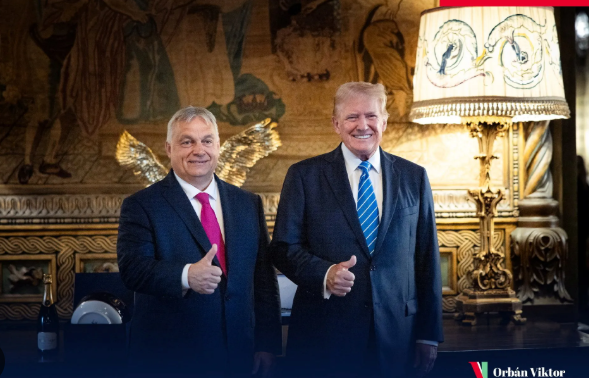
Hungarian Prime Minister Viktor Orban said on Friday that his country will continue to source fossil fuels from Russia despite Trump’s demands, and that he had informed his close ally, the US President, that dropping Russian energy would be a disaster for Hungary’s economy, the media reported.
Orban publicly supported and campaigned for Trump in the US elections in 2024 and made several appearances and statements in this regard.
In comments to state radio, Orban said he recently told Trump that that dropping Russian energy imports would be an economic disaster for Hungary.
But Trump, an admirer of the long-serving Hungarian leader, earlier this month called on all NATO countries, including Hungary, to cease purchasing Russian oil, since he believes the Russia-Ukraine war would end if they did so.
“I told the US President … that if Hungary is cut off from Russian oil and natural gas, immediately, within a minute, Hungarian economic performance will drop by 4 percent,” Orban said.
“It means the Hungarian economy would be on its knees.”
Despite three years of efforts by European Union members to diminish Russian energy supplies and thereby deprive President Vladimir Putin of revenue that helps fuel the ongoing war in Ukraine, Hungary insisted that geographical and infrastructural constraints make it nearly impossible to transition to using fossil fuels supplied from the West.
However, other countries in the region, including the similarly landlocked Czech Republic, have managed to fully cease their purchases of Russian oil since Moscow launched its invasion. Slovakia, which neighbours Hungary, has also maintained its Russian energy imports.
Yet, despite pressure from the EU and the Trump administration, Orban, widely considered the EU leader with the closest relationship to the Kremlin as well, said on Friday that when it comes to energy sources, “It is clear what is in Hungary’s interest and we will act accordingly.”
Hungary and the United States, he said, “are sovereign countries. There is no need for either of us to accept the arguments of the other. America has its arguments and interests, and Hungary does too.”
Meanwhile, the media reported, Indian officials have again told the Trump administration that a significant reduction in Russian oil imports by the South Asian nation’s refiners would require Washington to instead allow crude purchases from sanctioned suppliers like Iran and Venezuela.
An Indian delegation visiting the US this week reiterated the request in meetings with American officials. Indian representatives emphasized that simultaneously cutting off Indian refiners’ supply from Russia, Iran, and Venezuela — all major oil producers — could lead to a spike in global prices.
Despite the Trump levies, India has maintained its crude imports from Russia, the OPEC+ producer, albeit at a lower rate.
Union Commerce and Industry Minister Piyush Goyal said this week in New York that India wanted to increase its purchases of American oil and gas, adding that “our energy security goals will have a very high element of US involvement.”
Russia was forced to discount its crude after many others shunned trade with Moscow due to the war in Ukraine. Almost 90 percent of India’s oil needs are met by imports, and cheaper Russian barrels have helped to reduce the burden on its import bill. Iranian and Venezuelan oil would also be similarly discounted.
India stopped buying Iranian oil in 2019, and its largest private refiner — Reliance Industries Ltd. — halted purchases of Venezuelan crude this year as the US tightened sanctions. Processors can shift to buying more Middle Eastern barrels, but it would come at a higher cost and inflate the overall import bill.
Oil refiners paid an average USD 68.90 a barrel for Russian crude in July, compared with USD 77.50 from Saudi Arabia and USD 74.20 from the US, according to data from the Commerce Ministry. India is the biggest buyer of Russian oil delivered by tanker, while China is the largest overall importer, including deliveries by pipeline.
The oil market is also on track for a large surplus next year as the OPEC+ alliance and producers from outside the group boost output, which is likely to put downward pressure on global crude prices.