








Virendra Pandit
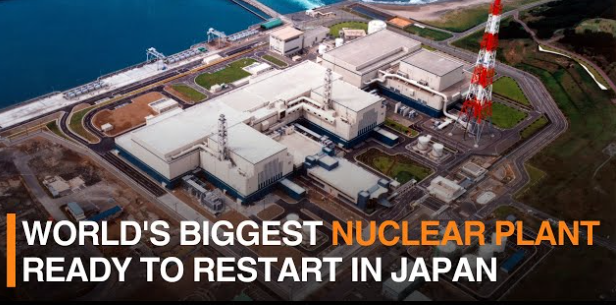
New Delhi: Reasserting its increasing role in geopolitics and energy dynamics, Japan is set to take the final step to restart the world’s largest nuclear power plant on Monday when the region of Niigata votes on the resumption of operations, in what is seen as a watershed moment for the country’s pivot back to nuclear energy nearly 15 years after the Fukushima disaster.
According to media reports, Kashiwazaki-Kariwa, located about 220 km northwest of Tokyo, was among 54 reactors shut after the 2011 earthquake and tsunami crippled the Fukushima Daiichi plant in the worst nuclear disaster since Chernobyl in Russia (1986).
Since then, Japan has restarted 14 of the 33 plants that remain operable, as it tries shed imported fossil fuels. Kashiwazaki-Kariwa will be the first plant operated by Tokyo Electric Power Co (TEPCO), which ran the doomed Fukushima plant as well.
But the unconvinced people are outraged against what they believe could be a ticking bomb.
Around 300 protesters, mostly older people, holding banners reading ‘No Nukes’, ‘We oppose the restart of Kashiwazaki-Kariwa’ and ‘Support Fukushima’ gathered in front of the Niigata prefecture assembly on Monday, as local lawmakers prepared to make their decision later in the day.
As the rally started, in temperatures of 6°C ahead of the vote, people were singing ‘Furusato’: a national song about connection to a birthplace, meaning ‘homeland’ in Japanese.
If approved, TEPCO is considering reactivating the first of seven reactors at the plant on January 20, 2026, public broadcaster NHK reported.
“We remain firmly committed to never repeating such an accident and ensuring Niigata residents never experience anything similar,” said TEPCO spokesperson Masakatsu Takata. He, however, declined to comment on timing.
TEPCO earlier this year pledged to inject 100 billion yen (USD 641 million) into the prefecture over the next 10 years as it sought to win the support of Niigata residents. But many locals remain wary.
A survey published by the prefecture in October found 60 percent of residents did not think conditions for the restart had been met.
On Monday, the prefecture’s assembly will cast a vote of confidence on Hanazumi, a de facto ballot on his support for the restart. The vote is seen as the final hurdle before TEPCO restarts the first reactor, which alone could boost electricity supply to the Tokyo area by 2 percent.
Prime Minister Sanae Takaichi, who took office two months ago, has backed nuclear restarts to strengthen energy security and to counter the cost of imported fossil fuels, which account for 60 to 70 percent of Japan’s electricity generation.
Japan spent 10.7 trillion yen (USD 68 billion) in 2024 on imported liquefied natural gas (LPG) and coal, a tenth of its total import costs.
Despite its shrinking population, Japan expects energy demand to rise over the coming decade due to a boom in power-hungry AI data centres. To meet those needs and its decarbonisation commitments, it has set a target of doubling the share of nuclear power in its electricity mix to 20 percent by 2040.
In July, Kansai Electric Power, Japan’s top nuclear power operator, said it would begin conducting surveys for a reactor in western Japan, the first new unit since the Fukushima disaster. But some feel the nuclear power revival is a terrifying reminder of the potential risks.