Repercussions of the Iran- US Israel War on Gulf States




By Harsh Pargat
The death of Iran’s Supreme leader Syed Ali Khamenei on 28th February in a joint airstrike done by US and Israel as part of Operation Epic Fury. The strikes killed the Supreme leader. And this led to the escalation of war between the three countries. This article emphasizes on the repercussions of the ongoing war on the Gulf states. It initially provides a comprehensive context into the factors that led to the war. The piece then touches upon how the retaliatory strikes carried out by Iran made gulf states vulnerable to great power rivalries.
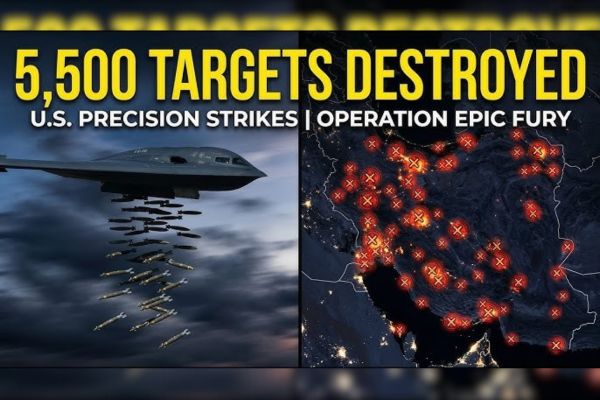
Operation Epic Fury: As per news reports by the Sunday Guardian US president Donald Trump highlighted five objectives for launching Operation Epic Fury ‘completely degrading Iranian Missile Capability, destroying Iran’s Defence Industrial Base,” and eliminating Iranian Navy and Air Force. As part of this coordinated operation airstrikes were done in the Tehran compound of the Supreme leader’s residence as well as targeting Iranian Revolutionary Guards Corps.
Iran’s Response: After the death of Iran’s Supreme leader the Iranian government as per the Iranian constitution appointed successor to Khamenei Ayatollah Alireza who was also killed in an airstrike. After this Khamenei’s son Mojataba Khamenei became the supreme leader. The Iranian government announced 40 days of mourning whereas the Iranian Revolutionary Guards Corps(IRGC) launched strikes targeting Israel and the US assets in the Gulf. Striking the Aramco oil refinery in Saudi Arabia to bombarding Bhurj Khalifa in UAE. Further Iran’s closure of the Strait of Hormuz has negatively affected global shipping and trade.
Repercussions on the Gulf States: By the Iran-Israel US war gulf states have faced direct repercussions because of their geography as well as strategic vulnerability as it finds itself in the middle of great power rivalries.
The retaliation strikes by Iran have damaged key sources of energy as well as the attack on desalination plants from both sides the has put forth the question of intentionally targeting infrastructure that provides livelihood. Iranian Foreign Minister Abbas Araghchi accused the United States of attacking a desalination plant in Iran, while Bahrain’s interior ministry said that its plant was struck by an Iranian drone. The damage to the Bahraini desalination plant reportedly affected water supply in approximately thirty villages. UAE and Kuwait have also stated that their desalination plant was targeted. The number of coordinated and targeted strikes has adversely impacted global energy supply chains. According to Qatar’s Foreign Affairs spokesperson Majed al-Ansari, said “Targeting energy infrastructure constitutes a threat to global energy security, as well as to the peoples of the region and its environment.
Iran responded to an Israeli attack on its South Pars gas field this week by launching missiles at Qatar’s Ras Laffan refinery. The damage will take three to five years to repair and affects 17 percent of Qatar’s gas production, according to Qatari energy minister Saad al-Kaabi.
Need for Reforming the Gulf Security Architecture:
The GCC countries need to make a transition from external protection dependence. Towards forming a hybrid model combining complex intricacies of strategic security and combined mutual interests. Gulf states much more. The current war has highlighted that security cannot be outsourced.
Gulf ‘s reliance on desalinisation and world’s reliance on energy requirements Geography cannot be ignored. Hedging alone doesn’t guarantee security. Nature of deterrence has evolved. Traditional security aspect is not pragmatic. Contemporary dynamics have reduced the degree of trust between states Strategic Hedging New security architecture Integrated Air and missile defence. Ensures maritime security through Strait of Hormuz and Bab al Mandab. Pursuit of strategic hedging through multi vector diplomacy.
India’s Role as a Potential Mediator: India can be a potential mediator owing to its unique foreign policy of multi-alignment and strategic autonomy . Also India has strategic relations with all the three countries involved in the war. The president of Finland Alexander Stubb said that a ceasefire is a must and India has the pragmatic potential to do so owing to it’s neutrality. Former UAE envoy Hussain Hassan Mirza in an interview to India Today stated that India has the stature to negotiate a ceasefire.
Conclusion: In conclusion it can be envisaged that owing to the recent developments progress it is difficult to determine when this war will end. India though has not officially announced that it will play a mediation role the global voices and it’s rising stature provide India a pragmatic chance to mediate owing to its good influence with all the three states involved in the war.
(The author is A Research Analyst, International Relations, with focus on West Asia.) Please share your views at – harshpargat@gmail.com