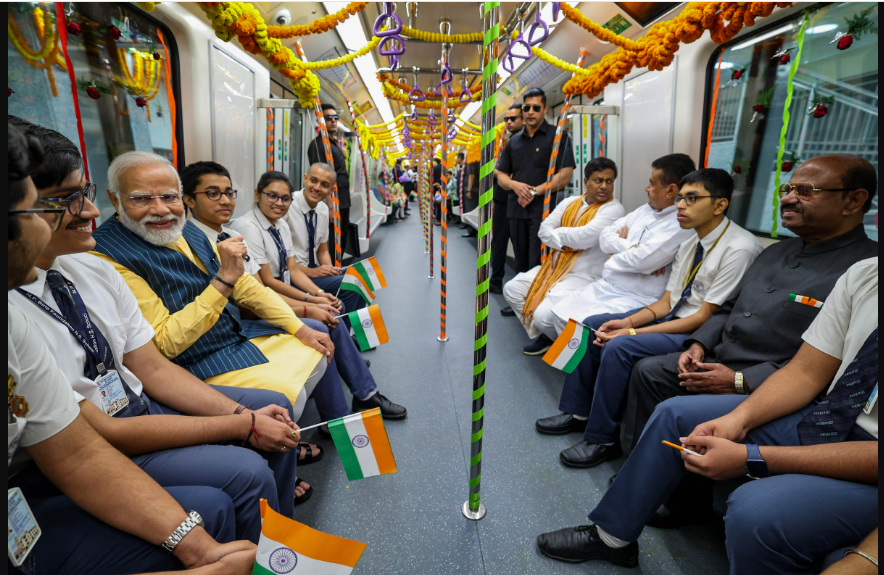


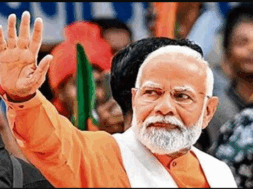
NEW DELHI, Aug 22: As the Prime Minister Narendra Modi inaugurated the 13.61 kilometre long new metro tracks costing over Rs 5,200 crores and lunched the train services on three new metro routes on Friday evening, the West Bengal chief minister Mamata Banerjee, who skipped the ceremony, asserted that the projects were planned and sanctioned during her tenure as railway minister.
Her decision to skip Mr Modi’s event was ascribed to the alleged harassment of migrants from the state in the BJP-ruled states. The Chief Minister, who held the railway portfolio twice during her tenures in the union cabinets — first in the NDA government under Atal Bihari Vajpayee between 1999 and 2001, and again during the Congress-led UPA-2 from 2009 to 2011 — said it was in her second stint that she sanctioned the series of metro expansion projects across Kolkata.
“Allow me to be a little nostalgic today. As the Railways Minister of India, I was fortunate in planning and sanctioning a series of Metro Railway corridors in metropolitan Kolkata. I had drawn the blueprints, arranged the funds, initiated the works and ensured that the different ends of the city (Joka, Garia, Airport, Sector V, etc) were connected by an intra-city Metro grid. Later, as the Chief Minister of West Bengal, I had the additional privilege of taking part in execution of the projects,” she said in a post on X.
“From the State, I arranged free land, paved roads, arranged rehabilitation of displaced people, removed impediments, and ensured all help in the execution of projects. Our chief secretaries successively held series of coordination meeting to ensure integration of execution agencies. My planning as Railways Minister got fulfilment in my participation in execution. Expanding Metro infrastructure has been a long journey for me. Allow me some nostalgia today,” Ms Banerjee said.
She wrapped up her experience in an online post about an hour before three new routes would add to the city’s metro network apparently to deny any credit to the Modi government for the new projects in view of the coming elections to the state Assembly early next year.
The 13.61 k.m.-long network, spread across the ‘Green’, ‘Yellow’ and ‘Orange’ lines, marks a defining moment in the city’s metro journey that began in 1984. Officials said the new routes are expected to ease congestion on Kolkata’s choked roads and transform daily commuting for millions.
Kolkata was the first Indian city to get an underground metro rail network and has lately expanded to improve connectivity to the city’s northern and southern ends, as well as the eastern and western fringes. The country’s metro rail service was started in Kolkata in 1984, connecting the northern and southern ends of the city’s then peripheries, and an east-west section was added later in 2020 to connect Salt Lake and Howrah through Kolkata.
The three new stretches that would now add to the city’s vast metro network are the Noapara-Jai Hind Bimanbandar section, Sealdah-Esplanade section, and Beleghata-Hemanta Mukhopadhyay section. The Noapara-Jai Hind Bimanbandar section will improve access to the city’s airport, while the Sealdah-Esplanade metro service will reduce the travel time by nearly half an hour. The Beleghata-Hemanta Mukhopadhyay section will strengthen connectivity with the city’s IT hub, the government has said.
(Manas Dasgupta)