





Manas Dasgupta
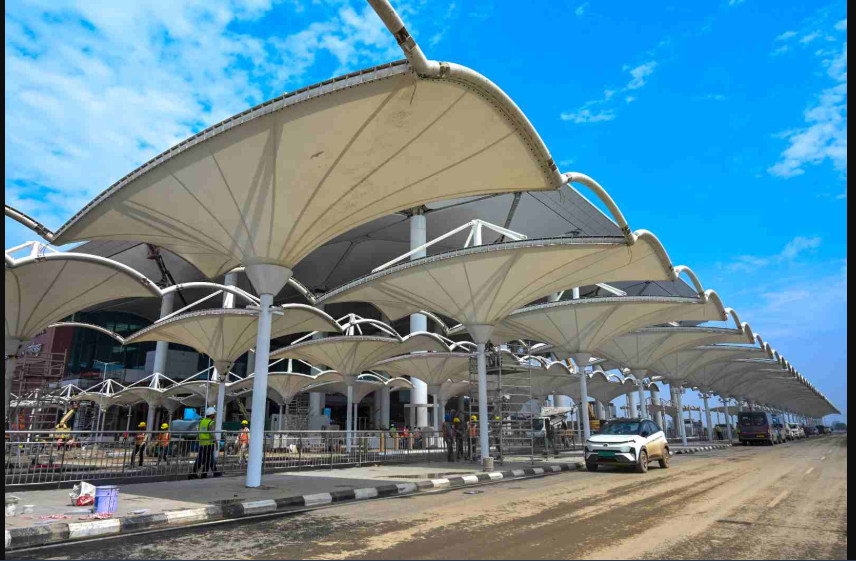
NEW DELHI, Mar 28: The first phase of Noida International Airport at Jewar in Uttar Pradesh adjacent to Delhi was inaugurated on Saturday by Prime Minister Narendra Modi, giving a major boost to air travel and connectivity in the Delhi NCR (National Capital Region) region.
Once fully developed, the airport is expected to become the largest in India, with a planned capacity to handle 225 million passengers annually, officials said. The airport is set to function as a major international hub for cities including Noida, Meerut, Ghaziabad, Mathura and Agra, while also improving connectivity to several religious and tourist destinations in the region.
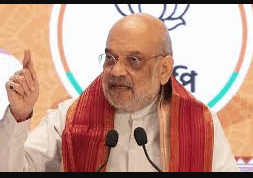
Addressing the gathering, the Prime Minister said the launch signalled the beginning of a transformative phase for both the state and the country. “Today we are starting a new chapter for a developed Uttar Pradesh and a developed India,” he said. The commencement of flights at the airport is yet to be announced.
Designed as the National Capital Region’s second airport, the project involves an investment of ₹11,200 crore. In its first phase, it will handle 12 million passengers annually with a single runway, while the long-term plan envisions a capacity of 70 million passengers per year and up to six runways.
Mr Modi underscored that the project would unlock fresh opportunities for farmers, small and medium enterprises, and the youth in western Uttar Pradesh. “Flights from here will connect directly to the world, and the airport will stand as a symbol of a developed Uttar Pradesh taking flight,” he said, congratulating the people of the State, particularly those in western U.P.
The PM said the Noida airport would serve a vast catchment spanning Agra, Mathura, Aligarh, Ghaziabad, Meerut, Etawah, Bulandshahr and Faridabad, significantly expanding connectivity across the region. Mr Modi said the ongoing global situation remained a cause for concern, pointing to the conflict in West Asia that has persisted for over a month and disrupted supplies of essential commodities such as food, petrol, diesel, gas and fertilisers in several countries.
Noting that India imports a significant share of its crude oil and gas from the region, he said the government was working to cushion the impact on citizens. “Every possible step is being taken to ensure that the burden of this crisis does not fall on ordinary families and farmers,” he said. He appealed to the people to face this crisis with a calm mind and patience, calling it the greatest strength of Indians.
The PM said the government has further expanded the low-cost flying scheme called UDAN and approved Rs 29,000 crore under which 100 new airports and 200 new helipads would be built in smaller cities. The growth in the aviation sector also creates tremendous opportunities for the youth, including pilots, cabin crew, and maintenance professionals, he said, as well as in Maintenance, Repair, and Overhaul (MRO) sector, noting that 85 per cent of Indian aircraft still have to go abroad for MRO services and today a foundation of one such facility for aircraft was also laid at Noida airport.
Civil Aviation Minister Kinjarapu Ram Mohan Naidu, Uttar Pradesh Governor Anandiben Patel and Chief Minister Yogi Adityanath were also present on the occasion. Mr Naidu said that Noida International Airport would be developed as an “aerotropolis” and not just an airport. “This is a moment of great happiness not only for Jewar, Uttar Pradesh or Delhi-NCR, but for the entire country,” he said, adding that the national capital had received “another heartbeat” with the development of the airport.
The airport, which has faced multiple delays before its inauguration, has already received its aerodrome licence from the Directorate General of Civil Aviation, a crucial requirement before operations can commence.
The DGCA issued the aerodrome licence on March 6, 2026, clearing a major regulatory step for the airport. Following this approval, cargo and domestic flight operations are expected to begin within 45 days, according to the project plan. This indicates that commercial services could start between mid-April and May 2026.
International flight operations are likely to begin later in the year. Booking windows are expected to open around 90 days before the start of international services, while domestic tickets are likely to be available about 6 weeks in advance.
While the final schedule is still being finalised, around 10 cities are expected to get direct connectivity from Jewar within the first 45 days of operations. These include Mumbai, Bengaluru, Hyderabad, Kolkata, Chennai, Pune, Ahmedabad, Lucknow, Jaipur and Goa.
In terms of airline participation, operations in the initial phase are expected to be led by low-cost carriers and rapidly expanding airlines. IndiGo is likely to hold the largest share of slots, while Akasa Air is aiming to tap into the younger, tech-savvy demographic in the Noida region. Air India Express is expected to focus on strengthening connectivity between the Noida NCR hub and Tier 2 cities.
The project timeline has been revised several times. It was initially scheduled for September 2024, before being pushed to mid-2025, with operations planned to follow thereafter. The inauguration was later rescheduled to October 30, 2025, with operations expected to begin within 45 days, initially linking at least 10 cities.
In comparison, Delhi’s Indira Gandhi International Airport, which is currently the country’s busiest airport has four runways and handles over 1,500 flight movements daily. Notably, Delhi’s aviation traffic reached a record high on February 20 this year, when IGI managed around 1,550 aircraft movements in a single day, driven by a surge in departures ahead of the conclusion of the India AI Impact Summit 2026.
The summit, held from February 16 to 20, 2026, saw participation from over 50,000 delegates and was billed as the world’s largest AI event. General aviation activity also saw a sharp rise, with 94 private and charter aircraft operating that day, nearly three times the usual daily average of 30–35 movements. Passenger traffic was similarly high, with approximately 2.5 lakh travellers scheduled, bringing the airport close to its peak passenger handling capacity.
As per officials, the fully built Noida airport will be able to handle up to 22.5 crore passengers annually, which translates to an average of around 6 lakh passengers per day at full capacity. However, these figures are theoretical, and actual daily numbers will vary depending on demand, flight schedules, and the phased expansion of the airport. On the other hand, IGI handles around 7.9 crore passengers a year, as per figures given on Delhi International Airport Limited website. It reportedly has the capacity to handle over 10.5 crore passengers annually.
While the fully built Noida airport is projected to have a significantly higher passenger capacity, surpassing IGI, will take considerable time. Delhi IGI remains a well-established aviation hub with extensive connectivity, high flight frequency, and mature infrastructure. In contrast, Noida airport will scale up gradually in phases, adding routes, airlines, and passenger volumes over the years. As a result, despite its ambitious long-term capacity, it may take a substantial period before Noida can match or exceed Delhi’s operational dominance.