Pakistan Launched Extraordinary Lobbying Blitz in US for Intervention to Stop “Operation Sindoor”




Manas Dasgupta
NEW DELHI, Jan 6: Amidst tall claims of its military prowess, Pakistan, which saw in 2025 its deadliest year in a decade in respect of conflict-related deaths, had launched an extraordinary lobbying blitz in Washington, exposing the scale of diplomatic pressure Islamabad unleashed as it struggled to blunt India’s military response during Operation Sindoor in May 2025, the newly accessed US government filings revealed.
The documents showed that Pakistani diplomats and defence officials sought more than 50 meetings with senior US administration figures, lawmakers and influential media outlets between the launch of Operation Sindoor and the full implementation of the ceasefire after a Pakistan-sponsored terror attack in Jammu and Kashmir’s Pahalgam in April 2025.
The records, filed under the US Foreign Agents Registration Act (FARA), indicate that Pakistan’s ambassador to the United States and its defence attaché reached out repeatedly by emails, phone calls and in-person meetings to more than 60 officials and intermediaries to press Washington for intervention and to “somehow stop” India’s military campaign following the Pahalgam terror attack in Jammu and Kashmir.
The outreach spanned Congress, the Pentagon, the State Department and prominent American journalists. Pakistani representatives discussed Kashmir, regional security, rare earth minerals, and broader bilateral ties, while also seeking interviews and background briefings with leading US media organisations. Several entries describe the efforts as “ongoing representation of Pakistan,” underscoring the intensity and persistence of the campaign.
This lobbying surge did not emerge in isolation. In November 2025, The New York Times reported that Pakistan had signed contracts with six Washington lobbying firms worth roughly $5 million annually to gain expedited access to the Trump administration and secure favourable trade and diplomatic outcomes.
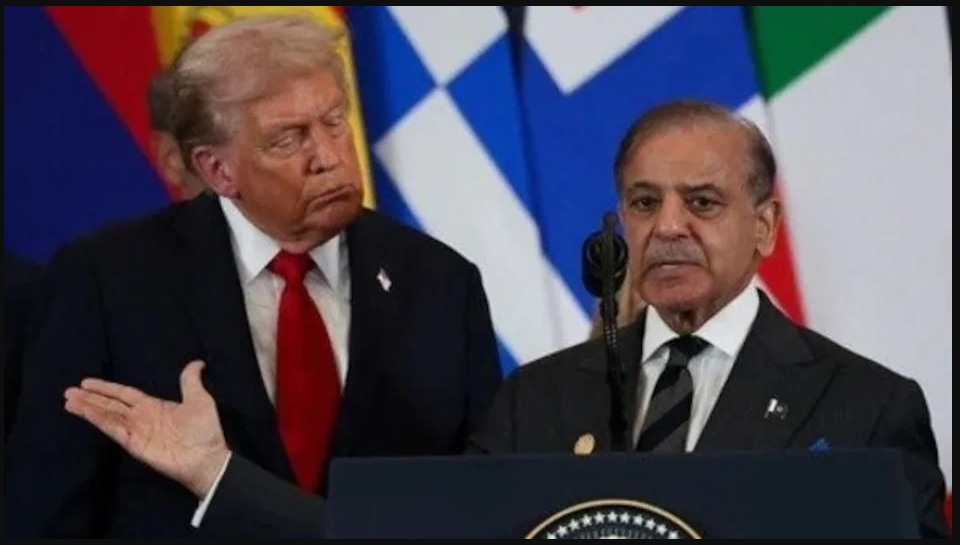
Weeks after Islamabad struck a deal with Seiden Law LLP working through Javelin Advisors, then-US President Donald Trump hosted Pakistan Army Chief Field Marshal Asim Munir at the White House, a meeting widely seen as symbolising Pakistan’s renewed access to the highest levels of US power.
According to the New York Times’ investigation, Pakistan dramatically ramped up its spending on lobbying in April and May, outlaying at least three times more than India during the same period. The paper described the resulting policy shifts as a sharp turnaround from previously strained US–Pakistan relations, marked by public praise for President Trump, the nomination of his name for the Nobel Peace Prize, and the pursuit of lucrative business and trade concessions.
Multiple diplomatic sources said the 2025 FARA filings confirm a broader pattern: Pakistan expanded its lobbying footprint across Capitol Hill and the US media ecosystem, with some individual contracts and outreach efforts running into hundreds of thousands of dollars. While there are indications that spending tapered later in the year, the documents collectively paint a picture of a state under intense military and diplomatic pressure, one that turned urgently to Washington in hopes of restraining India’s battlefield momentum.
The data released by the Islamabad-based Pakistan Institute for Conflict and Security Studies (PICSS), in 2025, conflict-related deaths in Pakistan climbed 74 per cent compared to the previous year. The high number of deaths was driven by suicide bombings and the use of US military equipment by Afghan terrorists, along with Islamabad’s own counterterrorism operations against outfits like the Pakistani Taliban and the Baloch Liberation Army (BLA). The PICSS report said terror operations in Pakistan left 3,413 people dead – up from 1,950 in 2024.
With records stretching back to 1947, Pakistan’s military and intelligence apparatus, the Inter-Services Intelligence (ISI), has used a consistent strategy of using terrorism as a state policy against India. For decades, Islamabad was considered a patron of the Taliban, providing shelter and support since the group’s emergence in the 1990s. It initially backed the anti-Soviet mujahideen who later formed the group.
In the 1990s, Pakistan was one of only three nations to recognise the Taliban regime. It was also the last to cut ties in 2001. Post US invasion, Islamabad was also accused of helping the Taliban terrorists, offering safe havens to regroup, which allowed the movement to endure despite counter-terrorism actions.
But 2025 saw the same guns turning inwards, with Islamabad accusing Kabul of turning a blind eye to cross-border attacks by Pakistani Taliban terrorists, a claim Afghanistan’s Taliban government denies. Tensions between the two neighbours have been high since October, following border clashes that killed dozens and wounded hundreds.
According to PICSS, among the 3,413 people who died in terror-related incidents, 2,138 were terrorists. The 124 per cent rise in terrorist deaths reflects intensive counterterrorism operations against the Pakistani Taliban, also known as Tehrik-e-Taliban Pakistan (TTP), which is not part of Afghanistan’s Taliban, the report said.
Abdullah Khan, managing director of PICSS, said the high death toll was driven in part by a rise in suicide bombings and the terrorists’ use of US military equipment left behind during the American withdrawal from Afghanistan in 2021, which later reached the Pakistani Taliban and other groups, increasing their operational capabilities.
The Islamabad-based PICSS recorded at least 1,066 terrorist attacks in 2025, and suicide attacks rose 53%, with 26 incidents reported. It also said security forces arrested about 500 militants during intelligence-based operations last year, up from 272 in 2024, he said. Khan said terrorist groups, including the TTP, claimed most attacks in 2025.
PICSS released its report weeks after Pakistan’s military spokesman, Lt Gen. Ahmad Sharif Chaudhry, said security forces carried out 67,023 intelligence-based operations in 2025, killing 1,873 terrorists, who included 136 Afghan nationals.
The border violence between Pakistan and Afghanistan followed the Oct. 9 explosions in Kabul that the Afghan Taliban government blamed on Pakistan. A Qatar-mediated ceasefire has largely held since then, though the two sides failed to reach an agreement in November despite holding three rounds of talks in Istanbul.
All border crossings between Pakistan and Afghanistan have remained closed since October, halting bilateral trade and the movement of people between the two countries. In December, Pakistan’s newly appointed armed forces chief, Field Marshal Asim Munir, called on Afghanistan’s Taliban government to choose between maintaining ties with Islamabad and supporting the Pakistani Taliban.