Overstretched BLOs: SC Refuses to Interfere in SIR Exercise, Directs States to Deploy Additional Staff





Manas Dasgupta
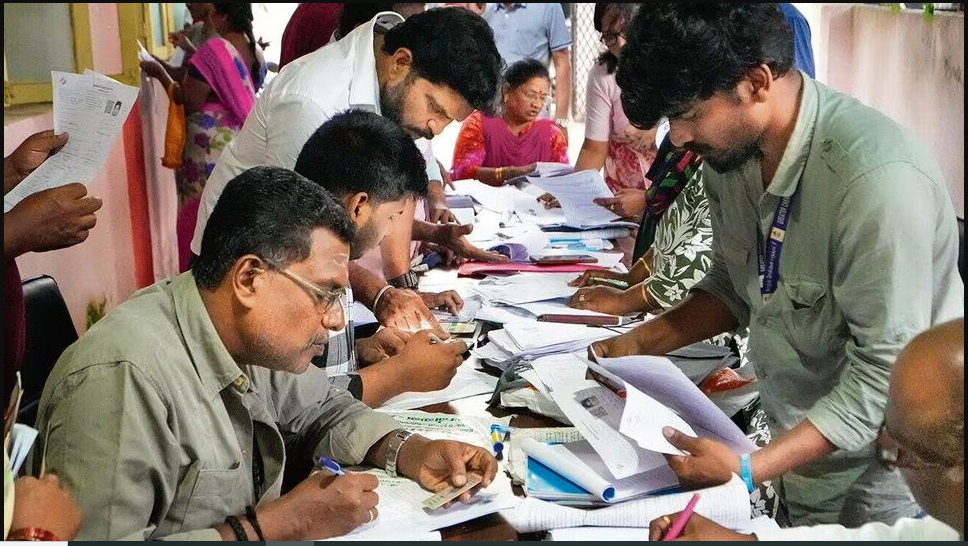
NEW DELHI, Dec 4: Refusing to interfere with the ongoing “Special Intensive Revision” of the electoral rolls being conducted by the Election Commission of India (ECI) in 12 states and union territories, the Supreme Court on Thursday directed the concerned state governments to deploy additional staff to ease the workload on the stretched Booth Level Officers (BLOs).
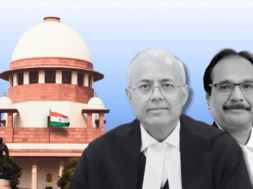
A Bench of Chief Justice of India Surya Kant and Justice Joymalya Bagchi emphasised that State employees recruited as BLOs had an obligation to perform the statutory duties assigned to them, in this case distributing enumeration forms to electors as part of the Special Intensive Revision (SIR) process. The court said it was for the State governments to “obviate the hardships” of the BLOs.
The Supreme Court directed state governments to ease the workload of the BLOs by deploying additional staff and considering requests for exemptions on a case-by-case basis. The Court did not issue a blanket order to “replace” all stretched BLOs but put the onus on states to provide adequate support to prevent undue pressure and ensure the ongoing SIR of electoral rolls was completed smoothly.
The court’s unflinching response came to a plea that BLOs were unable to meet the overwhelming targets set by the EC, collapsing under pressure or even choosing to take their own lives. “Whenever an employee has any individual, specific reasons for seeking exemption from the assigned duties, the competent authority, the State government, may consider such requests on a case to case basis and replace such persons,” the court directed.
Putting the onus entirely on State governments to substitute employees unable to bear the pressure of Booth Level Officer (BLO) work, the Bench underscored that States were obliged to provide the Election Commission (EC) with the requisite human resources to complete the SIR within the specified deadline. The court said States could also choose to depute additional employees to strengthen the BLOs’ ranks and reduce their work stress.
The EC, represented by senior advocate Rakesh Dwivedi, said claims of BLOs wilting under work pressure were “works of imagination”. He submitted that each polling booth was limited to 1200 electors under the EC’s rationalisation scheme. The BLO assigned to a booth had 37 days, from November 4 to December 11, to complete the enumeration work.
Senior advocate Maninder Singh, also for the EC, submitted that 90% of forms had been distributed in Tamil Nadu and 85% in Uttar Pradesh, where BLO deaths were reported. There were, on average, more than two lakh booth level agents of political parties and nearly 65000 BLOs deployed in Tamil Nadu alone.
Countering them, senior advocate Kapil Sibal, appearing for petitioners from Kerala and West Bengal, urged the court to recognise the cause of the BLOs as a “genuine concern.” “Why does the EC want SIR to be completed in just two months? The election in Uttar Pradesh is in 2027. Still, they want it done in two months, when there is a whole year ahead… They claim BLOs have uploaded 90% of the forms. Who is going to cross-check? Everything EC says may not be true… The narrative was there were ‘ghuspaithiyas’ (intruders), none were found,” Mr Sibal submitted.
Senior advocate Gopal Sankaranarayanan, appearing for Tamilaga Vettri Kazhagam (TVK), said BLOs, recruited from among aanganwadi workers and primary school teachers, were threatened with imprisonment, disciplinary proceedings or even loss of livelihood for not meeting targets.
“Fifty FIRs have been registered against BLOs under Section 32 of the Representation of the People Act of 1950 for the breach of official duty in connection with the preparation, etc, of electoral rolls. The EC is the complainant. Thirty odd BLOs have taken their own lives across the country,” Mr Sankaranarayanan submitted.
He urged the court to stop the EC from filing criminal complaints against BLOs. Mr Sankaranarayanan said the BLOs, though State employees, were doing the work of the EC. The electoral body had a duty to be humane to them. “This is not the way we behave with our teachers and aanganwadi workers… At least when you conduct an exercise, be humane about it,” he submitted.
However, the Bench shifted the focus from the EC to the States, observing that BLOs were State employees. The States could decide whom to depute for SIR work. Employees, for example, who were pregnant or unwell, need not be recruited as BLOs. “The work [SIR] cannot be hampered on this ground. Somebody has to do this… They are State employees. There is an obligation on them. There are officers who go from one State to another for conducting elections,” Chief Justice Kant observed.
Among the key directions issued by the court on the SIR exercise in response to pleas highlighting extreme work pressure, suicides, and FIRS against BLOs included:
- Deploy Additional Staff:State governments are obligated to provide the requisite workforce to the Election Commission (EC) and may deploy additional employees to reduce the working hours of existing BLOs engaged in SIR duties.
- Consider Exemptions:Requests for exemption from duty due to specific reasons such as illness, pregnancy, or family hardships must be considered by the competent state authority on a case-by-case basis.
- Ensure Replacements:If an exemption is granted, the state government must immediately arrange a replacement to ensure the revision work is not hampered.
- Address Grievances:If any affected individual’s grievance remains unaddressed under these directions, they may approach the Supreme Court directly for relief.
- Avoid Coercive Action (Initially):The Court noted that criminal action (under Section 32 of the Representation of the People Act, 1950) should not be the first response to non-performance linked to personal constraints and extreme pressure.
The Supreme Court emphasized that while BLOs (many of whom are teachers and aanganwadi workers) are state government employees and obligated to perform these statutory duties, the states bear the responsibility to manage their working conditions humanely.