


Virendra Pandit
New Delhi: While the US is pressurizing Iran to sign the nuclear deal, fearing it could use it for warfare, Pakistan, keeping its own options open, has supported Iran’s right to develop nuclear capability for “peaceful purposes.”
After Iranian President Masoud Pezeshkian, who arrived in Islamabad on Saturday on a two-day official visit, met Prime Minister Shehbaz Sharif, Islamabad on Sunday supported Tehran’s right to develop nuclear capability for “peaceful purposes.”
Amid the US attempts to pin down Iran, Islamabad and Tehran agreed to increase bilateral trade to USD 8-10 billion annually, taking advantage of their geography and the “discount of distance,” the media reported on Monday.
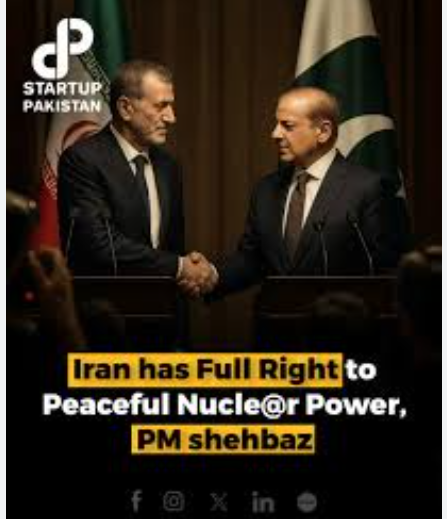
At a joint press conference, Sharif emphasised that Iran has the right to the “peaceful use” of nuclear energy, which is at the centre of the ongoing tensions with Israel, and the US-led West.
“Pakistan stands with Iran for the acquisition of peaceful nuclear power,” he said.
His remarks come amid heightened tensions between Iran and the US, which has recently designated Pakistan a “major non-NATO ally,” over Tehran’s nuclear programme.
In June, Israel and the US launched coordinated airstrikes on key Iranian nuclear facilities. Iran suspended cooperation with the International Atomic Energy Agency (IAEA) following the attacks.
Sharif also condemned “Israeli aggression” against Iran and expressed solidarity with Tehran’s right to self-defence.
He criticised Israel’s actions in Gaza and called upon the international community, particularly Muslim nations, to address the ongoing human rights violations in the region.
The two leaders also discussed issues related to terrorism and agreed to strengthen cooperation to combat militancy along their shared border.
President Pezeshkian said the MoUs signed also included one about finalisation of the bilateral free trade agreement (FTA) at the earliest.
According to state-run Radio Pakistan, Pakistan and Iran exchanged 12 agreements and MoUs in the presence of Sharif and Pezeshkian. These included cooperation in trade, agriculture, science, technology and innovation, information and communications, culture, art, tourism, climate, and maritime safety.