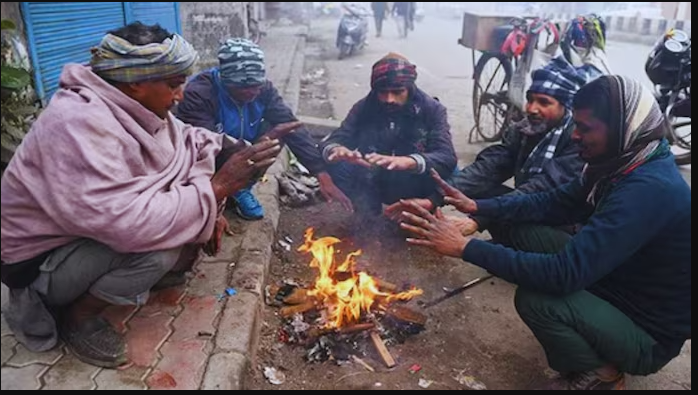










NEW DELHI, Dec 1: There will be more than the usual number of ‘cold wave’ days over Delhi, Haryana, Punjab, eastern Uttar Pradesh, northern Madhya Pradesh, western Maharashtra and Arunachal Pradesh, the India Meteorological Department (IMD) said on Monday.
According to the IMD precise definition of a ‘cold wave,’ when the minimum temperature of a station is 10°C or less in the plains and 0°C or less in hilly regions, it is considered a ‘cold wave’ day. If temperatures dip 4.5°C to 6.4°C below what’s normal for a region – irrespective of its geographical location – then too it can count as a ‘cold wave.’
“The upcoming winter months from December to February are likely to be normal to below-normal minimum temperatures and are likely over most parts of central India, adjoining peninsular India, and northwest India, while above-normal minimum temperatures are expected in the remaining parts of the country. Cold wave occurrences are expected to be above normal over parts of central, northwest, and northeast India during the season,” the agency said in a statement.
The reasons for longer cold wave spells are fewer western disturbances – rain-bearing storms that originate in the Mediterranean region. Moisture from rain tends to increase minimum temperatures. “This is also a La Nina year (characterised by cooler temperatures in the Central Pacific). While there is no direct correlation, historically La Nina years tend to correlate with cold waves,” the IMD Director General M. Mohapatra said.
He added that cold wave spells had already begun in November, “unusually early”, in northern India due to a Polar Vortex. These are bands of very cold air that normally swirl around the poles. While it normally stays over the Arctic, it can occasionally slip southwards and cause blasts of freezing air in Europe, northern Asia and the United States. “The Himalayas protect India from the Polar Vortex, but we can feel some of its effects,” Mr Mohapatra added.
He said the recent cyclones in the Indian neighbourhood – Cyclone Senyar and Ditwah – while not particularly intense, caused significant damage from the rainfall they brought. “Cyclone Senyar that originated in the Straits of Malacca was unusual, because there has been no recent record of cyclones in that region. Sri Lanka usually does not see many cyclones but the rainfall from Ditwah has caused severe flooding,” Mr Mohapatra pointed out.
(Manas Dasgupta)