Modi Draws Future Roadmap for India, Repeats Resolve No Compromise on IWT, Protect Farmers’ Interests


Manas Dasgupta
NEW DELHI, Aug 15: The Prime Minister Narendra Modi on Friday made a strong pitch with policy prescriptions for economic- and security-related reforms for self-reliance giving a roadmap for the future of the nation with a stern warning to those who challenge India’s sovereignty and conspiring to change the demographic make-up of the country.
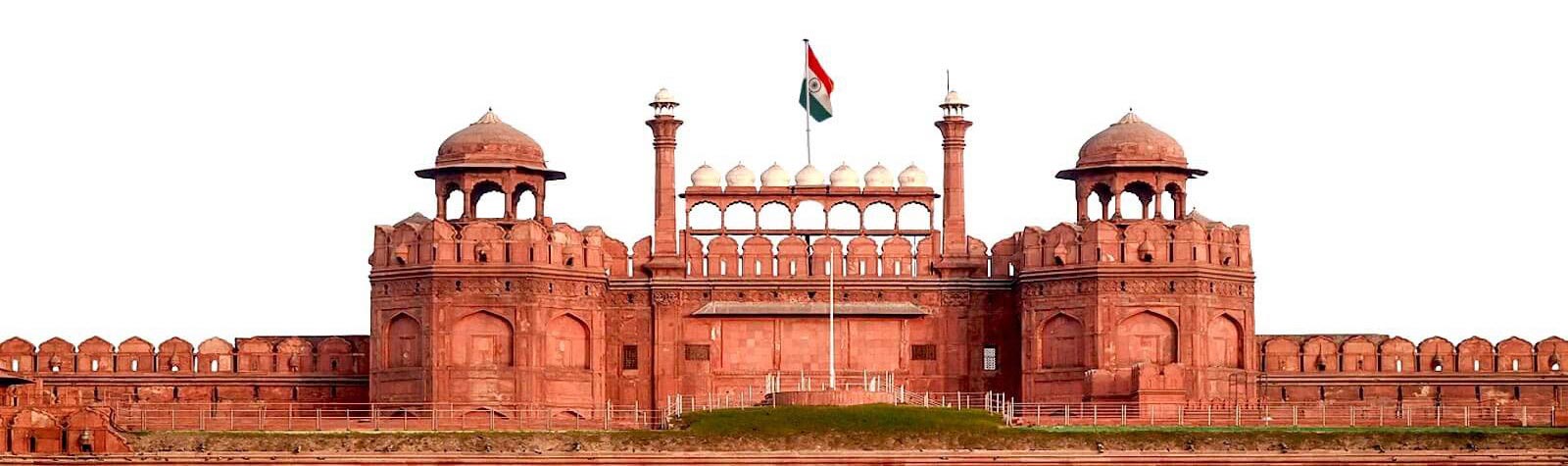
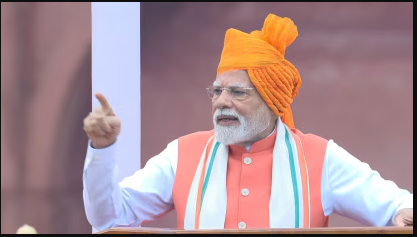
Addressing the nation from the ramparts of the Red Fort to celebrate the 79th Independence Day, Mr Modi made a series of bold announcements that signal a nation ready to leap, not just step, into the future with promises for making India’s first semiconductor chip to building jet engines, from tenfold nuclear expansion to a Rs one lakh crore youth employment push.
Peppered with substantive announcements on reforms, which he presaged by stating that “self-reliance is not limited to import-export, Rupees, pounds or dollars but linked to our own strengths and capabilities,” Mr Modi delivered a message which was unambiguous: Bharat will define its own destiny, set its own terms, and aim unapologetically to become a developed nation by 2047.
Mr Modi’s record 12th address to the nation that lasted for 103 minutes, the longest delivered by any prime minister since the independence of the country, breaking his own 98 minute address he had delivered on the Independence Day last year, was not just ceremonial in greetings but was heavy with resolve, bold in vision, and unapologetic in tone.
Rejecting all warnings issued by Pakistan lately of launching a war against India if it continued to hold the Indus Water Treaty (IWT) in abeyance, Mr Modi reiterated the government’s resolve that “blood and water cannot flow together.” Tearing into the decades old treaty, which he said was an “injustice” to the farmers of India, the Prime Minister said the IWT allowed India’s rivers to irrigate enemy fields while Indian farmers waited for relief. The PM declared that India’s rightful share of water will be secured, stored, and delivered to Indian farms — and that “compromise on farmers’ rights or national interests will no longer be tolerated. Not anymore.”
This was more than just a statement — it is a policy shift that could redefine water diplomacy in the subcontinent. It came just days after an arbitration panel ruled on the matter and Pakistani leaders issued threats – India does not recognise this panel.
Mr Modi’s speech gained importance in the oblique reference to challenges faced by India in the face of the 50% tariffs on Indian goods announced by U.S. President Donald Trump. Prime Minister Modi said India needed to be bigger by its own strength not by trying to reduce the footprint of another country, “economic greed of some countries is evident,” without naming names.
Turning to national security, the Prime Minister spoke about Operation Sindoor — a mission that has already entered military history books. He reminded the nation that for decades, India was forced to live under the shadow of nuclear blackmail. That, he said, is over. “We gave our armed forces a free hand. They decided the what, when and how,” the PM said.
Indian forces struck hundreds of kilometres inside enemy territory, dismantling terrorist headquarters. The scale of destruction, the PM said, was such that Pakistan was still counting its losses and losing sleep. His message was uncompromising — terrorists and those who shelter them will be treated alike, and any future misadventure will be met with a decisive, army-led response.
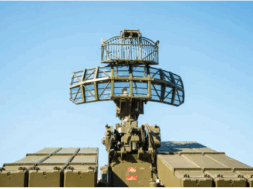
Starting with the deployment of Indian arms and weapons systems during Operation Sindoor which he said had perplexed the enemy, Prime Minister Modi said self-reliance in defence and economy were the cornerstone of a developed India.
He announced two major task forces, one to initiate second generation reforms of the Goods and Services Tax (GST) regime, eight years after its introduction, and a high powered task force for next generation economic reforms.
“You (Indians) will get a Diwali gift, the task force on second generation GST reforms will result in major relief in prices of essential goods,” he said. In a move to give a fillip to employment generation, he said the government would create a new corpus of ₹1 lakh crore, the Pradhan Mantri Viksit Bharat Rozgar Yojana, which would give a ₹15,000 one time grant to first time employees in the private sector and incentives to the private sector to create employment. He said, the government also aimed to reduce the compliance cost for Medium Small and Micro Enterprises (MSMEs) and relief from fear of arbitrary legal actions to give a fillip to the sector that creates employment.
Mr Modi also announced launching of the made in India semiconductor chips by the end of 2025 and emphasised that innovation in AI, cyber security, deep-tech, and operating systems for global competitiveness. Mr Modi said six semiconductor units were already on the ground, and four new units have been given the green signal.
Linking self-reliance with security, the PM cited the role of Made-in-India weapons in Operation Sindoor. These indigenous systems, he said, were game-changers — proving that Atmanirbhar Bharat is not just an economic slogan but a military shield. PM Modi hailed Operation Sindoor as a demonstration of India’s defence self-reliance. He emphasized that indigenous capabilities, including Made-in-India weapons, enable India to act decisively and independently, proving that national security cannot rely on foreign dependence.
While lauding made-in-India weapons and weapons system deployed during Operation Sindoor, Prime Minister Modi declared that India would be building a “Sudarshan Chakra” shield weapon system by 2035 to not only shield military and civilian areas but to also strike back in a precise, targeted manner, underscoring India’s commitment to strategic autonomy.
In a moment of technological pride, the PM fixed a target for India to produce its own fighter jet engines. This leap in defence manufacturing will not only strengthen the Indian Air Force but also mark India’s entry into an elite club of nations with this capability. PM Modi has thrown a national challenge with a dramatic announcement that just like how India made vaccines during Covid-19, and UPI for digital payments, the country should build its own jet engines too, asking scientists and youth to take it up as a direct challenge. He added that youngsters should work towards making sure that Indian fighter jets would have a made in India engine at its heart.
The Prime Minister promised next-generation GST reforms by Diwali — lower taxes, simplified compliance, and faster refunds, especially for MSMEs. He called it a festival gift for the backbone of India’s economy. This will lead to reducing taxes on essential goods and providing relief to MSMEs, local vendors, and consumers.
By the end of this year, India’s first homegrown semiconductor chip will hit the market. The PM said this vision was murdered in the womb 50-60 years ago — but now, it is set to power India’s entry into the global high-tech supply chain. PM Modi announced that India is now on mission mode. By the end of this year, the nation will roll out its first Made in India chip
Prime Minister Modi made a special mention of the anti-Naxal operations especially in Chattisgarh where he said terror corridors had become green corridors. He did however warn of a “conspiracy to change the demographic character” of the country, especially in border areas.
He announced the setting up of a High Powered Demographic Mission which would go into the challenges posed by this issue. “I would like to alert the nation about a concern, a challenge. Under a well-thought-out conspiracy, country’s demography is being changed, seeds of a new crisis are being sown. Infiltrators are snatching away the livelihood of the youth of my country.
“Infiltrators are targeting the sisters and daughters of my country. This will not be tolerated. These infiltrators mislead innocent tribals and capture their land. The country will not tolerate this. When demographic change takes place in border areas, it causes a threat to national security…No country can hand it over to infiltrators…So, I would like to say that we have decided to start a ‘High-Power Demography Mission,” he said.
The Prime Minister made an unambiguous promise — Bharat will never accept any policy, domestic or international, that harms its farmers, fishermen, or dairy workers. “I will stand like a wall,” he said, “against anyone who tries to force such policies on us.” It was an unambiguous message to Donald Trump and US bullying on the proposed trade deal. The Prime Minister said the need of the hour was to reduce fertilizer dependency on other countries.
Noting that a major part of India’s Budget was concerned with procuring fuel and energy from other countries, he said India would aim, by 2047, to increase its capacity of nuclear energy 10-fold via its 10 nuclear energy plants, and also announced that the National Deep Water Exploration mission will try and harness India’s deepwater energy resources. Alternative energy routes will also be explored, including hydroelectric and solar power.
Self-reliance in critical minerals was also flagged by Prime Minister Modi, with the launch of the National Critical Minerals Mission, to explore 1,200 sites where such minerals are to be found.
The address with its substantive announcement made history as Modi surpassed the former Prime Minister Indira Gandhi’s record by becoming the second Prime Minister to give 12 speeches from the Red Fort, second only to Jawaharlal Nehru who delivered 17 Independence Day addresses in a row.