Mamata Banerjee Demands SC-Monitored Probe into Ajit Pawar Plane Crash Suspecting Political Links

Manas Dasgupta
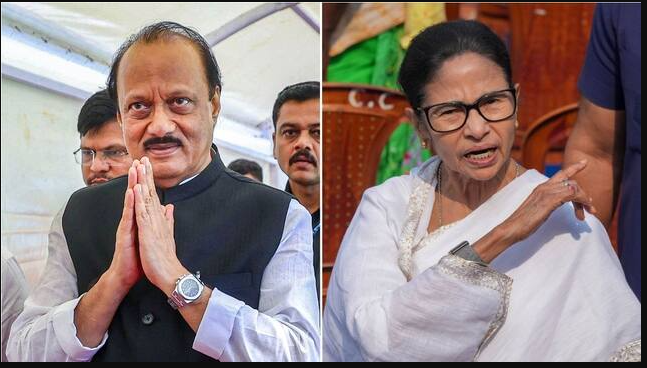
NEW DELHI, Jan 28: Suspecting some foul play with some political links behind the plane crash in which the Maharashtra deputy chief minister Ajit Pawar and four others were killed, the West Bengal Chief Minister Mamata Banerjee has demanded an investigation monitored by the Supreme Court into the incident. Purportedly linking the incident to his political trajectory, Ms Banerjee said,
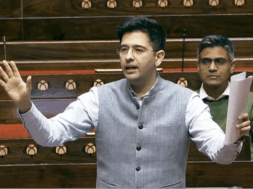
“Even political leaders are not safe in this country, let alone common people,” she said in a public speech on Wednesday. “I am deeply shocked to hear the news.”
She further said, “Two days ago, I came to know that someone from another party had given a statement that Ajit Pawar was willing to leave the BJP-led Mahayuti (the ruling alliance in Maharashtra), and now this has happened today.”
Calling for court’s supervision for the probe, she added, “We have trust only in the Supreme Court and no other agency. All (central) agencies have been completely compromised.”
“Today he (was) in the ruling alliance, but tomorrow (read: in future) he was supposed to return to the original course of his party,” she further claimed, referring to plans that the NCP, split by Ajit in 2023, was set to reunite.
Banerjee, one of the major faces of opposition to PM Narendra Modi-led BJP+ government at the Centre, expressed condolences to his family, the people of Maharashtra, and to Sharad Pawar, Ajit’s uncle and the family patriarch.
Bengal is to go to polls soon, and Mamata’s TMC is facing a challenge from the BJP in the state. Ajit Pawar was among the five killed after an aircraft carrying them crashed in Baramati, in Maharashtra’s Pune district, on Wednesday morning. The Congress president Mallikarjun Kharge also called for a probe, but did not make a political connection as such. “This has hurt everyone, including his family members, and we share their grief and pray that they can bear this loss,” the Congress chief told reporters in the Parliament House complex in Delhi.
Asked about Mamata Banerjee’s demanding a Supreme Court-monitored probe, Kharge said, “Everyone, all leaders, keep travelling for urgent work. But so many instances, we saw in Ahmedabad how a big plane crashed. This was a small plane, why this happened? It should be probed. We demand a probe.”
Ajit Pawar’s death has irrevocably altered the political landscape of Maharashtra putting a question mark on the future of the Nationalist Congress Party (NCP) that he led. The death of the leader popularly known as ‘Dada’ (‘brother’) is politically poignant also because it occurred just as the two factions of the NCP — one led by Ajit and the other by his uncle and family patriarch Sharad Pawar with his daughter Supriya Sule, appeared to be walking towards a reconciliation, possibly even a merger.
The tragedy strikes at a moment of intense political realignment within the Pawar family, and by extension in Maharashtra. During the recent municipal polls for 29 city corporations, including Mumbai’s BMC, there were visible signs of a thaw between the two NCP camps. Despite the bitter split in July 2023, which saw Ajit join the BJP-Shiv Sena ‘Mahayuti’ government and claim the party’s name and ‘clock’ symbol, the factions had recently begun working together.
In a surprising move for the January 15 corporation elections in Pune and Pimpri-Chinchwad, both sides released a unified manifesto.
They campaigned under the Ajit-held ‘clock’ symbol, sparking talk that ultimately the uncle and cousin will want to work with the “original” party, with Ajit as the chief. There was thus talk of getting Supriya Sule a berth in the Modi government at the Centre but nothing was yet concretised or public.
Ajit and cousin Supriya addressed joint press conferences, with both camps acknowledging that their grassroots workers desired a formal reunion. Ajit Pawar expressly hinted at a permanent reconciliation in an interview, saying he believed in the “politics of addition, not subtraction.” He claimed, with evidence of the recent tie-up, that bitterness between the groups, if any, was all but gone.
However, the path to a seemingly imminent reunion was not without electoral obstacles. Recent results of the Pune and Pimpri-Chinchwad municipal corporations showed that even the combined strength of the NCP factions failed to stop a BJP landslide.
With Ajit Pawar gone, the immediate question is: who will lead his faction of 40+ MLAs within the Mahayuti government? While the BJP-led government remains in a comfortable position anyhow in terms of numbers, the leadership vacuum in the Ajit-led NCP is significant. Focus has obviously shifted to Ajit’s immediate family.
Sunterra Pawar, his wife, holds her own political standing as a Rajya Sabha MP but attention is also on the sons, Parth and Jay Pawar. Parth has contested a Lok Sabha election and could be positioned as a successor to his father’s local legacy, analysts say.
There is, though, another rising star of the family, Rohit Pawar, a grandnephew of Sharad Pawar who remained loyal to the patriarch during the 2023 split. Rohit also manages Baramati Agro and other parts of the sugar mill empire of the family. He has even served as the president of the Indian Sugar Mills’ Association (ISMA).
Rohit’s growing influence also creates a complex dynamic between the cousins: Supriya Sule is seen as the heir apparent to Sharad’s national legacy, while the party must now decide if Rohit or Ajit’s sons will be given larger roles to stabilise the Pawar empire on home turf.
Sharad Pawar, 85, recently hinted at retiring by the end of 2026. The loss of his nephew, whom he mentored for decades despite their frequent political friction, may force him to delay his exit. There is now widespread speculation that Sharad Pawar will, at this tragic moment, call for a total unification of the party.
By bringing his grandnephews, Parth and Jay, back into the fold of the NCP (Sharadchandra Pawar), he could potentially heal the dynasty’s rift permanently. On the ground, it remains to be seen if Ajit’s supporters will agree to a merger and/or want to continue their alliance with the BJP.
Ajit Pawar was widely seen as the obvious heir to Sharad Pawar. Amid the emergence of his daughter Supriya Sule, Ajit shocked many when he joined a BJP government, becoming deputy to Devendra Fadnavis as CM, in 2019. Uddhav Thackeray’s Shiv Sena had refused to work with pre-poll ally BJP, and Fadnavis put the NCP support at the time. It lasted merely 80 hours. Sharad Pawar stamped his authority as Ajit returned to the NCP and the NCP-Sena-Congress alliance, the Maha Vikas Aghadi.
Signs of a new juggle emerged in 2022, as Uddhav’s Shiv Sena split, and Eknath Shinde unseated him as CM. Shinde got the original name and symbol. A year later, Ajit Pawar split the NCP and joined the BJP-led Mahayuti government with the backing of a large group of MLAs. After the 2024 elections, he remained deputy CM, and Shinde also became one, while Fadnavis became CM again.
Revived in 2022 after Eknath Shinde split the Shiv Sena, toppling the Uddhav Thackeray government, and took oath as chief minister, the coalition took its current form when Ajit Pawar followed in Shinde’s footsteps, divided uncle Sharad Pawar’s NCP, and joined the Maharashtra government a year later.
The arrangement worked smoothly with Shinde as chief minister and the BJP’s Devendra Fadnavis and Pawar as his deputies until 2024, when a mega victory in the Assembly polls posed the first major challenge for the Mahayuti. The BJP emerged as the single largest party by a massive margin, winning 132 of the state’s 288 seats, just 13 shy of a majority on its own.
The Shinde Sena notched up 57 seats and Ajit Pawar’s NCP 41, while the Uddhav Thackeray faction of the Sena could win only 20 seats, the highest among the opposition grouping. Shinde, arguing that the victory was a result of his governance and the schemes introduced under him, made a pitch to retain the chief minister’s post.
The BJP, however, was in no mood to relent, and a sulking Shinde settled for the deputy chief minister’s post. This was at least in part because he was aware that the BJP and Pawar’s NCP had the numbers to form a government on their own and did not really need him. For the BJP, then, Shinde and Pawar served as a valuable counterbalance to each other, preventing both from pushing too hard and demanding a larger share of the governance pie.