



Manas Dasgupta
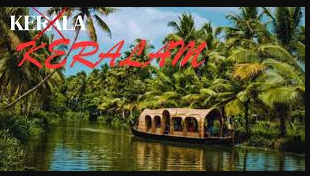
NEW DELHI, Feb 24: Just days ahead of the elections to the Kerala Assembly expected in April or May, the Union Cabinet on Tuesday gave approval to the renaming of the State from “Kerala” to “Keralam,” the union minister Ashwini Vaishnaw announced.
The approval comes nearly two years after the Kerala Assembly had unanimously passed a resolution on June 24, 2024, urging the Union government to rename the State as “Keralam.” After approval of Union Cabinet, the president of India will refer a Bill, namely the Kerala (Alteration of Name) Bill, 2026 to the State Legislative Assembly of Kerala for expressing its views under proviso to Article 3 of the Constitution of India.
After receipt of the views of the Kerala Legislative Assembly, the government of India will obtain the recommendation of the president for introduction of the Kerala (Alteration of Name) Bill, 2026 to alter the name of Kerala as ‘Keralam’ in Parliament, an official release said.
The Kerala Assembly had passed resolutions in 2023 and 2024 urging the Union government to amend the Constitution and change the state’s name from Kerala to Keralam. Both resolutions were moved by Chief Minister Pinarayi Vijayan. Last month, Kerala BJP state president Rajeev Chandrasekhar wrote to the CM extending the party’s support to the move.
The 2024 resolution stated that the name of the state in Malayalam is Keralam and that states were reorganised on linguistic lines on November 1, 1956, which is observed as Kerala Piravi (Kerala Formation Day). It noted that while the state is referred to as Keralam in Malayalam, its name in the First Schedule of the Constitution is Kerala. The Assembly unanimously requested the Union government to take immediate steps under Article 3 of the Constitution to change the name to
The Kerala Assembly had passed the resolution for the second time because the Ministry of Home Affairs, which had reviewed the first resolution, suggested some technical changes. Kerala Chief Minister Pinarayi Vijayan, who had moved the resolution, wanted the Union Government to change the southern State’s name from Kerala to Keralam in all languages included in the Eighth Schedule of the Constitution.
Moving the resolution, the Chief Minister had said the State was called ‘Keralam’ in Malayalam and that the demand to form a united Kerala for the Malayalam-speaking communities had strongly emerged since the time of the national freedom struggle.
The Article 3 of the Constitution provides for alteration of names of existing States. According to Article 3, Parliament may by law alter the name of any State. Further proviso to Article 3 states that no Bill for the purpose shall be introduced in either House of Parliament except on the recommendation of the president and unless where the proposal contained in the Bill affects the area, boundaries or name of any of the States, the Bill has been referred by the president to the legislature of that State for expressing its views thereon within such period as may be specified in the reference or within such further period as the president may allow and the period so specified or allowed has expired.
The matter regarding alteration of the name Kerala as Keralam was considered in the Ministry of Home Affairs, Government of India and with the approval of Union Home Minister Amit Shah, the draft note for the Cabinet for the alteration of name of Kerala as Keralam was circulated to the Department of Legal Affairs and Legislative Department, Ministry of Law and Justice for their comments. The Department of Legal Affairs and Legislative Department, Ministry of Law and Justice have concurred with the proposal for the alteration of name of Kerala’ as ‘Keralam.’
There are multiple theories about the origin of the name “Kerala.” The earliest epigraphic reference is found in Rock Edict II of Ashoka, dated to 257 BCE, which mentions “Keralaputra” (Sanskrit for “son of Kerala”), also interpreted as a reference to the Chera dynasty.
Some scholars trace Keralam to Cheram. German scholar Herman Gundert, who compiled the first Malayalam-English dictionary, noted that keram is the Kannada form of cheram and described Keralam as Cheram, the region between Gokarnam and Kanyakumari. The root “cher” is understood to mean “to join,” and appears in the compound “Cheralam,” with “alam” meaning land or region.
Malayalam-speaking regions were historically ruled by various kings and princely states. The Aikya (unified) Kerala movement gathered momentum in the 1920s, demanding a separate state for Malayalam-speaking people by integrating Malabar, Kochi and Travancore. Inspired by the freedom movement, Malayalis — bound by a shared language, cultural traditions, and social customs — pressed for political unification.
Following Independence, the integration of princely states paved the way for statehood. On July 1, 1949, Travancore and Kochi merged to form the Travancore-Cochin state. When the Union government decided to reorganise states on linguistic lines, the State Reorganisation Commission, headed by Syed Fazl Ali, recommended the creation of Kerala by including the Malabar district and the Kasargod taluk, while excluding the southern taluks of Travancore that now form part of Tamil Nadu.
Unlike the renaming of cities, changing the name of a state requires a Constitutional amendment, for which a proposal must originate from the state government. The Union Ministry of Home Affairs (MHA) examines the request and seeks No Objection Certificates (NOCs) from agencies such as the Ministry of Railways, the Intelligence Bureau, the Department of Posts, Survey of India, and the Registrar General of India.
If cleared, the proposal is introduced in Parliament as a Bill. Once passed and notified, the new name comes into effect. In a previous instance, a 2018 proposal to rename West Bengal as Bangla was not cleared after the Ministry of External Affairs raised concerns about its similarity with Bangladesh.
Meanwhile, the senior Congress leader Shashi Tharoor on Tuesday wittingly remarked how the change of the name of the state would now be used for its citizens, “what happens now to the terms “Keralite” and “Keralan” for the “denizens” of the new “Keralam.”
Mr Tharoor said, “All to the good, no doubt, but a small linguistic question for the Anglophones among us: what happens now to the terms ‘Keralite’ and ‘Keralan’ for the denizens of the new ‘Keralam’? “‘Keralamite’ sounds like a microbe and ‘Keralamian’ like a rare earth mineral…! @CMOKerala might want to launch a competition for new terms resulting from this electoral zeal,” he said, sharing the media report on the name change.