


Manas Dasgupta
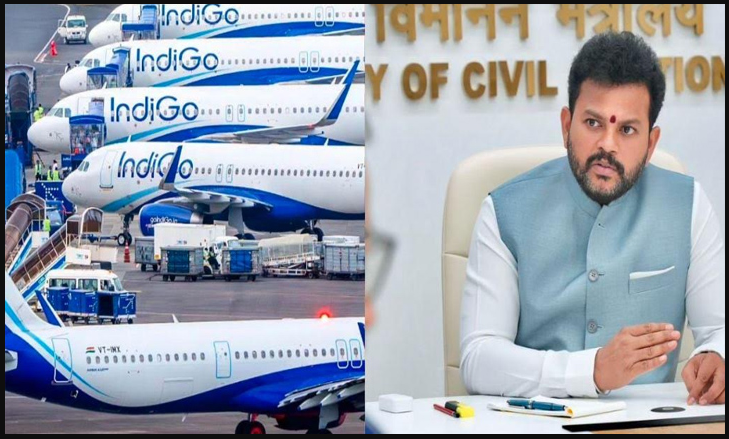
NEW DELHI, Dec 8: The disruption-hit India’s largest airlines IndiGo is gradually limping back to stabilised operations claiming to have operated on Monday over 1,800 of its 2,200 odd average scheduled daily flights and its on-time performance (OTP), which had crashed to all-time lows last week amid its massive flight disruption, improved to 91 per cent.
While the operation of 1,800 flights means that the airline still had to cancel over 500 flights on Monday, the number of cancellations was much lower than the previous four days. The carrier also said its board has been meeting regularly during this operational disruption and a crisis management group (CMG) set up by the board meets every day and hoped to completely normalise its services in the next couple of days.
The Directorate General of Civil Aviation (DGCA) has said IndiGo Airlines was “profusely” apologetic and deeply regrets inconvenience and hardship caused to customers due to the continued cancellation and delays of the flights since last Tuesday. This statement comes after DGCA’s updated deadline to respond to the show-cause notice.
Amid the ongoing spate of operational disruptions that affected India’s largest carrier for seventh day on Monday, IndiGo CEO Pieter Elbers and Chief Operating Officer Isidro Proqueras are likely to be summoned on Wednesday by the four-member probe panel set up by the Directorate General of Civil Aviation (DGCA) as part of the investigations in the IndiGo flight disruptions.
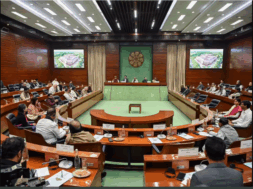
As IndiGo tries to restore full-scale operations after the chaotic situations in a large number of airports across the country, the Civil Aviation Minister Rammohan Naidu has warned of tough action against the airline to “set an example” for other lines. Speaking in the Rajya Sabha on Monday, the minister said the chaos that led to the cancellation of hundreds of flights and stranded thousands of people was the result of IndiGo’s “internal crisis” after the new passenger safety norms came into force.
“We care for pilots, crew and passengers. We made it clear to all the airlines. IndiGo was supposed to manage the crew and roster. Passengers faced a lot of difficulties. We are not taking the situation lightly. We will take strict action. We will set an example for every airline. If there will be any non-compliance, we will take action,” he told the House. The government, he said, has initiated a thorough inquiry into the matter. The minister also said the government wants more players in the aviation sector and that the country has the potential to have five major airlines, he added.
In a statement, IndiGo spokesperson said, “After the recent disruptions, IndiGo has recorded considerable and consistent improvement across the network. Today, we are all set to operate over 1800 flights, connecting all stations that we operate to. We have optimized our operations and managed to reduce the number of cancellations which are being notified to customers in advance, and our on-time performance (OTP) has also improved to 91% across the network.” He also said the company has already processed refunds worth Rs 827 crore to affected passengers and delivered 3,000 pieces of baggage to passengers across the country, and the rest of refunds was under process for flight cancellations up to December 15.
On Sunday, IndiGo had operated just over 1,650 flights, up from 1,500 on Saturday, and more than double of Friday’s around 700 flights, when cancellations were “well over 1,000”. Friday was the worst day in IndiGo’s network-wide disruption this week, as the airline had decided to “reboot the network, systems, and rosters” to mitigate the widespread delays and flight cancellations. Its OTP was 78.2 per cent on Sunday, up sharply from 20.7 per cent on Saturday, and Friday’s all-time low of 3.7 per cent, as per data from the Ministry of Civil Aviation (MoCA).
The primary reason for this disruption was crew shortages in the wake of the new (FDTL) rules, which IndiGo did not plan for properly. As per the DGCA, IndiGo informed it that the disruptions “have arisen primarily from misjudgement and planning gaps in implementing” the second phase of new FDTL rules, with the airline accepting that the actual crew requirement for the new rules exceeded what it had anticipated.
The massive disruption at IndiGo—India’s largest airline that commands over 60 per cent of the domestic market share—threw commercial flight operations out of gear all over the country. Given the scale of the disruption, aviation regulator DGCA on Friday granted IndiGo a temporary one-time exemption from some night operations-related changes in the new FDTL norms for its Airbus A320 pilots. The temporary rollback, which will be in place till February 10, is likely to help IndiGo—caught grossly unprepared for the new crew rest norms—to get its act together and stabilise operations from heron. The DGCA has also granted a few other temporary relaxations to IndiGo.
But the government and the regulator have turned up the heat on IndiGo with the initiation of an inquiry by a DGCA panel into the disruption. The regulator has also issued show cause notices to the airline’s CEO Pieter Elbers and its chief operating officer Isidro Proqueras and Mr Naidu cautioning all airlines of “strict action” if such a chaos returned to flying operations.
Although the new FDTL rules apply to all domestic airlines, IndiGo has been the most severely-affected carrier. The factors that have made IndiGo more vulnerable, according to industry sources, include its massive scale of operations, a high-frequency network, significant number of night and wee hour flights, and high aircraft and crew utilisation levels with hardly any buffers, leaving little elbow room for the airline to manage crew shortages. With its fleet of over 400 aircraft, IndiGo operates over 2,300 flights a day. By contrast, the next biggest airline group—Air India—operates less than half the number of flights IndiGo operates.
“We would like to reiterate that all our operations are fully compliant with the relevant FDTL norms and safety regulations, as they have been throughout the last two decades. We continue to work in full cooperation with the authorities to restore normalcy in operations,” the IndiGo spokesperson said Monday.
In a video message to staff on Sunday, IndiGo CEO Pieter Elbers said “step by step, we are getting back” and added that the airlines on time performance is expected to reach 75 per cent and was expected to become fully normal by December 10.
Meanwhile, Air India has launched a massive drive to recruit more pilots and cabin crew to upgrade its operations. “The sky is not the limit; it’s just the beginning,” said Air India in a hiring advertisement calling pilots to apply for a career in the Tata group company. The airline that the Tata group bought back from the government in October 2021 said it is looking to hire pilots for its fleet of Airbus A320 and Boeing 737 – the backbone of the short- to medium-haul market.
“Command the future of Indian aviation. We are inviting experienced B737 and A320 pilots to join our growing fleet. Submit your applications by December 22,” Air India said in a post on Instagram. Air India’s hiring call comes at a time when IndiGo is struggling to hire more pilots to stabilise flight operations affected by the new FDTL rules.
For the A320 fleet, Air India said it is looking for experienced “type rated” pilots in command. The airline said for the B737 fleet, it wanted to hire both experienced “type rated” and “non-type rated” pilots. Type rating refers to a certification for pilots who have completed training and testing on a specific type of aircraft.