Indian Army Receives First Lot of Apache Helicopters, Deploy near Pakistan Border










Manas Dasgupta
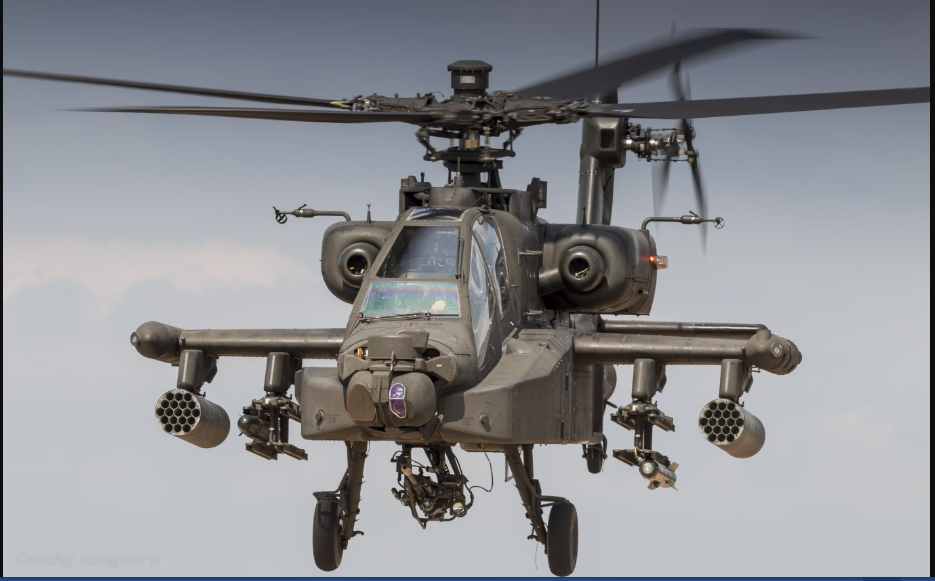
NEW DELHI, July 22: In a major milestone for India’s military capability, the Indian Army on Tuesday took delivery of the first three of six Boeing-built AH-64E Apache helicopters developed by Boeing and inducted the first batch in the service positioning near the Pakistan border.
These state-of-the-art choppers are expected to significantly bolster the operational capabilities of the Indian Army. Boeing delivered the AH-64E Apache choppers, known as one of the world’s most advanced multi-role combat helicopters, as part of a contract to supply six helicopters to the Indian Army.
Its induction comes weeks after Operation Sindoor, and at a time when India’s western frontier remains live with threats. The Apache’s presence near the Pakistan border shifts the equation. It can engage enemy armour, radar posts, terror camps and logistics convoys with speed and precision. Its survivability, with armoured crew compartments, crash-resistant systems, and hardened rotors, ensures it can take damage and still complete missions.
The desert camp painted helicopters, which sport fuselages built by a Tata-Boeing joint venture on the outskirts of Hyderabad, are destined for combat patrol missions near the Pakistan border, where they will immediately be a major boost to the Indian Army’s combat rotorcraft fleet, currently comprised of Indian-made Dhruv Rudra and Prachand helicopters.
Other procedures, such as assembling, the Joint Receipt Inspection (JRI), and induction, would be followed as per the protocol. The Indian Air Force (IAF) had signed a multi-billion-dollar contract with the US government and Boeing Ltd in September 2015 for 22 Apache helicopters. The Defence Ministry in 2017 approved the procurement of six Apache helicopters along with weapons systems from Boeing at a cost of Rs 4,168 crore for the Army.
India has now joined the likes of the United States, the UK, Israel and Egypt to use the Boeing-made Apache choppers. These helicopters are armed with a powerful 30 mm chain gun, laser and radar-guided Hellfire missiles for precision strikes, and rocket pods capable of engaging multiple ground targets.
“Milestone moment for Indian Army as the first batch of Apache helicopters for Army Aviation arrive today in India. These state-of-the-art platforms will bolster the operational capabilities of the Indian Army significantly,” said the Indian Army on X.
India first acquired 22 Apache helicopters for the Indian Air Force under a 2015 agreement. The six new ones being inducted are for the Indian Army’s Aviation Corps. The Indian Air Force operates two squadrons of the type, based in Pathankot and Jorhat, each ‘taking care of’ the northern sectors and eastern sectors facing China.
Heavily armed, the Apache’s arsenal includes a 30 mm M230 chain gun for close support, 70 mm Hydra rockets for area saturation, and AGM-114 Hellfire missiles that can destroy armoured vehicles and tanks from over six kilometres away. For aerial threats, it carries air-to-air Stinger missiles, making it lethal not just to tanks, but even to helicopters and UAVs. The Indian Army and IAF versions of the Apache are identical.
What truly sets the Apache apart, and makes it feared across theatres of war, is the AN/APG-78 Longbow radar system mounted above its rotor. About half of the Apaches for the Indian Army and IAF are Longbow-fitted versions of the helicopter. This mast-mounted, millimetre-wave radar can track up to 128 ground targets and prioritise 16 simultaneously. Its positioning allows the Apache to scan and assign targets while remaining hidden behind terrain, literally popping up only to deliver fire. That radar, paired with advanced infrared sensors, helmet-mounted displays, and night vision systems, makes the Apache a predator in the dark, ideal for sudden, overwhelming strikes. Their very presence adds several layers of deterrent caution on Pakistani ground movements.
For the Indian Army, the AH-64E will also be able to receive live sensor feeds from drones, giving it situational awareness of the kind Indian Army copter pilots have never had before. This networked combat ability allows the Apache to detect threats, coordinate attacks, and share targeting data in real time, offering commanders a comprehensive, multi-domain view of the battlefield.