India – Pakistan Asia Cup Tie: BCCI Officials to go for “Invisible Boycott”





Manas Dasgupta
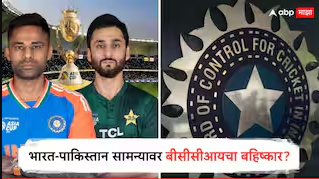
NEW DELHI, Sept 13: Even as the Centre has given a green signal to India playing against Pakistan in any multi-lateral tournament and the Supreme Court recently refused an urgent hearing over a boycott call, the Board of Control for Cricket in India (BCCI) is learnt to have taken cognisance of the boycott campaign going on social media and decided to go for “invisible boycott” of the Group A match between India and Pakistan in the T20 Asia Cup match in Dubai on Sunday.
According to media reports, the BCCI officials have decided to distance themselves from the venue of the match. The report said none of the BCCI top officials have so far reached Dubai nor inclined to do so to attend the match despite India being the official hosts of the tournament. When the match between India and Pakistan in the Champions Trophy was held in Dubai earlier this year, all the top BCCI officials were in attendance. The Asia Cup matches were shifted to UAE amid rising political tensions between India and Pakistan in the aftermath of the Pahalgam terror attacks.
The report said the BCCI secretary Devajit Saikia, IPL chairman Arun Dhumal, treasurer Prabhtej Bhatia, and joint secretary Rohan Desai are unlikely to visit Dubai for the match on Sunday. Rajeev Shukla, currently the acting president of the BCCI, is also an executive board member of the Asian Cricket Council (ACC), so he is expected to be at the venue to watch the contest.
ICC chairman Jay Shah is currently in the US and will also miss the contest. A BCCI official stated that the match between the two teams would go ahead once the government gave permission. However, the top brass is now wary of making their presence felt on camera. “We agreed to the match after getting permission from the government. If we come on camera during the match, then attempts would be made to create an atmosphere against us,” a BCCI official said.
The political squabbles returned a day before the match, with leaders once again calling for a boycott of the game. The criticism came mostly from the Opposition camp, especially Congress, Shiv Sena (UBT), and the Aam Aadmi Party (AAP).
The AAP leaders and workers burnt a Pakistan-labelled effigy outside their office, with ex-minister Saurabh Bharadwaj making a public appeal to boycott clubs and restaurants that live telecast the match. “Indian government is making cricketers play with such disgusting people who wiped our sisters’ sindoor. We’ll expose all the clubs and restaurants in Delhi that telecast India-Pakistan matches,” said Mr Bharadwaj.
Uddhav Thackeray, chief of the Sena (UBT), recalled the Prime Minister’s “water and blood cannot flow together” remark over the suspension of the Indus Water Treaty, and asked how “blood and cricket” go together. “How can war and cricket be at the same time? They have made a business out of patriotism. They just want money,” said Mr Thackeray.
Shiv Sena (UBT) MP Priyanka Chaturvedi also urged the people of the country to stand united against Pakistan. “Pakistan cricketers were humiliating us and Operation Sindoor on their social media…We do not want to play against Pakistan till Pakistani players stop supporting terrorists,” said Ms Chaturvedi.
Congress MP Imran Masood said people are busy minting money without caring for the “sisters” who lost their husbands. “It is business. There is excitement in India-Pakistan matches. Tickets are being sold at high prices. They do not care that our sisters’ Sindoor has been destroyed. These people are busy making money in the name of cricket. Our sisters’ families were destroyed, and they are going to play cricket with Pakistanis. The government should be ashamed,” he said.
Criticism also poured in from the victims’ families. Aishanya Dwivedi, whose husband Shubham Dwivedi died in the Pahalgam attack, called it “wrong” for India to play Pakistan in the Asia Cup. “It seems that BCCI has no feelings for those 26 people who died in Pahalgam. They don’t value it because no one from their family died. Why are the cricketers playing with Pakistan? Players can also take their stand,” she said.
However, Union Minister Anurag Thakur argued that it was a compulsion to participate in the match, since Pakistan would earn the match points if India opts out. “When multinational tournaments are organised by the ACC or the ICC, it becomes a compulsion, a necessity for nations to participate. If they don’t, they will be eliminated from the tournament, they will have to forfeit the match, and the other team will get the points. But India doesn’t play bilateral tournaments with Pakistan,” said the minister. Mr Thakur said it has been India’s policy for years to not play bilaterals against Pakistan until they stop terror attacks on India.
Jammu and Kashmir Chief Minister Omar Abdullah said that, as per his understanding, there had been no problem in playing multi-team tournaments with Pakistan. “As far as I know, we don’t play bilateral cricket with them. But I think we never had any problem with a multi-team tournament. If I understand clearly, then this match is a part of a multi-level tournament and not a part of a bilateral series. If this is a start and if things can move in a positive direction, then nothing like it. Sports often become a victim of politics,” said Mr Abdullah.
The India vs Pakistan fixture in the Asia Cup tomorrow has raised the political temperature in the country. The face-off had come under intense criticism due to its timing, less than five months after the April 22 Pahalgam terror attack that had left 26 people dead in Jammu and Kashmir, particularly with families still mourning their sons who died in the attack.
Countdowns to cricketing contests between India and Pakistan encompass a few constants. In the days and weeks leading up as the excitement swells to fever pitch, the rhetoric is ratcheted up. Raucous debates transpire on television and social media. Tickets, often at unreasonably high prices, sell like hot cakes. Individual match-ups are dissected. Jangling nerves suffuse the air. By most estimates, however, the build-up to Sunday’s contest hasn’t been quite as boisterous. Nothing is more revealing of the subdued surroundings than tickets still being up for grabs more than two weeks after they first went up for sale.
The Supreme Court had on Thursday declined to urgently hear a petition that sought cancellation of Sunday’s India–Pakistan cricket match. The petition, filed by four law students, contended that staging the match soon after the Pahalgam terror attack and Operation Sindoor was “against national interest” and demeans the sacrifices of armed forces and civilians who lost their lives in the attack.
When the matter was mentioned before a Bench of Justices J.K. Maheshwari and Vijay Bishnoi for urgent listing, the Bench declined to entertain the plea. What is the urgency? It’s a match, let it be,” Justice Maheshwari told the counsel who urged the court to list the matter on Friday. When the lawyer pointed out that the match was to be held on Sunday (September 14) and that the petition would otherwise become infructuous, the Bench remained unmoved. “Match is this Sunday? What can we do about that? Let it be. The match should go on,” it said.
Even as the lawyer insisted that the merits of the case were immaterial and that it ought to be heard, the Bench reiterated its refusal. “Playing with Pakistan sends the opposite message, that while our soldiers are sacrificing their lives, we are celebrating sports with the same country sheltering terrorists. It can also hurt the sentiments of the families of the victims. The dignity of the nation and security of citizens come before entertainment,” the plea, filed through advocates Sneha Rani, Abhishek Verma and Md. Anas Chaudhary said.
The petitioners submitted that cricket cannot be placed above national interest, the lives of citizens, or the sacrifices of armed personnel, cautioning that allowing the match to proceed would undermine the morale of both the armed forces and the public. “The nation’s dignity and security must outweigh considerations of entertainment and revenue generation,” they said.